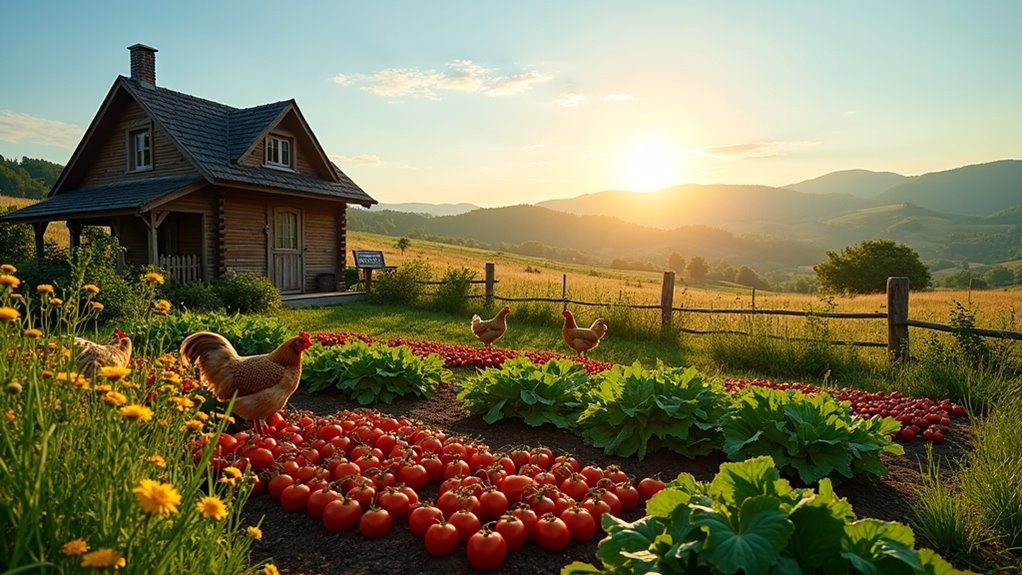
Rural homesteading is a vital aspect of survivalism and prepping, focusing on living a self-sufficient lifestyle in the countryside. By growing your own food, raising animals, and implementing sustainable practices, you not only fulfill your food needs but also build resilience in the face of potential crises. This lifestyle fosters community support and encourages sharing resources and knowledge. A small piece of land—typically 1-2 acres—can be incredibly productive when you employ smart techniques like crop rotation and permaculture. If you’re interested in preparing for the future and starting your own homestead, there is a wealth of information to explore on how to make your homesteading journey a successful part of your survival plans.
Key Takeaways
- Rural homesteading is a self-sufficient lifestyle focused on growing food and raising livestock in rural areas, which aligns with principles of survivalism and prepping.
- It emphasizes sustainability, self-reliance, and preparedness for food shortages during crises, making it a vital aspect of survival strategies.
- Modern homesteaders often aim to produce 75-90% of their food needs through organic gardening and animal husbandry, ensuring a consistent food supply even in uncertain times.
- Successful homesteads require adequate land, sustainable practices, and reliable water sources for crops and animals, all of which are crucial for long-term survival.
- Community support is essential for resource sharing and overcoming the challenges of rural living, fostering a network of preparedness among like-minded individuals.
Understanding the Concept of Rural Homesteading
Rural homesteading, a vital aspect of survivalism and prepping, represents a strategic approach to cultivating a self-sufficient lifestyle away from the chaos of urban environments.
In rural locations, individuals can acquire larger parcels of land, allowing for the cultivation of food crops and the raising of livestock. This lifestyle not only emphasizes sustainability and self-reliance but also equips you to satisfy a considerable portion of your food requirements directly from your homestead, which is essential in times of crisis.
With fewer regulations on agricultural practices, you can explore various farming techniques and maintain livestock, fostering a robust community of like-minded individuals who support each other in this empowering and preparedness-focused journey.
The Historical Context of Homesteading in America
Although the concept of homesteading may seem like a modern trend, its roots in America stretch back to the early 19th century, shaped by the ideals of self-reliance and land ownership.
The Homesteading Act of 1862 allowed individuals to claim 160 acres of rural land, offering an opportunity for self-sufficiency. However, many faced significant challenges:
The Homesteading Act of 1862 empowered individuals with 160 acres, but self-sufficiency came with formidable challenges.
- Harsh droughts made farming difficult, threatening food security.
- Insect infestations devastated crops, leading to devastating losses.
- Economic hardships forced many to abandon their homesteads, highlighting the importance of resilience.
The back-to-the-land movement in the 1960s reignited interest in simpler living and self-sufficiency, reflecting a desire for preparedness.
Today, homesteading continues to evolve, merging with survivalism and prepping to encourage sustainable and fulfilling lifestyles that prioritize self-sufficiency and readiness for any challenges that may arise.
Modern Motivations for Choosing Rural Homesteading
What drives people to embrace rural homesteading in today’s fast-paced world? Many are motivated by survivalism and the desire for self-sufficiency, aiming to grow 75-90% of their food needs right from their rural homesteads.
Inspired by the back-to-the-land movement, you might find satisfaction in organic gardening and animal husbandry as essential skills for preparedness. Escaping the consumer chaos of urban life allows you to focus on sustainability, resilience, and environmental consciousness, all crucial elements in a survivalist lifestyle.
Community engagement also plays a vital role, as you connect with like-minded families who prioritize preparedness and resourcefulness. Additionally, the affordability of rural land enables you to cultivate a secure and fulfilling lifestyle.
Weigh the pros and cons carefully, and determine if rural homesteading aligns with your values and survival goals.
Key Components of a Successful Rural Homestead
Embracing rural homesteading within the context of survivalism and prepping involves understanding key components that contribute to its success.
To create a resilient rural homestead, consider these essentials:
Creating a resilient rural homestead requires careful planning and key essentials for long-term sustainability.
- Space: A minimum of 1-2 acres for self-sufficient gardens, orchards, and livestock to ensure food security.
- Sustainable Practices: Implement crop rotation and composting to enhance soil health, which is crucial for long-term survival.
- Water Access: Ensure reliable water sources, such as wells or rainwater harvesting systems, for crops and animals to withstand emergencies.
- Community Network: Build relationships with fellow homesteaders and preppers for support, knowledge sharing, and resource pooling during crises.
The Benefits and Challenges of Rural Homesteading
Rural homesteading offers a distinct combination of benefits and challenges that can significantly influence your survivalist lifestyle. Achieving self-sufficiency is a key advantage, allowing you to grow a substantial portion of your food needs, potentially up to 90%, while also benefiting from a lower cost of living. However, this lifestyle requires a considerable investment of time for land maintenance and may lead to feelings of isolation from urban conveniences. Engaging with the community is crucial, as it provides essential support networks to help you navigate the various challenges associated with self-reliance.
| Benefits | Challenges | Considerations |
|---|---|---|
| Self-sufficiency | Time investment | Distance from supplies |
| Lower cost of living | Potential isolation | Commuting costs |
| Fewer restrictions | Financial implications | Resource sharing |
When considering rural homesteading, it’s important to weigh these factors carefully to ensure your preparedness and resilience in the face of challenges.