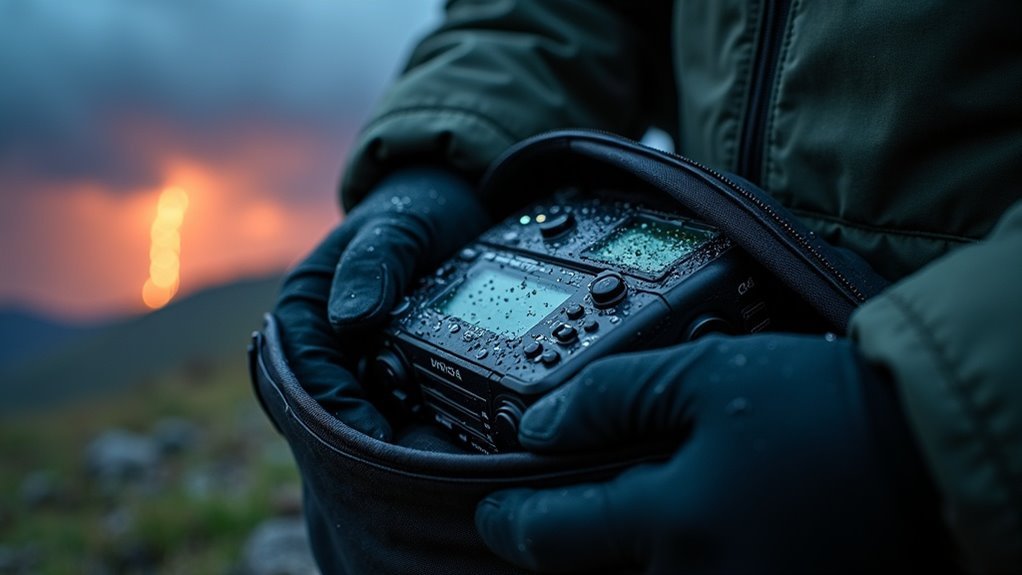
To preserve your night vision during survival situations, utilize red light, as it minimizes disruption to your eyes’ dark adaptation—an essential factor when navigating in low-light conditions. Opt for dim red flashlights or headlamps specifically designed for nighttime use, since bright red light can still impair your sight. If necessary, you can create DIY red filters using materials like plastic or cellophane to adapt standard flashlights for nighttime operations. Additionally, limit your exposure to bright light before engaging in nighttime activities; this practice will help your eyes adapt more quickly to darkness. By consistently applying these techniques, you can significantly enhance your low-light vision, which is crucial for effective survival and preparedness strategies. Explore further methods to maximize your night vision and stay one step ahead in your survival endeavors.
Key Takeaways
- Use dim red light sources, such as red-filtered flashlights or headlamps, to minimize disruption to your dark adaptation when navigating in the wilderness or during emergencies.
- Limit exposure to bright white light before engaging in nighttime survival activities, as it can impair your night vision for 20-30 minutes, potentially putting you at risk.
- Utilize red light for reading maps or charts in low-light conditions to maintain visibility while preserving your ability to see in the dark, essential for successful navigation and situational awareness.
- Experiment with DIY red filters, like red cellophane or plastic bottle caps, to create effective red light sources that can be easily made from common materials found in a prepper’s supplies.
- Transition quickly between red and white light by using removable filters, allowing you to maintain stealth and reduce detection by potential threats during nighttime operations or while foraging.
Understanding Night Vision and Light Adaptation
When you’re navigating in low light conditions, your eyes undergo a crucial process known as dark adaptation, which can take about 20-30 minutes to fully develop.
During this period, your pupils dilate, allowing more light to enter and enhancing your ability to see in the dark. However, exposure to bright light can significantly disrupt this adaptation, causing your pupils to constrict and impair your night vision, which is vital for survival scenarios.
Red light, on the other hand, minimally affects the rods in your retina, which are essential for low-light vision. By using red light, you can effectively preserve your night vision, as it has a lower impact on dark adaptation compared to other wavelengths, particularly blue light.
This knowledge can be invaluable for prepping and survival situations where maintaining your night vision can mean the difference between safety and danger.
The Benefits of Red Light for Stargazing
Using red light for stargazing can be a valuable skill for survivalists and preppers. It enhances your night vision by minimizing disruption to your eyes’ adaptation to darkness, which is crucial when navigating in the wild or during a power outage.
With red light, you can read maps or charts safely without sacrificing your ability to spot potential threats or find resources in the night. This makes red light an essential tool for anyone preparing for emergencies and looking to navigate effectively under the stars.
Enhanced Night Vision
While stargazing during outdoor survival situations, maintaining ideal night vision is crucial for both navigation and enjoyment of the night sky.
Using red lights can enhance your night vision, allowing your pupils to dilate effectively and improving your ability to gather light in dark conditions. Unlike bright white light, which can disrupt your dark adaptation for 20-30 minutes, red light minimizes this impact, making it the preferred choice for visual navigation in the wilderness.
It’s less absorbed by the rods in your retina, which are vital for low-light vision. By using red light to read maps or star charts, you can navigate effectively without compromising your ability to spot faint celestial objects, ensuring a more successful and immersive survival experience under the stars.
Minimal Disruption to Adaptation
Red light plays an essential role in survivalism and prepping, particularly when it comes to maintaining your night vision during nighttime operations or stargazing. By using red light, you can keep your eyes adapted to the darkness, which is crucial for spotting potential threats or navigating in low-light conditions. Unlike other light wavelengths, red light minimizes disruption to dark adaptation, enabling you to see faint details in your surroundings. Human eyes take about 20-30 minutes to fully adapt to darkness, and red light facilitates this process by allowing your pupils to dilate without sacrificing your night vision.
| Benefit | Description |
|---|---|
| Preserves Vision | Minimizes disruption to dark-adapted vision |
| Enhances Adaptation | Supports pupil dilation for better light-gathering |
| Less Rod Absorption | Red light is less absorbed, aiding low-light vision |
Safe Chart Reading
Maintaining night vision during stargazing is crucial for survivalists and preppers, as it allows you to navigate and observe the night sky without compromising your ability to see in low-light conditions.
When reading star charts in the dark, the type of light you use can significantly impact your night vision. Red light is essential for preserving your ability to see in the dark, as it minimizes pupil dilation and helps you identify faint celestial objects, which can be useful for navigation and situational awareness.
Your eyes require 20-30 minutes to fully adapt to darkness, and exposure to bright lights can disrupt this adaptation, making it harder to spot potential threats or landmarks in low light.
Using red light for chart reading is an effective strategy, as it allows you to view necessary details without sacrificing your dark adaptation, which is critical for spotting dim stars or other important celestial markers.
For those who prefer DIY solutions, creating a red light source can be as simple as using red cellophane over a flashlight. This ensures you have an effective tool for reading star charts while protecting your night vision—a vital skill for anyone involved in survivalism and prepping.
Effective Red Light Sources and Tools
Effective red light sources are crucial for survivalism and prepping, especially when maintaining night vision during essential activities like stargazing or navigating in low-light environments.
Red flashlights and headlamps are invaluable tools that minimize disruption to your eyes’ dark adaptation, allowing your pupils to fully dilate. For a practical and cost-effective solution, you can use red plastic bottle caps over mini-maglight flashlights to quickly switch from white to red light.
Red flashlights and headlamps enhance night vision, allowing your pupils to fully dilate while minimizing light disruption.
Additionally, many modern smartphones and tablets feature night mode settings that can be adjusted to red, making it easier to use stargazing apps while preserving your night vision.
For optimal safety and visibility during nighttime operations, select headlamps with adjustable brightness settings that default to red light, ensuring you stay discreet and effective in low-light situations.
DIY Hacks for Creating Red Light
Creating your own red light can be a crucial survival hack that enhances your preparedness for low-light situations.
With a few DIY methods, you can ensure you have a reliable light source without compromising your night vision. For instance, you can wrap red cellophane over a flashlight to create a makeshift red filter, replace a lens with red plastic for a more permanent solution, or modify a mini-maglight using a bottle cap filter to achieve the desired effect.
These techniques are effective for various survival tasks while minimizing light pollution and maintaining your ability to see in the dark.
Red Cellophane Flashlight Hack
One effective method for achieving red light for night vision in survival situations is by using red cellophane on a flashlight.
Secure a piece of dark red cellophane over the lens with a rubber band, ensuring multiple layers for a deeper hue. This DIY hack allows you to quickly revert to white light when necessary, making it versatile for various survival scenarios, including stargazing or navigating in low-light conditions.
Test your setup by reading a star chart in a dimly lit area; the light should be subdued enough to preserve your night vision. Experiment with different placements and layers to find the optimal brightness while observing celestial objects or keeping a low profile during nighttime operations.
Red Plastic Lens Modification
If you’re looking to enhance your flashlight for nighttime survival situations, modifying it with a red plastic lens is a smart and practical approach.
Begin by disassembling your flashlight, then replace the clear lens with a durable piece of red plastic, using the original lens as a template to ensure a precise fit.
It’s important to choose a material that’s thick enough to produce a deep red light, which minimizes disruption to your night vision while still allowing you to read vital maps and survival guides.
Experiment with different shades of red plastic, as these can influence the intensity of the light.
Once you’ve found the right fit, reassemble the flashlight, ensuring that the red lens is securely in place to prevent any light leakage—essential for maintaining stealth in survival scenarios.
Bottle Cap Light Filter
Modifying your flashlight with a bottle cap light filter is an essential survival skill that can provide red lighting for various nighttime activities, crucial for maintaining stealth and preserving your night vision during emergencies.
Select a plastic bottle cap that fits securely over your mini-maglight flashlight. This DIY solution enables you to convert your flashlight to red light, minimizing disruption to your night vision while navigating in the dark or observing your surroundings.
If the cap isn’t snug, use a paper strip to enhance friction and ensure it stays in place. Experiment with different bottle caps to find the best option for light diffusion and visibility in low-light situations.
The filter is easily removable, allowing for a quick transition back to white light when needed, making it a versatile tool for different illumination needs in survival scenarios.
Best Practices for Using Red Light
Utilizing red light effectively is crucial for survival situations, especially during nighttime operations. To maintain optimal night vision in low-light scenarios, always choose dim red light sources; even bright red light can still hinder your eyesight. This approach minimizes pupil dilation and allows your eyes to adjust more swiftly to darkness, which is essential for navigating through potentially dangerous environments.
When moving in the dark, consider using red-filtered headlamps or red-tinted flashlights. These tools enable you to read maps or charts without compromising your night vision. Additionally, it’s important to limit your exposure to any bright light before engaging in nighttime activities, as even brief exposure can significantly delay your dark adaptation.
Maintaining Night Vision After Exposure to Bright Light
Maintaining night vision after exposure to bright light is crucial for effective navigation in survival situations and low-light environments. After exposure to bright light, such as white flashlights or flares, your eyes may take 20-30 minutes to fully adapt.
To expedite this recovery process, avoid looking at bright surfaces; instead, focus on dark surfaces, which can help enhance your night vision in as little as 2-3 minutes. Utilizing red light during this adaptation period is particularly beneficial, as it minimizes damage to your rods – the cells responsible for low-light vision.
Experimenting with different shades and intensities of red light can help you identify what works best for your situation, allowing your pupils to dilate and restore optimal night vision more quickly. This skill can be vital in survival scenarios, where maintaining awareness during the night can mean the difference between safety and danger.