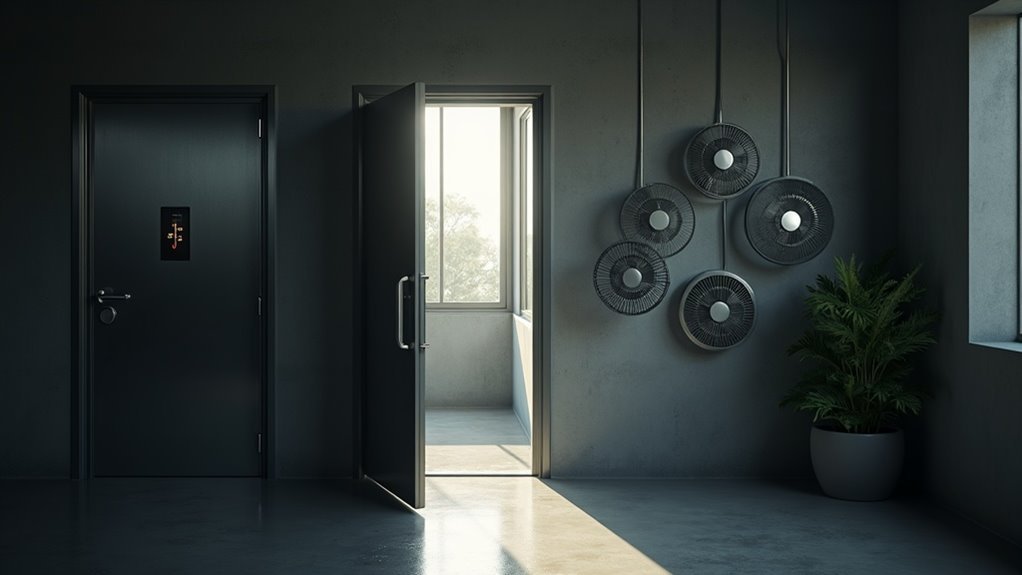
To set up ventilation in your safe room, ensure proper airflow by implementing a strategic combination of intake and exhaust vents. Position intake vents higher to allow warm air to escape, while utilizing exhaust fans to promote ideal circulation. Consider a mechanical ventilation system equipped with HEPA filters to ensure the air remains clean and free from contaminants. It’s crucial to maintain a positive pressure within the room to further prevent the ingress of harmful particles. Regularly check and maintain all ventilation components to avoid CO2 buildup, which could pose a risk in survival situations. For those interested in specific types of ventilation systems and best maintenance practices, there’s a wealth of information available to enhance your preparedness.
Key Takeaways
- Ensure a minimum air exchange rate of one per hour to maintain adequate airflow and fresh air circulation in the safe room, crucial for survival situations.
- Implement a mechanical ventilation system, such as Energy Recovery Ventilators (ERVs), to actively manage air exchange during prolonged stays in your safe room, ensuring you are prepared for extended emergencies.
- Position intake vents high and exhaust fans strategically to facilitate effective warm air escape and circulation, optimizing your safe room environment for comfort and safety.
- Regularly inspect and maintain all components, including filters and fans, to prevent carbon dioxide buildup and guarantee the efficiency of your ventilation system, which is vital during critical times.
- Document maintenance activities and monitor system performance to identify recurring issues, enhancing the overall effectiveness of your safe room setup and ensuring you are always ready for any situation.
Importance of Proper Ventilation in Safe Rooms
When considering the importance of proper ventilation in safe rooms, it’s evident that maintaining adequate airflow is vital for a healthy survival environment. Proper ventilation prevents carbon dioxide buildup, which can lead to dizziness and headaches during prolonged stays.
An effective design should include a minimum air exchange rate of one per hour to ensure fresh air circulation and optimal air quality, especially in emergency situations. Positioning vents high and low enhances airflow and helps regulate temperature, crucial for comfort and safety.
For larger safe rooms, incorporating mechanical ventilation systems like Energy Recovery Ventilators (ERVs) can actively manage air exchange, making them invaluable in a prepper’s arsenal.
Regular maintenance checks, including cleaning vents and replacing filters, are essential to prevent mold growth and ensure safety, allowing you to remain prepared for any scenario.
Key Components of Safe Room Ventilation Systems
To ensure your safe room is a reliable refuge for survival, it’s crucial to comprehend the essential components of its ventilation system.
An efficient NBC (Nuclear, Biological, Chemical) filtration system, equipped with nuclear-grade HEPA filters and carbon adsorbers, guarantees a supply of clean air while maintaining positive pressure.
An efficient NBC filtration system with nuclear-grade HEPA filters ensures a continuous supply of clean air under safe conditions.
Blast valves serve as a safeguard for your air supply, sealing the room during nearby explosions or threats.
Incorporating mechanical ventilation systems, such as Energy Recovery Ventilators, allows for effective air exchange, helping to balance humidity levels and enhance energy efficiency.
Additionally, regular maintenance—such as cleaning vents and replacing filters—is vital to prevent carbon dioxide buildup and mold growth, ensuring that the air pressure remains safe and breathable for occupants during critical situations.
Types of Ventilation Systems for Safe Rooms
When planning ventilation systems for your safe room, it’s crucial to understand the two primary options: passive and mechanical systems.
Passive systems rely on strategically placed vents to allow natural airflow, which can be beneficial in maintaining a fresh atmosphere without the need for power.
On the other hand, mechanical systems actively manage air exchange through fans and ducts, ensuring a constant supply of fresh air, especially during prolonged stays.
For those serious about survivalism and prepping, hybrid solutions that integrate both types may provide the ideal balance, enhancing air quality and comfort while minimizing reliance on external resources.
Passive Ventilation Benefits
Passive ventilation systems provide a crucial advantage for survivalists and preppers looking to maintain air quality in safe rooms. By incorporating strategically placed vents, these systems facilitate the flow of fresh air while allowing warm, stale air to escape.
High vents enable the release of warm air, while low vents draw in cooler air, improving airflow and overall comfort. This method is particularly effective in reducing humidity and preventing carbon dioxide buildup, which is vital for extended stays in sealed environments during emergencies.
Furthermore, passive ventilation is energy-efficient, requiring minimal energy input, thereby reducing operational costs—a key consideration for those preparing for long-term survival scenarios.
Regular maintenance of the system ensures optimal airflow and prevents blockages that could jeopardize air quality, making passive ventilation a practical and essential choice for any safe room designed for preparedness.
Mechanical Ventilation Advantages
While passive ventilation offers certain benefits, mechanical ventilation systems serve as a crucial asset in ensuring optimal air quality in safe rooms, especially in survival scenarios where natural airflow may be compromised.
Systems like Energy Recovery Ventilators (ERVs) are designed to actively replace stale air with fresh, breathable air, which is vital during emergencies. Equipped with high-efficiency filters, these systems effectively eliminate airborne toxins and allergens, creating a safer environment for long-term stays.
They’re particularly valuable in larger safe rooms, ensuring ideal air circulation and humidity control, which are essential for comfort and survival.
Regular maintenance, including timely filter replacements, is critical to prevent carbon dioxide buildup and ensure continuous efficiency in air exchange, thereby enhancing your preparedness and readiness in any situation.
Hybrid System Solutions
Hybrid ventilation systems for safe rooms are critical in survival situations, effectively combining passive and mechanical solutions to enhance air quality and circulation.
By utilizing passive ventilation through strategically placed high and low vents, you can facilitate natural air exchange, allowing fresh air to enter while expelling warm air.
In emergencies or extended stays, mechanical ventilation systems like ERVs ensure continuous air circulation and filtration, which are essential for maintaining a safe environment.
Incorporating an inline fan within a dual vent system also aids in humidity control, preventing stale air from becoming a hazard.
- Ensures breathable air quality for survival situations
- Prevents carbon dioxide buildup, vital for health
- Promotes comfort with balanced air circulation
- Provides fresh air during extended use in sealed environments
- Enhances safety in emergency situations by maintaining air flow
Designing Effective Airflow: Intake and Exhaust Strategies
To design effective airflow in your safe room, it’s crucial to strategically position intake vents high up to facilitate the escape of warm air, while also ensuring that exhaust fans are optimally placed for maximum air draw.
This two-tiered approach not only fosters continuous circulation but also preserves the integrity of the room.
Intake Vent Placement
Effective intake vent placement is crucial for optimizing airflow in your safe room, significantly impacting air quality and overall comfort—key factors in survival situations.
By positioning intake vents high, above doorways or near the ceiling, you can allow warm, stale air to escape, which promotes ideal air circulation essential for long-term preparedness.
Consider implementing two-hole vent systems with inline fans to enhance air movement and maintain stable air pressure, ensuring your safe room remains a viable refuge.
- Improve air exchange for a healthier environment in emergency situations
- Enhance comfort by effectively reducing humidity levels
- Minimize contamination from outside sources, crucial in crisis scenarios
- Maintain consistent airflow with regular maintenance to ensure readiness
- Create a secure haven for you and your loved ones during uncertain times
For optimal humidity control, strategically locate exhaust vents directly opposite the intake vents.
Exhaust Fan Design
Optimizing airflow in your safe room is crucial for ensuring a secure and comfortable environment. This requires meticulous attention to the design of your exhaust fan, which should work in harmony with your intake vent placement strategies. Position your exhaust fan on the wall opposite the intake vent to guarantee balanced airflow, which is essential in survival situations. Aim for a minimum air exchange rate of at least once per hour to effectively manage humidity and carbon dioxide levels, especially during extended stays.
Utilize an inline fan with ventilation pipes to enhance air movement. This setup allows stale air to exit through high vents while low intake vents draw in fresh air, creating a continuous flow that is vital for maintaining a breathable atmosphere. Regular maintenance checks are imperative to ensure your system remains efficient and reliable when you need it most.
| Feature | Purpose | Recommendation |
|---|---|---|
| High Vents | Expel stale air | Install near the ceiling |
| Low Intake Vents | Draw in fresh air | Position near the floor |
| Inline Fan | Enhance air movement | Use in a two-hole vent system |
Maintaining Overpressure for Air Quality Control
Maintaining overpressure in a safe room is crucial for survivalists and preppers, as it helps prevent airborne toxins from infiltrating the space. A well-sealed envelope combined with an effective NBC (Nuclear, Biological, Chemical) filtration system serves as the first line of defense in any emergency situation.
Maintaining overpressure in a safe room is vital for blocking airborne toxins, ensuring safety in emergencies.
To achieve optimal overpressure, consider the following essential components:
- Ensure a reliable air exchange rate of at least once per hour to maintain fresh air circulation.
- Utilize high-performance nuclear-grade HEPA filters to capture harmful particulates.
- Implement effective carbon adsorbers for the removal of toxic gases and fumes.
- Install blast valves to safeguard airflow during pressure fluctuations.
- Conduct regular checks using differential pressure gauges to monitor system integrity.
By integrating these elements, you can preserve air quality and create a secure environment for you and your loved ones in the face of potential threats.
Prioritize maintaining overpressure for enhanced safety and well-being.
Routine Maintenance and Filter Management for Ventilation Systems
To ensure your ventilation system operates at peak efficiency in a survival situation, routine maintenance and filter management are crucial.
Regularly inspect and clean your ventilation ducts to prevent dust accumulation, which can compromise air quality and your health. Replace pre-filters and HEPA filters in your NBC (Nuclear, Biological, Chemical) filtration system every 6 to 12 months to ensure optimal contaminant removal, particularly in emergency scenarios.
Keep an eye on differential pressure gauges to maintain proper overpressure and promptly address any air leaks that could undermine your safety. Schedule maintenance activities for mechanical components like fans and blast valves to ensure they’re functional during critical moments.
Additionally, keep a detailed log of these activities to track performance and identify any recurring issues that may need your attention, ensuring your preparedness in any situation.