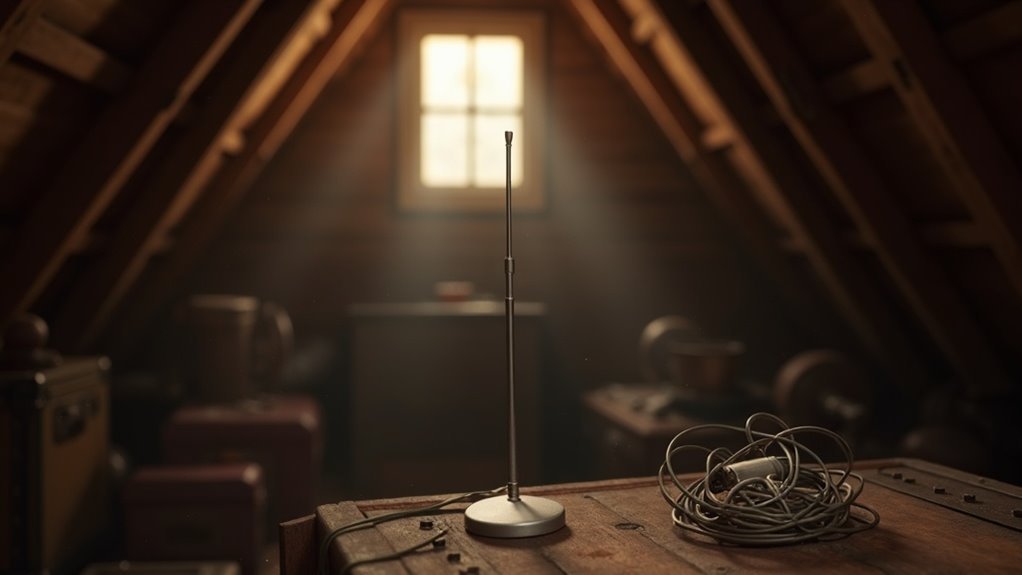
To set up an attic antenna discreetly as part of your survivalist preparations, select a compact model that fits your available space and minimizes visibility to avoid drawing attention. Securely mount it using a J-mount, positioning it toward broadcast signals for optimal reception, which is crucial for staying informed during emergencies. Connect it to your TV with RG-6 coaxial cable, and take care to organize and conceal the cables to maintain a low profile. Be aware of any local HOA or zoning regulations that might apply, as they can impact your setup. As you delve deeper into this topic, you’ll uncover additional strategies for enhancing reception and ensuring compliance with local laws, ultimately helping you stay prepared and informed in uncertain times.
Key Takeaways
- Select a compact, low-profile antenna design that minimizes visibility and blends seamlessly with your attic environment, ensuring you maintain a low profile in your prepping efforts.
- Position the antenna in a corner of the attic to keep it concealed while maximizing reception, which is essential for staying informed in emergencies.
- Utilize RG-6 coaxial cable for a streamlined installation, reducing clutter and enhancing signal quality for reliable access to vital information.
- Securely mount the antenna with a J-mount, ensuring stability while maintaining the aesthetics of your attic, which can be important for stealth during uncertain times.
- Regularly scan for over-the-air channels to ensure optimal reception, allowing you to stay connected and informed while keeping your setup discreet for survival purposes.
Who Should Use An Attic Antenna?
Are you concerned about staying informed during emergencies or natural disasters? If you have extra attic space, an attic antenna might be the perfect solution for you.
It’s ideal for those wanting to enhance their access to crucial information without relying solely on internet services or expensive cable bills. Many survivalists and preppers, especially in areas with HOA restrictions, find attic antennas a practical choice for receiving emergency broadcasts and local news.
Ideal for those seeking reliable access to emergency broadcasts and local news without internet or high cable costs.
If you’re frustrated with your current setup—like having just a limited number of channels—you’ll appreciate the potential to access a wider range of broadcasts.
Whether you’re in a rural or urban area, an attic antenna can significantly improve your ability to stay connected and informed during critical times.
Potential Obstacles To An Attic Antenna
While attic antennas can be a practical solution for receiving broadcasts in a survivalist setting, several potential obstacles can hinder their performance.
Building materials like metal siding or brick may block signals, making it challenging for your antenna in the attic to achieve optimal reception when you need information the most. Nearby obstructions such as trees and tall buildings can further interfere with signal strength, particularly in rural areas where situational awareness is crucial.
Attic installations can lead to a 40-50% loss of signal strength compared to outdoor options, which may be a significant drawback in emergency situations. Additionally, proximity to air conditioning lines and electrical wiring can degrade signal quality, reducing your access to valuable updates.
Utilizing antenna amplifiers can help boost signal strength, enhancing performance despite these limitations and ensuring you remain informed during critical times.
How To Install An Attic Antenna
Installing an attic antenna can be a valuable part of your survivalist and prepping strategy, ensuring you receive vital broadcast signals even amidst potential challenges.
Begin by measuring your attic space to make sure it accommodates the antenna installation. For secure mounting, consider using a J-mount, which is readily available online for approximately $20. Point the antenna toward broadcast signals, utilizing resources like Antennas Direct’s map or apps like Antenna Point to identify optimal directions.
Next, run RG-6 coaxial cable from the attic to your television, which may involve drilling holes for a neat and organized setup.
After installation, it’s essential to regularly scan for over-the-air (OTA) channels on your TV, as new channels may become available. This capability can enhance your access to critical information during emergencies and ensure you stay informed in uncertain times.
Top Attic Antenna Models
When selecting the right attic antenna for your survival and prepping needs, it’s vital to consider factors such as your geographical location and the types of signals available, especially in times of crisis.
Here are some top attic antenna models to evaluate that will help ensure you stay informed:
- GE Attic-Mount Antenna: Known for its reliable performance and straightforward installation, making it a practical choice for emergency preparedness.
- RCA Outdoor Yagi: This model is particularly advantageous for rural areas, boasting a range of over 70 miles to help you access vital information from afar.
- ClearStream 2V: Offers omnidirectional reception, allowing you to capture signals from multiple directions—essential for tracking news and updates during uncertain times.
- Channel Master 4228HD: A directional option that excels in urban environments with numerous transmitters, ensuring you have consistent access to essential broadcasts.
- Tablo DUAL/QUAD: Ideal for those who want to record and stream multiple channels, keeping you connected to crucial information during emergencies.
Pair Your Antenna With an OTA DVR
Pairing your attic antenna with an OTA DVR can significantly improve your preparedness for any situation.
With devices like the Tablo DUAL or Tablo QUAD, you can record live television and stream important news or survival shows throughout your home.
This setup not only allows you to access vital information at your convenience but also reduces reliance on cable subscriptions, ensuring you stay informed even in challenging times.
Embracing this technology is a smart move for anyone focused on survivalism and prepping.
Enhanced Viewing Experience
Enhancing your survival skills and preparedness becomes effortless with the right combination of an attic antenna and an OTA DVR.
By pairing these devices, you can enjoy a wide array of benefits that are essential for staying informed and ready:
- Record, pause, and rewind live emergency broadcasts
- Tablo DUAL stores up to 80 hours of crucial HD content, ensuring you don’t miss vital information
- Tablo QUAD accommodates up to 700 hours for larger families, keeping everyone updated
- Stream multiple channels simultaneously, ideal for accessing various emergency alerts and survival programming
- Built-in Wi-Fi allows for optimal antenna placement and streaming to multiple devices, ensuring you stay connected even in challenging situations
With an antenna mounted in your attic, you’ll achieve an enhanced viewing experience that caters to all your survival and preparedness needs.
Recording Live Television
The combination of an attic antenna and an OTA DVR can elevate your preparedness by enabling you to record live television.
With devices like the Tablo DUAL 128GB or the Tablo QUAD 1TB, you can capture essential news broadcasts, emergency alerts, and survival shows, ensuring you’re informed during critical situations.
Ensure your TV antenna is properly installed and aimed using an antenna mast for optimal signal strength. Regularly rescanning for channels keeps your DVR updated with the latest information.
This seamless integration not only enhances your viewing experience but also allows you to pause, rewind, and revisit crucial content whenever you need to stay informed and prepared.
Channel Streaming Options
When you combine your attic antenna with an OTA DVR, you’ll unlock a range of survivalist and prepping-related streaming options that can enhance your knowledge and preparedness.
These devices can greatly improve how you consume essential information:
- Record up to 80 HD hours (Tablo DUAL) or 700 hours (Tablo QUAD) of crucial survival content
- Stream multiple educational channels simultaneously (two or four, respectively) to broaden your skill set
- Pause, rewind, and schedule recordings of vital live broadcasts that could aid in emergency situations
- Compatible with various antenna models for optimal reception of survival programming
- Eliminate cable subscriptions while accessing free over-the-air channels that provide important updates and survival strategies
Tools Needed for Installation
To successfully install your attic antenna as part of your preparedness plan, you’ll need a few essential tools.
Ensure you have RG-6 coax cable, a coaxial cable cutter, and a reliable drill among others to facilitate a smooth setup.
Additionally, don’t overlook the importance of safety equipment to protect yourself while working in tight or confined spaces, especially in a survival situation where being prepared is crucial.
Essential Tools Required
Installing an attic antenna is an important step for survivalists and preppers looking to maintain communication and access vital information in uncertain times.
To ensure a smooth and successful setup, you’ll need the following essential tools for effective antenna installation and optimal performance:
- RG-6 coax cable: This high-quality cable ensures better signal reception, which is crucial for staying connected during emergencies.
- Coaxial cable cutter and stripper: These tools are essential for preparing the cable properly, allowing for efficient connections.
- F-connectors and a compression crimper: Secure connections are vital for preventing signal loss, making these tools indispensable.
- Plastic coax cable clips: Keep your cables organized and secure to avoid any hazards in your attic space.
- A drill with suitable bits: This will help you route cables with minimal damage, ensuring a clean installation.
Also, don’t forget to bring a flashlight or headlamp for visibility in the often dim attic environment.
Having these tools on hand will significantly enhance your installation process, allowing you to set up your antenna effectively and prepare for any situation.
Safety Equipment Checklist
Before you begin setting up your attic antenna, it’s essential to prioritize safety and preparedness by gathering the right equipment to protect yourself during the installation process.
Make sure you wear appropriate safety gear, such as long sleeves, a respirator, and safety glasses, to shield yourself from dust and debris, particularly when handling roofing materials.
Equip yourself with a reliable drill and the correct bits for aluminum, along with a flashlight or headlamp for visibility in the often dim conditions of an attic.
Additionally, have RG-6 coax cable on hand, as well as essential tools like a coaxial cable cutter, stripper, and compression crimper ready to ensure a smooth and safe installation.
Being prepared with the right tools and safety gear isn’t just about the installation; it’s a crucial part of your overall survival strategy.
Tips for Improving OTA Reception
Achieving optimal over-the-air (OTA) reception is crucial for survivalists and preppers who rely on reliable information and communication. Here are some tailored strategies to enhance your antenna’s signal quality:
Optimal OTA reception is essential for survivalists and preppers seeking reliable information and communication.
- Position the antenna as high as possible to maximize its range, ensuring it’s free from obstructions such as trees or buildings that could block signals.
- Consider using a high-gain antenna to effectively capture weaker signals, especially in remote areas where reliable communication is vital.
- After adjusting the antenna’s position, regularly scan for available channels to ensure you’re receiving the most current information.
- Install low-noise pre-amplifiers to boost signals before they reach coaxial cables, enhancing overall reception quality.
- Maintain a minimum distance of six feet from metal objects and electrical wiring to reduce potential interference, ensuring your communication remains clear.
Legal Considerations for Antenna Installation
When you decide to set up an antenna as part of your survivalist and prepping strategy, it’s essential to understand the legal landscape surrounding installations. Homeowners have the right to install antennas on their property, as stated by FCC regulations, which can be crucial for maintaining communication in emergency situations.
However, you’ll need to take into account local zoning laws and homeowners’ association (HOA) rules, which may restrict antenna visibility and height. While attic installations usually don’t require permits, they can result in a significant loss of signal strength, potentially hindering your ability to receive critical information.
To guarantee compliance and avoid issues, always check local building codes and HOA guidelines. If restrictions arise, consider options like concealed antennas or alternative installation methods that can help you stay connected while adhering to regulations.