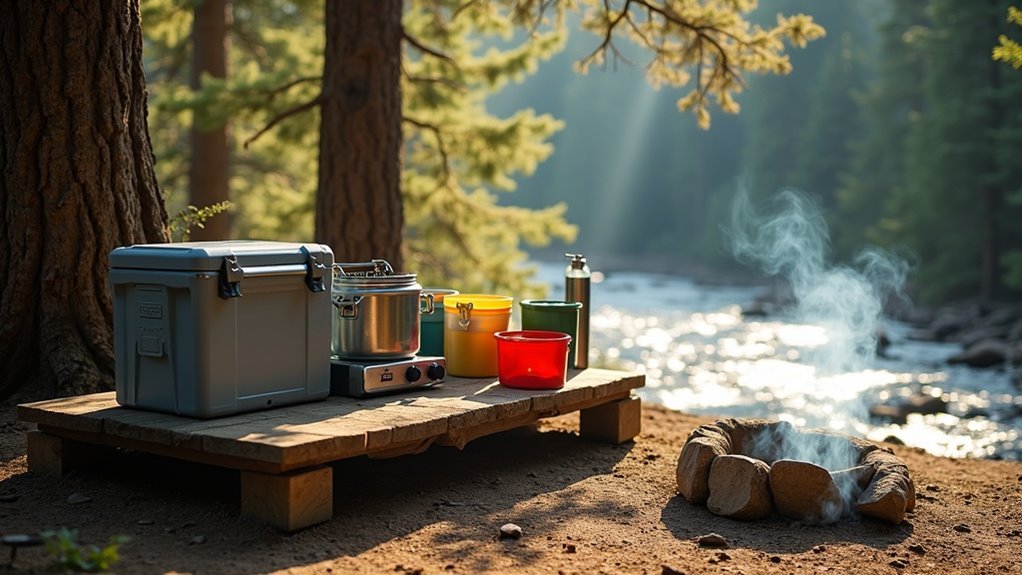
To set up a wildlife-safe camp kitchen, select a location at least 200 feet from water sources and away from well-trodden trails. Invest in durable, critter-proof containers to securely store your food supplies and maintain a clean cooking area. Always utilize a three-sink system for washing dishes and ensure that all waste is disposed of properly, at least 200 feet from your campsite. Be mindful that wildlife is drawn to scents, so it’s crucial to manage odors effectively. Continuously educate yourself on proven strategies to enhance your outdoor survival skills and overall camping experience.
Key Takeaways
- Choose a cooking area at least 200 feet away from sleeping quarters to reduce food odors that could attract wildlife, ensuring a safer camping experience.
- Utilize bear-resistant containers and odor-proof bags to securely store food, preventing wildlife from accessing your supplies and maintaining your preparedness.
- Clean all cooking equipment immediately after use, and dispose of food scraps in sealed bags to minimize attractants that could compromise your survival efforts.
- Establish a three-sink dishwashing system to filter out food particles before disposing of wash water far from the campsite, keeping your area clean and safe.
- Separate food storage and cooking zones to further minimize potential attractants, ensuring a secure and effective camping environment for your survival needs.
Choosing the Right Campsite Location
When selecting a campsite for survival or prepping purposes, prioritize a location that’s at least 200 feet away from water sources. This distance is crucial for protecting local wildlife habitats and ensuring that animals have access to essential water without human interference.
Choose a campsite that minimizes wildlife disturbances by avoiding well-trodden areas and trails. This won’t only decrease the likelihood of encounters with animals but also help keep your food securely stored and out of reach from curious creatures.
Minimize wildlife encounters by selecting a campsite away from well-trodden areas, keeping food safely stored from curious animals.
Additionally, consider wind direction when setting up your cooking area; position it away from your sleeping quarters to prevent cooking odors from wafting into your tent.
Look for established fire rings, as they typically indicate safer locations that are less frequented by wildlife, ensuring a more secure and peaceful camping experience.
Essential Gear for a Wildlife-Safe Camp Kitchen
To ensure your camp kitchen is wildlife-safe, it’s crucial to equip yourself with the appropriate gear.
Invest in robust, critter-proof food storage solutions, such as bear-resistant containers, to safeguard your provisions.
Utilize odor-reducing supplies to further minimize scents that might attract wildlife.
Moreover, maintaining a high level of cleanliness is vital—clean your cooking equipment immediately after use to prevent drawing animals to your campsite.
This preparation is essential for survival in the wilderness.
Critter-Proof Food Storage
While embracing survivalism and prepping, ensuring your food is securely stored is crucial for avoiding unwanted wildlife encounters. In bear country, implementing bear-proof containers like BearVault or Ursack can protect you from dangerous situations. To assist you in managing your food storage effectively, here’s a quick reference:
| Storage Method | Effectiveness | Additional Tips |
|---|---|---|
| Bear-proof containers | High | Store at least 200 feet away from sleeping areas |
| Odor-proof bags | Moderate | Pack out leftovers tightly to reduce scent |
| Hard-sided totes | High | Keep out of sight to deter wildlife |
| Locked vehicles | High | Ensure all food is securely stored and out of reach |
| Designated storage | High | Keep food separate from cooking zones to minimize attractants |
Implement these strategies to enhance your safety and preparedness in the wild!
Odor-Reducing Cooking Supplies
Establishing a wildlife-safe camp kitchen is crucial for survivalists and preppers looking to maintain a secure campsite. By utilizing odor-reducing cooking supplies, you can significantly decrease the likelihood of attracting unwanted wildlife.
Here are four essential items to consider:
- Odor-proof containers designed for food and cooking supplies to minimize wildlife attraction and keep your provisions secure.
- Unscented cooking and cleaning products that prevent drawing animals into your campsite, ensuring your safety and the integrity of your supplies.
- A portable, sealable trash container that effectively contains waste and limits odors, crucial for maintaining a clean environment.
- A camp stove instead of an open fire, which helps keep cooking smells contained and reduces the risk of attracting unwanted attention from local wildlife.
Effective Cleanliness Practices
Maintaining cleanliness in your camp kitchen is crucial for survivalism and prepping, as it helps deter wildlife and ensures a secure outdoor experience.
Always position your cooking and food storage areas at least 200 feet away from sleeping sites to minimize potential encounters with animals.
Utilize a scrim cloth beneath your cooking surface to catch food scraps, simplifying cleanup and reducing waste.
Implement a four-bin dishwashing system to effectively clean dishes while conserving water and preventing debris from scattering.
Store all food in odor-proof containers, securing them in hard-sided totes or bear-proof canisters to protect your supplies.
Promptly clean up spills and leftover food, and dispose of trash in designated bins to minimize enticing odors, which could attract unwanted wildlife.
Prioritizing cleanliness is a vital part of maintaining your preparedness in the wilderness.
Proper Food Storage Techniques
To ensure your survival and safety while camping in natural areas, it’s essential to employ effective food storage techniques.
These practices will help keep wildlife at bay and minimize risks:
- Store all food in bear-proof containers such as BearVault or Ursack to deter wildlife from accessing your supplies.
- Utilize odor-proof plastic bags inside your containers to contain food particles and reduce scents that attract animals.
- Maintain a distance of at least 200 feet between your food and cooking items and your sleeping areas to avoid attracting wildlife during the night.
- Always pack out all food scraps and leftovers in sealed odor-proof bags to prevent leaving traces that may lure animals to your campsite.
Creating a Clean Cooking and Dining Area
To create a clean cooking and dining area in a survival situation, start by establishing a designated zone at least 200 feet from your sleeping quarters. This distance helps minimize the risk of attracting unwanted wildlife.
Implement effective waste management practices, such as using sealed containers for food storage and proper disposal methods for scraps, to ensure that your area remains hygienic and safe.
Keeping your cooking and dining space organized and tidy not only promotes efficiency but also significantly reduces the likelihood of animal encounters, which is crucial for your safety and well-being in a survival scenario.
Designated Cooking Zone
Creating a designated cooking zone is crucial for your survival and safety in the wilderness, as well as for deterring wildlife. To establish an effective camp kitchen that aligns with survivalism principles, consider these key elements:
- Distance Matters: Set up your cooking zone at least 200 feet away from sleeping areas to minimize the risk of attracting unwanted animals.
- Stable Ground: Choose a flat, level surface for cooking to ensure stability while preparing meals, particularly when using portable cooking equipment.
- Secure Dining Setup: Utilize a portable table and chairs for dining, ensuring that food is kept out of reach to prevent wildlife encounters.
- Odor Management: Lay down a scrim cloth or tarp to catch spills and reduce odors, which can attract animals and compromise your safety.
Waste Management Practices
When venturing into the wilderness, effective waste management is crucial for maintaining a clean camp and minimizing encounters with wildlife.
Implement a three-sink method for dishwashing: soak, rinse, and final rinse, to ensure that all food particles are thoroughly removed. Use scrim cloths under cooking surfaces to catch food scraps, making cleanup more efficient.
Set up a waste management station with designated containers for garbage, compost, and recycling. Always pack out food scraps in odor-proof bags and promptly clean up any spills to uphold Leave No Trace principles.
Adopting these practices not only promotes cleanliness but also significantly reduces the chances of attracting wildlife, a key consideration for those focused on survival and preparedness.
Managing Waste and Leftovers
Properly managing waste and leftovers is crucial for survivalists and preppers who want to maintain a wildlife-safe environment at their campsites.
Effective waste management is essential for survivalists seeking to keep their campsites safe from wildlife.
Follow these steps to ensure you minimize risks and protect your supplies:
- Store food scraps and leftovers in odor-proof plastic bags or bear canisters to deter wildlife.
- Clean up immediately after meals, ensuring spills and scraps are disposed of properly to avoid attracting animals.
- Use designated trash receptacles or securely store trash in vehicles overnight to keep it out of reach of wildlife.
- Implement a three-sink dishwashing system, straining wash water to filter out food particles, which can attract unwanted creatures.
Understanding Wildlife Behavior
Understanding wildlife behavior is crucial for survivalists and preppers looking to keep their campsites safe from unwanted animal encounters. Wildlife, particularly bears, possess an incredible sense of smell, enabling them to detect food from over a mile away. Therefore, implementing proper food storage techniques is essential to avoid attracting them.
Opportunistic feeders like raccoons and squirrels are known to scavenge for easily accessible food, so utilizing secure storage methods is vital in wilderness settings. At night, nocturnal animals become active in their search for food, which can lead to chaotic and potentially dangerous situations if precautions aren’t taken.
Moreover, animals that become habituated to human food can pose significant threats, as they may lose their natural fear of humans. By understanding that wildlife behavior differs by species and region, preppers can develop tailored food storage and campsite management strategies that effectively deter unwanted visitors, ensuring safety and security during outdoor adventures.
Implementing Leave No Trace Principles
To ensure the safety of both wildlife and your campsite while engaging in survivalism and prepping activities, it’s crucial to implement Leave No Trace principles.
Adhere to the following guidelines during outdoor cooking:
- Establish cooking and food storage zones at least 200 feet away from sleeping areas to minimize wildlife encounters.
- Promptly clean all food spills and leftover particles to prevent attracting animals.
- Strain wash water and dispose of it at least 200 feet away from your camp and any water sources to protect the ecosystem.
- Pack out all trash in odor-proof bags and refrain from burning waste to reduce environmental impact.
Preparing for Unexpected Wildlife Encounters
While you may take all the necessary precautions to secure your camp kitchen, unexpected wildlife encounters can still occur. Always store food and scented items in bear-proof containers or a locked vehicle to minimize the risk of attracting animals.
Set up your cooking area at least 200 feet from sleeping zones, creating a buffer against nighttime visits. Clean your cooking surfaces regularly and dispose of scraps in odor-proof bags to prevent attracting unwanted wildlife.
Implementing a three-sink system for washing dishes ensures no food particles linger, which is crucial for maintaining a safe camp environment. Familiarize yourself with local rules regarding wildlife to stay informed and prepared during your camp cooking adventures.
Being proactive and knowledgeable about your surroundings is an essential part of survivalism and prepping.