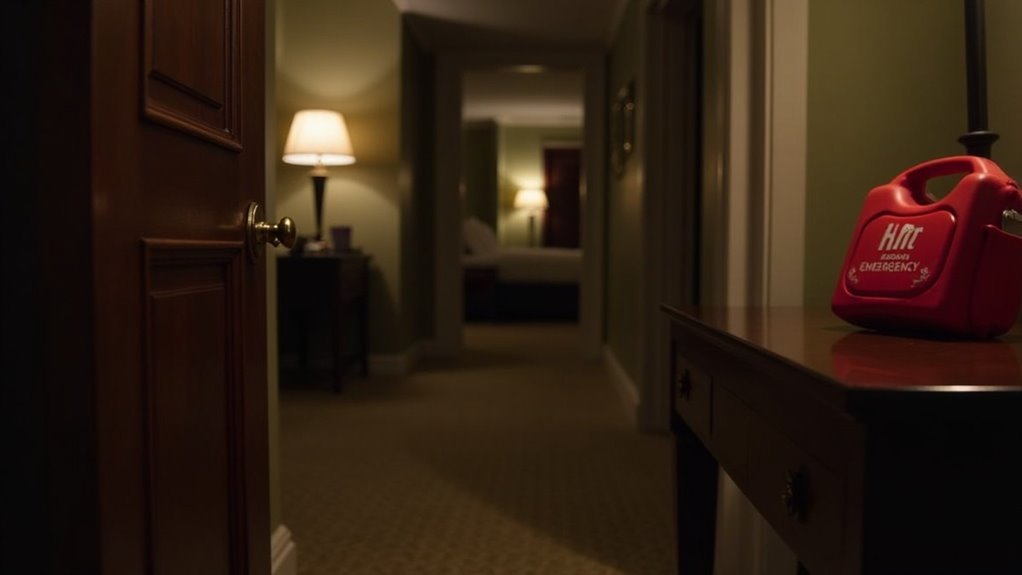
To secure your hotel room during emergencies, it’s crucial to familiarize yourself with the layout and identify emergency exits immediately upon arrival. Keep essential items, such as your room key, a flashlight, and a personal safety device, within easy reach for quick access. Enhance your room’s security by using portable safety devices like door alarms and wedges. Always inspect locks and windows to ensure they are functioning properly. Being prepared and aware significantly boosts your confidence in crises. Interested in more effective strategies for hotel safety and survival? There’s a wealth of information to explore in the realm of survivalism and prepping.
Key Takeaways
- Employ travel door alarms and wedges to fortify your hotel room against unauthorized access during emergencies, enhancing your security measures.
- Before settling in, thoroughly inspect the locks and windows of your room to ensure they provide maximum protection.
- Keep critical items, such as your room key and wallet, within reach for a swift evacuation if necessary.
- Acquaint yourself with the hotel’s emergency exit plan and locate the nearest stairwell to ensure a quick escape route.
- Invest in portable safety devices like motion detectors to bolster your security and provide additional peace of mind during your stay.
Understanding Hotel Emergencies
When you’re staying at a hotel, it’s crucial to recognize that emergencies can arise unexpectedly, whether from natural disasters or other unforeseen circumstances.
Hotels face numerous risks, including fires, civil unrest, and other crisis situations. It’s essential to familiarize yourself with the emergency procedures and evacuation plans upon arrival; knowing the exit routes can significantly enhance your survival chances.
Trained staff are equipped to implement safety protocols, ensuring guests remain secure during crises. Don’t hesitate to inquire with hotel management about specific safety measures, especially if you’re traveling with individuals who’ve disabilities.
Being prepared and informed can greatly improve your ability to respond effectively in any emergency situation. Always prioritize your safety and think ahead about potential risks when traveling.
Pre-Arrival Safety Measures
Understanding how to respond in emergencies is crucial, but taking proactive steps before you arrive at a hotel can significantly enhance your safety and preparedness.
Consider these pre-arrival safety measures that align with survivalism and prepping principles:
- Always carry a reliable flashlight to navigate your hotel room during power outages, ensuring you can maintain visibility and personal safety in uncertain situations.
- Pack non-perishable, easy-to-make snacks to sustain yourself during unexpected circumstances or disruptions in services.
- Utilize a travel tray to keep essential items like room keys, wallets, and other survival gear organized and easily accessible.
- Familiarize yourself with the hotel layout, including emergency exits and the nearest safe zones, to guarantee swift evacuations and enhance personal security.
These actions not only reinforce your safety within a hotel setting but also align with broader survival strategies and preparedness protocols.
Familiarization Upon Arrival
Upon checking into your hotel, it’s crucial to take immediate steps to familiarize yourself with the surroundings for your safety and preparedness.
Keep essential items like your room key, wallet, and any necessary survival gear within easy reach to enhance access during emergencies. Review the emergency exit map located on your room’s entry door to identify exits, safety features, and potential escape routes.
Place slip-on shoes near your bed for quick access if you need to evacuate swiftly. Conduct a thorough inspection of your room, ensuring all locks and windows are secure and can be easily accessed.
Finally, locate the nearest stairwell, as elevators may not function during emergencies. Familiarizing yourself with these aspects now can significantly improve your safety and readiness as a guest in any situation.
Conducting Safety Drills
Practicing safety drills is crucial for survival preparedness, ensuring that everyone is equipped with the knowledge and skills needed in an emergency.
Involve your children in these drills to enhance their learning experience and make it enjoyable, reinforcing their understanding of escape routes, meeting points, and emergency protocols.
Regular practice not only fosters confidence but also hones everyone’s ability to respond effectively during real-life emergencies, a vital aspect of survivalism and prepping.
Importance of Practice
While emergencies can arise unexpectedly, conducting regular safety drills in hotel rooms is crucial for preparing guests for such situations.
Here are four key benefits of practicing safety drills from a survivalism and prepping perspective:
- Familiarizes guests with emergency exits and evacuation routes, reducing panic in high-stress situations.
- Enhances response times during crises by instilling practiced protocols, allowing individuals to react swiftly and effectively.
- Reinforces a sense of security and preparedness, assuring both guests and staff that they’re equipped to handle emergencies.
- Boosts the hotel’s reputation for safety and preparedness, leading to positive reviews and encouraging repeat business from those who value a secure environment.
Regular practice not only improves safety but also empowers families and individuals, fostering a calm and effective response during real emergencies.
Emphasizing preparedness is essential in today’s unpredictable world, ensuring everyone is ready for anything.
Engaging Children Effectively
How can you effectively engage children during safety drills in a survival situation? Conduct mini-drills to familiarize them with emergency procedures, which can significantly reduce panic when it matters most.
Discuss designated meeting spots outside your safe location, ensuring they know where to gather after an evacuation. Practice descending stairwells calmly and emphasize the importance of wearing sturdy shoes and grabbing essential items quickly.
This proactive preparation enhances safety and shortens evacuation time. Regularly review drills to adapt to their growing understanding, keeping them engaged and informed.
Hotel Room Safety in a Fire
In the event of a fire, having a solid escape plan can mean the difference between survival and peril. Familiarize yourself with the emergency procedures outlined on the exit map posted on your guest room door.
Here are four essential steps to follow:
- Immediately activate the nearest fire alarm if you detect flames or smoke.
- Evacuate using the stairs, as elevators may become inoperative or dangerous during a fire.
- Conduct mini-drills with your companions to practice your exits and evacuation routes regularly.
- Always close doors behind you to help contain fire and smoke, and use a wet cloth to cover your mouth if smoke is present.
Being prepared not only enhances your safety but also contributes to the overall security and reliability of the hotel.
Stay vigilant and ready to act in emergencies.
Utilizing Portable Safety Devices
When staying in a hotel, incorporating portable safety devices can significantly bolster your security and preparedness.
Travel door alarms and door wedges act as effective barriers against unauthorized entry, giving you peace of mind during your stay.
Motion detection alarms serve as an early warning system, alerting you to any movement in your room and providing an additional layer of protection against potential intruders.
Furthermore, the Lock Locker can be secured around the door handle and deadbolt, making it nearly impossible to gain access even with a key.