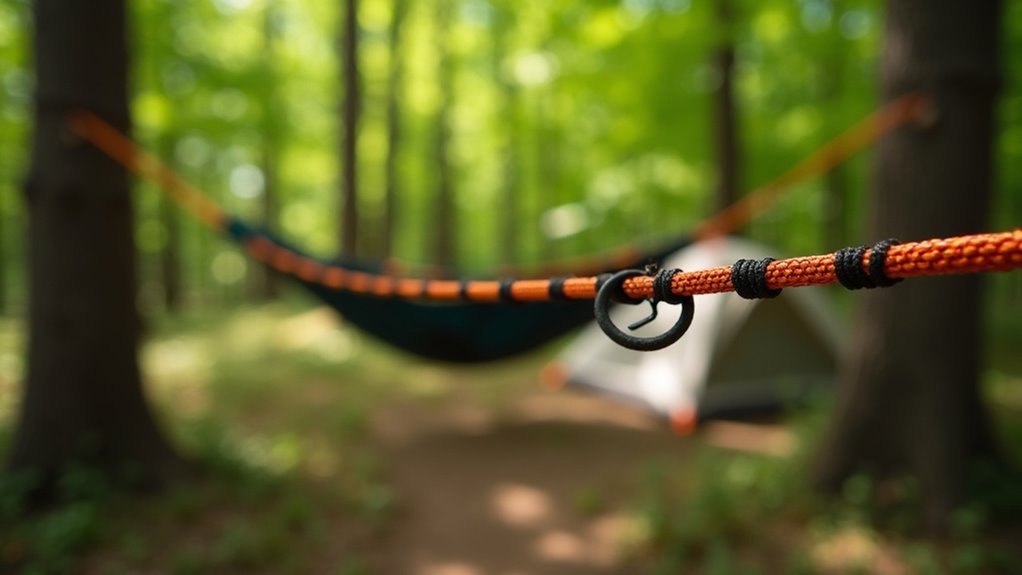
To rig a ridgeline with paracord for survival situations, begin by gathering a 30-foot piece of durable paracord, a sturdy tarp, a reliable peg, and a strong carabiner. Start by creating a marlin spike hitch: loop the paracord and secure it with the peg to ensure a tight and reliable knot. Next, attach the line to a sturdy tree or anchor point, and adjust the tension to ensure stability. Experiment with various tarp arrangements to maximize coverage and protection from the elements. Continuously refine your technique through practice, as this will enhance your ability to adapt and succeed in different survival scenarios.
Key Takeaways
- Cut a 30-foot piece of paracord to use for strength and flexibility in your ridgeline setup, crucial for survival situations.
- Create a marlin spike hitch by forming a loop with the paracord and securing it with a sturdy peg, ensuring your shelter remains reliable.
- Attach the paracord to robust trees or anchors, making sure to maintain tension while allowing for flexibility to adapt your tarp configurations for various weather conditions.
- Use a half hitch around the peg to enhance security and prevent slippage, especially important in windy scenarios that can compromise your shelter.
- Experiment with different tarp shapes and setups to discover the most effective configuration for your needs, ensuring you are well-prepared for any outdoor challenge.
Materials Needed for Ridgeline Setup
When you’re ready to rig a ridgeline with paracord for your survival setup, gathering the right materials is crucial for an efficient and effective process.
Start with a 30-foot piece of paracord, which offers the strength and flexibility necessary for various survival scenarios. Ensure you have a tarp measuring at least 10 feet long to provide adequate coverage and protection from the elements. A sturdy peg or stake is essential for securing the marlin spike hitch and maintaining tension in your setup.
Begin with a 30-foot paracord and a 10-foot tarp for effective shelter in survival situations.
For cutting the paracord, keep a knife or scissors handy, and consider using a carabiner for easy attachment to anchor points. A tensioning device, such as a half hitch, can also be a valuable addition to ensure your setup remains taut.
If possible, having a second person to assist with managing the tarp’s positioning can make the process smoother, especially in challenging conditions. Being prepared with these materials will enhance your ability to create a reliable shelter in any survival situation.
Step-by-Step Guide to Marlin Spike Hitch
To create a reliable marlin spike hitch, essential for survival scenarios, begin by making a loop with your paracord; cross the rope from your right hand to form the loop while pinching it in place. This technique is crucial for securing items or creating shelter in outdoor situations.
Next, lay the loop back down on the main rope and pull it towards the direction you’re tying. Insert a peg into the loop for secure tension, ensuring you have a reliable anchor point.
Here’s a step-by-step guide:
- Pull the rope around a sturdy tree or anchor for a strong hold, which is vital in survival situations.
- Adjust the setup while maintaining tension to keep it secure.
- Tighten the hitch firmly to ensure it won’t slip under pressure.
- Add a half hitch with the peg for extra security, reinforcing the knot’s reliability.
- Before putting your setup to use, verify that everything’s snug and secure, ensuring safety in the field.
Mastering this knot can be invaluable in emergency situations where securing gear or creating makeshift supports is necessary for survival.
Mastering Tension Management Techniques
Mastering tension management techniques is essential for creating a stable and effective ridgeline in survival situations.
Start by using a marlin spike hitch, which allows for quick adjustments without needing to run the entire cord through, making it ideal for dynamic environments. Always work from the base tree to the anchor tree to maintain control and ensure that your setup remains secure.
As you tighten the line, roll the rope in the direction of tension to keep it taut, which is vital for maintaining the integrity of your shelter. For added security, consider incorporating a half hitch around a peg after setting the initial tension with the marlin spike hitch.
Proper execution of these techniques guarantees flexibility in tarp configurations and stability across various tree sizes and distances, ensuring you’re well-prepared for any outdoor scenario.
Exploring Configuration Flexibility
While exploring configuration flexibility in your ridgeline setup, it’s crucial for survivalists and preppers to adapt your tarp to varying weather conditions and terrain features. Here’s how you can effectively achieve this:
- Utilize a 30-foot paracord for versatile distance adjustments, ensuring you can modify your setup based on immediate needs.
- Adjust the marlin spike hitch to accommodate different tree sizes, allowing you to secure your shelter in diverse environments.
- Maintain tension while working from the base tree to the anchor tree, which is vital for stability in unpredictable weather.
- Incorporate a half hitch with a peg for extra security, reinforcing your tarp against strong winds and heavy rain.
- Experiment with different tarp shapes to enhance shelter stability, enabling you to create a reliable refuge in any survival scenario.
These techniques ensure your setup remains secure, stable, and ready to withstand whatever nature throws your way, a key component of effective preparedness.
Engaging With the Community for Improvements
Engaging with the community is essential for enhancing your skills in rigging a ridgeline with paracord, especially in the context of survivalism and prepping. By sharing diverse techniques and inviting feedback, you cultivate a collaborative environment that encourages innovation and resilience.
Organize discussions or workshops focused on mastering various tarp configurations that can be crucial in emergency situations, while also building your confidence in outdoor skills. Sharing video tutorials or guides on social media can broaden your reach, facilitating community learning and promoting effective survival practices.
Actively seek and value input from fellow survival enthusiasts; it not only sharpens your skills but also fosters camaraderie among those dedicated to wilderness survival and preparedness. Connect, learn, and grow together for a more resilient future.