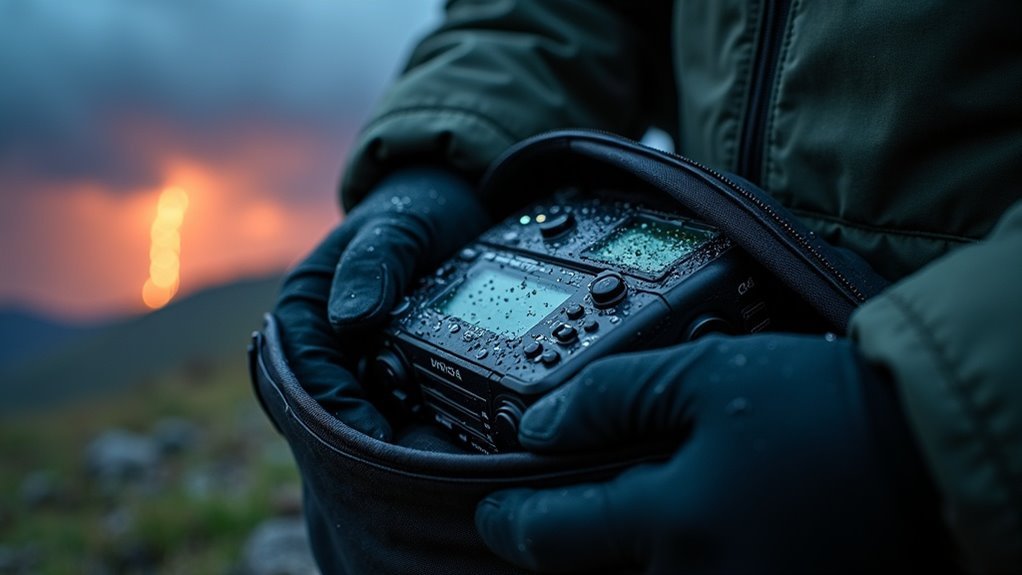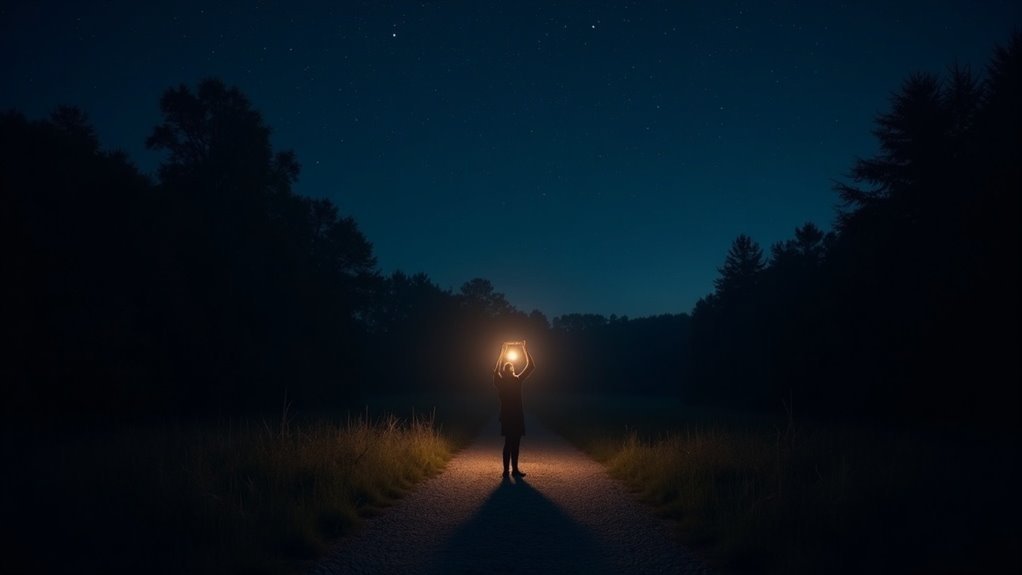
To practice light discipline at night while focusing on survivalism and prepping, keep your light settings as low as possible to maintain a low profile. Utilize red or green filters to preserve your night vision and reduce the risk of detection by potential threats. Adjust your light angle to navigate effectively without blinding others nearby, illuminating only when absolutely necessary to conserve battery life and maintain stealth. Handheld lights are ideal for quick navigation in emergency situations, while headlamps offer hands-free operation for tasks that require both light and mobility. By consistently evaluating your light usage and adapting to your environment, you’ll enhance your nighttime stealth and improve your overall preparedness for any survival scenario.
Key Takeaways
- Utilize the lowest effective light setting to maintain your night vision and minimize the risk of detection during survival situations.
- Choose red or green light options to preserve rod function in your eyes, while also reducing visibility to potential threats.
- Direct your light beam down and forward to prevent blinding others and to improve your navigation in unfamiliar terrain.
- Regularly practice adjusting brightness levels and light angles according to the specific conditions of your environment.
- Ensure bright lights are turned off near your campsite to respect the stealth of your group and to avoid drawing attention to your presence.
The Importance of Light Discipline
Understanding the importance of light discipline is crucial for anyone engaged in survivalism and prepping, especially in low-light environments. Proper light discipline helps you preserve your night vision while reducing the risk of detection by wildlife or potential threats.
Over-lighting can compromise your position, so it’s vital to control your light usage by opting for low brightness and activating illumination only when absolutely necessary.
Be mindful that reflective surfaces can expose your location, and certain colors, like red and green, are less disturbing to sensitive animals, such as deer, making them preferable for navigation and signaling.
Techniques for Effective Light Management
Effective light management is crucial for survivalists operating in low-light environments while maintaining a low profile. Instead of increasing brightness, adjust the angle of your light sources to navigate obstacles without compromising your night vision. Utilize handheld lights for improved depth perception and reduced brightness, which can be vital in critical situations. In climbing or traversing slow terrains, red light is preferable as it enhances visibility while protecting your rod cell function, allowing for better adaptation to darkness. Always aim your beam down and forward to avoid blinding others and drawing unwanted attention. Position your light approximately one meter above the ground for optimal control.
| Technique | Purpose |
|---|---|
| Angle adjustment | Navigate without overwhelming night vision |
| Handheld lights | Improve depth perception |
| Red light usage | Enhance visibility without glare |
| Low beam direction | Minimize distractions for others |
Recommended Lighting Tools for Night Practice
When practicing survival skills at night, selecting the right lighting tools is crucial for maintaining visibility and control in the wilderness.
It’s important to consider essential light types, their key features, and top product recommendations that cater to your survival training needs.
This guide will assist you in choosing the best options for effective night practice, ensuring you’re prepared for any situation that may arise in the dark.
Essential Light Types
Choosing the right lighting tools is crucial for effective night practice and maintaining light discipline, especially in survival and prepping scenarios.
Here are some recommended light types:
- Tactical flashlight: High lumens output with red or green filters for versatility in various situations, helping to preserve night vision while providing ample illumination.
- Headlamp: Offers hands-free operation with adjustable beam settings, such as the Brinyte HL28 Artemis, making it ideal for tasks that require both light and mobility.
- Handheld flashlight: Provides quick access and versatility, making it suitable for a range of scenarios, from navigation to signaling.
- Weapon-mounted lights: These low-profile designs allow for direct target engagement while maintaining control over light output, essential for both self-defense and hunting.
- Infrared (IR) lighting: Enhances stealth operations and is compatible with night vision devices, making it a critical tool for covert activities.
Key Features Overview
Selecting the right lighting tools is crucial for survival situations, especially during night operations where visibility and stealth are paramount.
The Brinyte HL28 Artemis Headlamp features adjustable beam angles and tri-color light sources, making it an excellent choice for adapting to low-light environments while maintaining a low profile.
For long-range visibility, the Brinyte T18 Artemis Flashlight offers precision throw beams and optional red or green filters, ensuring you remain undetected in critical scenarios.
The lightweight Brinyte HC01 Headlamp is dual-colored, perfect for close tasks without compromising your night vision, which is essential for effective light discipline during survival situations.
Additionally, tactical lights come with versatile brightness settings to suit various needs, and infrared (IR) lighting supports covert operations, ensuring stealth and compatibility with night vision devices when operating in sensitive environments.
Top Product Recommendations
Practicing light discipline at night is crucial for survivalists and preppers who need to maintain visibility while remaining undetected.
Here are some top product recommendations for effective night operations:
- Brinyte HL28 Artemis Headlamp: This headlamp features adjustable brightness and tri-color options, making it ideal for terrain navigation without giving away your position.
- Brinyte T18 Artemis Flashlight: With a precision beam and red and green filters, this flashlight is perfect for long-range stealth operations.
- Brinyte HC01 Headlamp: Lightweight and featuring a dual-color design, this headlamp is great for close-up tasks like reading maps or prepping gear in low-light conditions.
- Tactical Lights: These lights offer high lumen output with multiple brightness settings, providing versatility for various survival situations.
- Weapon-Mounted Lights: Designed for low-profile illumination, these lights allow for hands-free operation during movement and target engagement, essential for defense scenarios.
Choose wisely to ensure effective light management during your nighttime operations.
Understanding the Impact of Light on Night Vision
When navigating through low-light situations, understanding the influence of light on your night vision is crucial for survival and preparedness. Intense bright white light can overwhelm your cone cells, resulting in temporary blindness, which can be hazardous in critical scenarios. Instead, opt for red or green lights, as these colors help maintain the functionality of your rod cells, enabling better visibility without compromising your awareness of surroundings. In dark environments, your capacity to observe landscapes and wildlife significantly improves, making it essential to manage artificial light sources effectively. Staying conscious of light levels is vital for maintaining situational awareness and ensuring safety in survival situations.
| Light Type | Impact on Night Vision | Best Practices |
|---|---|---|
| Bright White | Disrupts night vision | Minimize exposure |
| Red Light | Preserves rod function | Use for navigation |
| Green Light | Maintains visibility | Preferred in low-light |
| Dim Light | Enhances night vision | Limit bright exposure |
| Dark Environment | Improves awareness | Manage artificial light |
Strategies for Enhancing Situational Awareness
To enhance your situational awareness at night during survival scenarios, adjust your light brightness levels to prevent overwhelming your vision.
Utilize color light options like red or green to maintain your night vision while observing your surroundings.
Implement effective light management techniques to navigate stealthily, ensuring you remain aware of potential threats in any emergency situation.
Adjusting Light Brightness Levels
Adjusting light brightness levels is crucial for survival and situational awareness during nighttime operations. By fine-tuning your light source, you can adapt to ambient conditions, which is essential for enhancing your low-light vision in survival scenarios.
Here are some effective strategies:
- Utilize adjustable brightness settings to match the surrounding environment and remain discreet.
- Employ red or green filters to preserve your night vision and keep your eyes adjusted to darkness.
- Reduce light output when approaching others or entering a camp to avoid compromising your position or blinding fellow preppers.
- Practice with varying brightness levels to become proficient in navigating different terrains, whether in the wild or urban settings.
- Focus on the angle of your light; direct it downwards to minimize glare and maintain awareness of your surroundings.
Implementing these techniques will help you navigate effectively while ensuring you remain alert to potential threats and changes in your environment.
Utilizing Color Light Options
Choosing the right color light options can significantly enhance your situational awareness during nighttime survival activities. Utilizing red or green colored lights is essential as they help preserve your night vision, minimizing disruption to rod cell function.
This capability allows you to better identify potential threats while maintaining peripheral awareness—crucial for safety in survival scenarios. Military practices endorse these colors for their reduced blinding effects compared to white light, making them ideal for stealth during critical situations.
Additionally, lower-intensity colored lights offer sufficient illumination for navigation without overwhelming your visual system, which is vital when moving through unfamiliar terrain. This approach fosters a respectful environment, ensuring you won’t blind fellow survivalists or disrupt wildlife while enhancing your appreciation of celestial phenomena during outdoor excursions.
Embracing these lighting options can be a game-changer in your preparedness strategy.
Practicing Light Management Techniques
While navigating through low-light environments, mastering light management techniques is crucial for enhancing your situational awareness and survival skills.
- Utilize red or green light sources to preserve your night vision and remain stealthy.
- Instead of relying solely on brightness, adjust the angle of the light beam to effectively illuminate your surroundings without revealing your position.
- When in close proximity to others, reduce light intensity and direct it downwards to minimize visibility to potential threats.
- Enhance control by practicing with handheld lights or mounting them for stability during critical situations.
- Engage in regular training under low-light conditions to refine your strategic use of light and improve your overall preparedness.
Practicing Light Discipline in Various Environments
Practicing light discipline in various environments is crucial for survival and enhancing your preparedness.
In dense forests or rural areas, use low-brightness red or green lights for navigation to protect wildlife and preserve your night vision, which is vital for evading threats.
Utilize low-brightness red or green lights in rural areas to safeguard wildlife and maintain essential night vision for evasion.
In urban settings, keep handheld lights at waist height to minimize glare and maintain awareness of your surroundings, ensuring you can react quickly if necessary.
During hunting expeditions, reserve bright white lights for critical moments, such as tracking after a shot, to maintain stealth and avoid alerting potential game or adversaries.
For trail running, adjust light levels according to terrain, opting for softer settings unless navigating obstacles to prevent injury and maintain a tactical advantage.
In low-light training scenarios, utilize intermittent light to assess your surroundings without compromising your night vision adaptation, allowing you to stay aware of your environment while conserving energy and resources.
Safety Considerations During Nighttime Activities
When engaging in nighttime survival activities, prioritizing safety is crucial to avoid accidents and maintain situational awareness.
Here are some key safety considerations for survivalists and preppers:
- Use the lowest effective light setting to preserve your night vision, which is essential for navigating in the dark.
- Avoid shining lights directly at others, as this can cause temporary blindness and reduce everyone’s ability to see clearly.
- Turn off headlamps when near camps or groups to respect others and maintain a low profile in case of potential threats.
- Be cautious with bright lights, as they can attract wildlife or draw attention to your position, compromising your safety.
- Regularly assess your surroundings and adapt your lighting strategy to enhance your safety while remaining vigilant of potential dangers.
Developing a Consistent Light Discipline Routine
Establishing a consistent light discipline routine is crucial for effective nighttime navigation and safety in survival situations.
Begin by utilizing red or green lights for navigation, which helps preserve your night vision and minimizes disruptions in low-light environments. Regularly practice using lower brightness settings to conserve battery life and avoid blinding fellow survivalists.
Always direct your light beam downward and forward when approaching others to respect their night vision, especially in group scenarios. Incorporate light management drills, adjusting your light angle based on the terrain and your speed to prevent drawing unwanted attention.
Lastly, consistently evaluate your light usage in various survival scenarios, reinforcing effective habits and enhancing your overall light discipline skills for safer nighttime operations in the field.