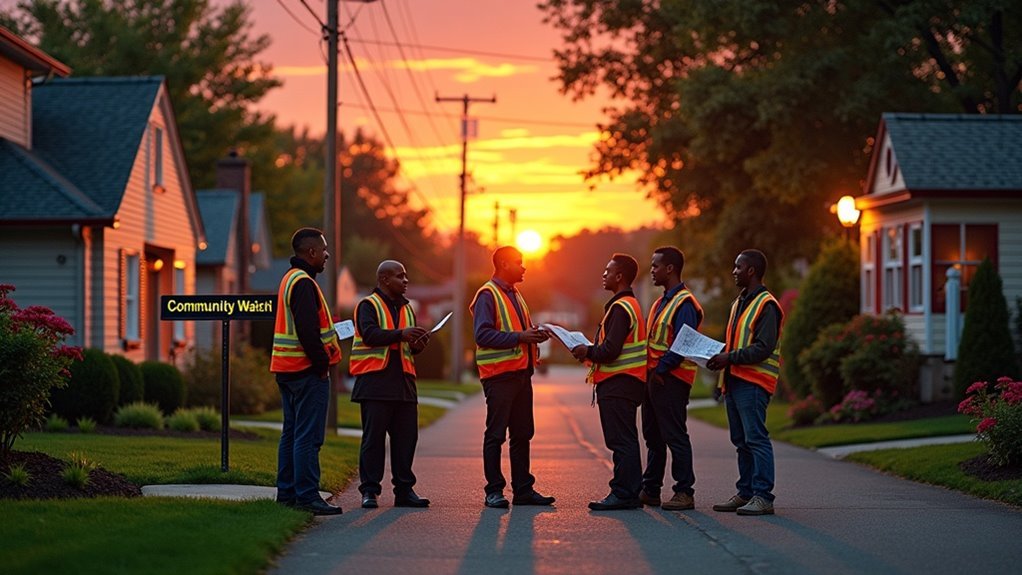
To plan neighborhood watch patrols effectively, begin by assessing your community’s vulnerable areas, such as high-crime zones and poorly lit areas that could pose risks during emergencies. Next, identify the peak times for patrols by analyzing crime reports and gathering feedback from residents about when they feel most vulnerable. Develop a rotating patrol schedule that assigns members to various time slots, ensuring coverage during critical hours.
Equip your patrol teams with essential survival gear, including reflective vests for visibility and communication devices to stay connected. Additionally, establish safety protocols, emphasizing the importance of operating in pairs for added security and support. Remember, there’s always more to learn about enhancing your community’s safety and preparedness, so continue exploring further strategies for effective patrol planning in the context of survivalism and prepping.
Key Takeaways
- Conduct surveys to understand residents’ safety concerns and identify vulnerable areas in the community that may require additional preparedness measures.
- Analyze local crime statistics to determine peak times for patrols, allowing for strategic planning and resource allocation to enhance community defense.
- Establish a rotating patrol schedule with clear guidelines to ensure consistent coverage, visibility, and readiness to respond to emergencies.
- Equip patrol teams with survival gear, reflective vests, and communication devices to ensure they are prepared for any situation and can effectively coordinate during patrols.
- Develop clear safety protocols for patrol members, including reporting procedures and the importance of operating in pairs to maximize security and preparedness in the face of potential threats.
Assessing Vulnerable Areas in Your Community
To effectively enhance your neighborhood’s security and preparedness, you first need to assess the vulnerable areas within your community.
Start by conducting surveys to gather residents’ input on perceived dangers and emergency preparedness concerns. Analyze local crime statistics to identify high-crime zones that may require increased vigilance and community defense strategies.
Observe physical conditions such as inadequate lighting or abandoned properties that can attract suspicious activity and serve as potential survival threats. Engage in door-to-door canvassing to identify unoccupied homes that could become targets for looting or other criminal activities during emergencies.
Finally, collaborate with local businesses to address safety issues in commercial areas, ensuring they’re equipped to handle crises.
This comprehensive evaluation will bolster your community’s resilience and enhance your Neighborhood Watch Group‘s crime prevention and emergency preparedness efforts.
Determining Peak Times for Patrols
When are the most critical times for your neighborhood patrols in a survivalist context?
To determine peak times, analyze local crime reports and identify patterns, especially during late-night hours and weekends when potential threats may increase.
Analyze local crime reports to identify peak threat times, particularly during late-night hours and weekends.
Conduct surveys to gather input from residents about when they feel most vulnerable or unsafe.
Collaborate with local law enforcement to access historical crime trends and enhance your scheduling efforts for community safety.
Additionally, monitor neighborhood activity, such as unusual traffic patterns and local gatherings, to pinpoint high-traffic times that may require heightened vigilance and extra patrol presence.
Establishing a Rotating Patrol Schedule
After identifying peak times for your neighborhood patrols, the next step involves establishing a rotating patrol schedule that maximizes coverage and participation for preparedness efforts.
Aim for at least two to three patrols per week to maintain visibility and deter potential threats. Assign different members or groups to specific time slots, allowing flexibility for everyone while ensuring a strong community presence.
Utilize a shared calendar to coordinate times and track participation easily, which is crucial for effective planning in survival situations. Establish clear guidelines for patrol routes and responsibilities, including protocols on how to report suspicious activity or emergencies.
Encourage all community members to join, even those who prefer patrolling during early mornings or late evenings, ensuring thorough coverage and strengthening community resilience.
Equipping Patrol Teams for Success
Equipping your patrol teams with the right tools and resources is crucial for enhancing safety and preparedness in your community watch initiatives. Ensure that each team is outfitted with tactical gear such as reflective vests for visibility, identification badges for recognition, and reliable communication devices like walkie-talkies for effective coordination. Implement training sessions focused on situational awareness and reporting suspicious activities to sharpen their observational skills. Additionally, provide essential survival gear such as flashlights, first aid kits for medical emergencies, and encourage the use of crime reporting forms or apps to document incidents.
| Essential Gear | Purpose | Notes |
|---|---|---|
| Reflective Vests | Visibility during patrols | Enhances safety and recognition |
| Communication Devices | Maintain contact | Enables quick reporting |
| Training Sessions | Skill development | Focus on situational awareness |
| Flashlights | Emergency lighting | Essential for low-light conditions |
| First Aid Kits | Medical emergencies | Must be stocked with necessary supplies |
| Reporting Tools | Document incidents | Use forms or apps for efficiency |
Developing Safety Guidelines for Patrol Members
Building on the foundation of equipping patrol teams, developing safety guidelines for patrol members is essential for maintaining a secure community environment, especially in the context of survivalism and prepping.
Establish clear protocols for reporting suspicious activities directly to local authorities—never confront individuals. Encourage patrol members to operate in pairs or groups to enhance visibility and support, which is crucial during uncertain times.
Establish protocols for reporting suspicious activities and encourage team patrols for enhanced safety and support in uncertain times.
Implement a communication system, such as two-way radios or a secure messaging app, for real-time updates and coordination. Regular training sessions on safety measures, conflict resolution, and first aid will prepare members for various situations, ensuring they’re equipped to handle emergencies effectively.
Finally, create a patrol schedule that guarantees consistent coverage, particularly during peak times of vulnerability, maximizing your community’s resilience and safety.
Gathering Feedback From Residents
How can you ensure that your neighborhood watch patrol effectively addresses the survival and safety concerns of all residents?
Start by gathering feedback through surveys or community meetings to understand specific safety issues and preparedness preferences. Encourage participation from everyone, including renters and non-English speakers, to ensure diverse perspectives are considered.
Utilize social media platforms to facilitate convenient sharing of thoughts and experiences related to safety and survival. Consider setting up a suggestion box in common areas for anonymous feedback, allowing residents to express their concerns without hesitation.
Regularly review this input and incorporate it into your patrol plans, fostering community involvement and ensuring your patrols address the most pressing survival challenges faced by the neighborhood.
Adjusting Patrol Routes Based on Community Concerns
While maintaining a strong presence in your community is essential for survivalism and prepping, adjusting patrol routes based on local concerns is equally important for enhancing safety and preparedness.
To effectively address specific issues related to safety and security, consider the following steps:
- Conduct regular surveys to identify areas with high crime rates, poor lighting, or potential threats to your community’s safety.
- Collaborate with local law enforcement and emergency services to access crime statistics and identify hotspots that may require increased vigilance.
- Utilize community mapping tools to visualize crime patterns, gather feedback from fellow preppers and survivalists, and strategize effective patrol routes.