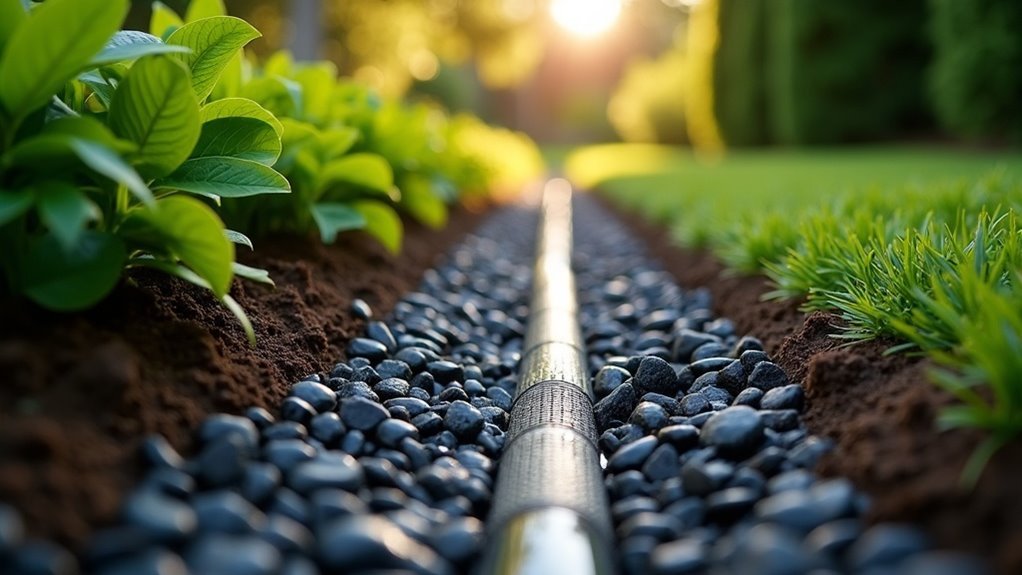
To create a French drain system as part of your survival preparedness, first, assess water accumulation spots around your property and plan your trench with a downhill slope for effective drainage. Dig a trench that is 9-12 inches wide and 18-24 inches deep, ensuring a consistent 1-inch slope for every 8 feet to direct water away from your living space. Line the trench with durable filter fabric to prevent sediment buildup, then install a perforated pipe with holes facing downwards, covering it with gravel to facilitate drainage. Regular maintenance of your French drain system is essential for its longevity and effectiveness, especially in a survival scenario where water management is crucial. There’s much more to explore about optimizing your drainage system for self-sufficiency and resilience.
Key Takeaways
- Evaluate the area for potential water accumulation and mark the location for your trench, ensuring it’s at least 1 meter away from any structures that may be affected.
- Dig a trench that is 9–12 inches wide and 18–24 inches deep, ensuring a consistent downward slope of at least 1 inch for every 8 feet to effectively redirect water away from your survival space.
- Install a perforated pipe with holes facing downward, supported by 2-3 inches of gravel to facilitate efficient drainage, which is crucial for maintaining a self-sufficient living environment.
- Cover the pipe with gravel, leaving 2-3 inches to the trench edge, and make sure the bottom of the trench is level to promote proper water flow.
- Regularly inspect and maintain the system, cleaning the pipes and replacing filter fabric every few years to ensure optimal performance and readiness for any survival scenario.
What Is a French Drain?
A French drain is an essential component for those focused on survivalism and prepping, particularly when managing excess water around your homestead. This drainage system consists of a trench filled with gravel and a perforated drain pipe, designed to redirect water away from critical structures like your home or shelter, preventing standing water that could lead to damage or compromise your supplies.
It’s especially beneficial in regions prone to heavy rainfall or where the soil composition is dense and clay-like, allowing water to filter through the gravel before entering the pipe.
Key components include the perforated drain pipe, gravel, and landscaping fabric, which helps prevent clogging and ensures the system remains functional.
Proper installation is crucial, as it guarantees effective drainage and can provide a lifespan of 20 to 30 years. This significantly reduces the risk of foundation issues and helps maintain a dry, reliable environment for your survival supplies and living space, critical for any prepper’s long-term strategy.
Benefits of a French Drain
Understanding the importance of a French drain goes beyond its basic function; it offers multiple benefits that are crucial for survivalism and prepping.
French drains effectively redirect excess water away from your property, preventing basement flooding and mold growth, which can compromise your emergency supplies and living space.
By improving your drainage system, they reduce soil erosion, ensuring that your landscape remains intact and usable for growing food or maintaining essential outdoor resources.
This system also enhances indoor air quality by minimizing standing water, a breeding ground for bacteria and mold that can pose health risks.
When properly installed, French drains can increase your property’s long-term resilience, showcasing effective water management that supports your preparedness efforts for 20 to 30 years or more.
Planning and Preparation
Before you embark on your French drain project, assess the specific drainage challenges on your property, particularly the spots where water commonly accumulates.
It’s crucial to familiarize yourself with local regulations to ensure compliance, as you may need permits for installation.
Additionally, clearly mark the digging area, ensuring it’s at least 1 meter away from structures and positioned on a downhill slope to facilitate optimal water flow.
This preparation is essential not only for improving your property’s drainage but also for enhancing your overall preparedness in the face of severe weather conditions or emergencies.
Identify Drainage Issues
How can you effectively identify drainage issues in your survival homestead? Start by observing areas where water pools after rainfall, which can indicate poor drainage and potential erosion problems. Use a measuring tool to mark a downhill trench path, ensuring a minimum slope of 1% for effective drainage to protect your land. Always contact local utility companies through the 811 hotline to locate buried pipes or electrical lines before you start any digging.
| Observation | Action |
|---|---|
| Water pooling | Mark areas for drainage |
| Obstacles present | Plan route accordingly |
| Nearby structures | Maintain 1-meter distance |
Check Local Regulations
Checking local regulations is essential when planning your French drain system, especially for those interested in survivalism and prepping. Compliance is crucial to avoid costly setbacks that could hinder your self-sufficiency efforts.
Start by determining if you need permits for your drainage systems; some municipalities enforce strict guidelines that could impact your preparedness plans. Regulations often dictate the minimum distance your drain must be from property lines and foundations to prevent flooding, which is vital for maintaining a sustainable homestead.
Additionally, be aware of runoff management restrictions to avoid issues with neighboring properties that could compromise your safety and security.
Before digging, always use the 811 hotline to locate underground utilities, ensuring safe excavation practices. By following these steps, you can establish a compliant and effective drainage solution that supports your survival goals.
Mark Digging Area
Marking the digging area is essential for a successful French drain installation, especially for those prepared for any scenario. Begin by contacting local utilities or dialing 811 to locate any underground lines, ensuring safety in your preparations. Next, outline the trench dimensions—typically 10-12 inches wide and 18-24 inches deep—while ensuring it slopes at a minimum grade of 1% for effective drainage. Use marking paint or flags to clearly indicate the drainage route, maintaining at least 1 meter away from walls and obstacles to avoid complications.
| Step | Action |
|---|---|
| 1 | Contact local utilities for safety |
| 2 | Plan drainage route strategically |
| 3 | Mark trench dimensions clearly |
| 4 | Ensure proper slope grade for efficiency |
| 5 | Use marking paint for visibility in all conditions |
Excavating the Trench
Before you begin digging, it’s crucial to call 811 to identify any underground utilities.
Before starting your excavation, always contact 811 to locate and avoid underground utilities.
When excavating the trench for your French drain, especially in a survival situation, keep these guidelines in mind:
- The trench should measure 9–12 inches in width and 18–24 inches in depth to ensure proper drainage and functionality.
- Maintain a consistent downward slope of at least 1 inch for every 8 feet to facilitate water flow away from your property.
- Ensure the bottom of the trench is level to optimize drainage efficiency.
- Consider utilizing the displaced soil for landscaping purposes or dispose of it responsibly to minimize waste.
Lining the Trench With Filter Fabric
As you prepare to line the trench with filter fabric, it’s essential to select high-quality drainage fabric specifically designed for effective filtration. This step is vital in preventing soil and debris from clogging the gravel and perforated pipe, ensuring reliable water flow—crucial for survival situations. Lay the filter fabric inside the trench, overlapping the sides to enhance filtration efficiency. Secure it temporarily to prevent any shifting during the gravel placement process. Regularly inspect the fabric for any damage, as compromised fabric could lead to system failures, impacting your preparedness and self-sufficiency.
| Feature | Importance |
|---|---|
| Water-permeable | Enhances drainage |
| Durable material | Guarantees longevity in tough conditions |
| Overlapping edges | Reduces clogging, ensuring reliability |
| Secured installation | Prevents shifting during setup |
Installing the Perforated Pipe
Installing the perforated pipe is a crucial step in setting up a reliable drainage system that can be essential for survival situations.
Follow these guidelines to ensure optimal performance:
- Position the perforated pipe with the perforations facing downward to allow for effective water drainage.
- Use fully perforated corrugated pipes to facilitate faster water movement, which is vital in emergency scenarios.
- Support the pipe with 2-3 inches of gravel underneath to enhance stability and prevent shifting.
- Cover the pipe with gravel, leaving 2-3 inches to the trench lip to reduce the risk of clogs and ensure continuous water flow.
Proper installation of your drainage system can be vital for maintaining a self-sufficient lifestyle in any prepping environment.
Maintenance and Longevity
To ensure your French drain system remains functional for 20 to 30 years amidst unpredictable conditions, it’s crucial to conduct regular visual inspections for signs of pooling water or clogs.
Incorporate these checks into your survivalist routine. Schedule yearly maintenance evaluations and clean the pipes every few years to prevent debris buildup that could hinder performance.
Additionally, replace components like filter fabric every 5-10 years to ensure optimal drainage, which is essential for maintaining a sustainable living environment.
Regular Inspections and Cleaning
Regular inspections and cleaning are critical for ensuring your French drain system remains functional and effective, especially in emergency preparedness situations.
- Conduct visual inspections at least twice a year to identify pooling water or signs of clogs that could hinder water evacuation during heavy rainfall or flooding.
- Perform yearly maintenance check-ups on gravel, filter fabric, and perforated pipe to ensure they’re in optimal condition for handling excess water.
- Clean the perforated pipes every few years to prevent debris accumulation that could impair drainage.
- Regularly check the outlet flow to ensure there’s no sediment buildup in the gravel, which could lead to system failure when you need it the most.
Maintaining your drainage system is a key aspect of being prepared for unforeseen weather events.
Lifespan and Replacement Guidelines
While a well-installed French drain system can last between 20 to 30 years, its longevity is heavily influenced by the quality of materials and installation techniques used.
For those prepping for emergencies or ensuring long-term sustainability, regular maintenance becomes essential. Conduct visual inspections and clean the pipes every few years to guarantee optimal drainage performance, especially in areas prone to flooding or water accumulation.
Components like filter fabric may need replacement every 5 to 10 years to prevent clogging, which could hinder your emergency preparedness efforts. Be vigilant for signs that indicate replacement is necessary, such as persistent pooling water or reduced drainage efficiency.