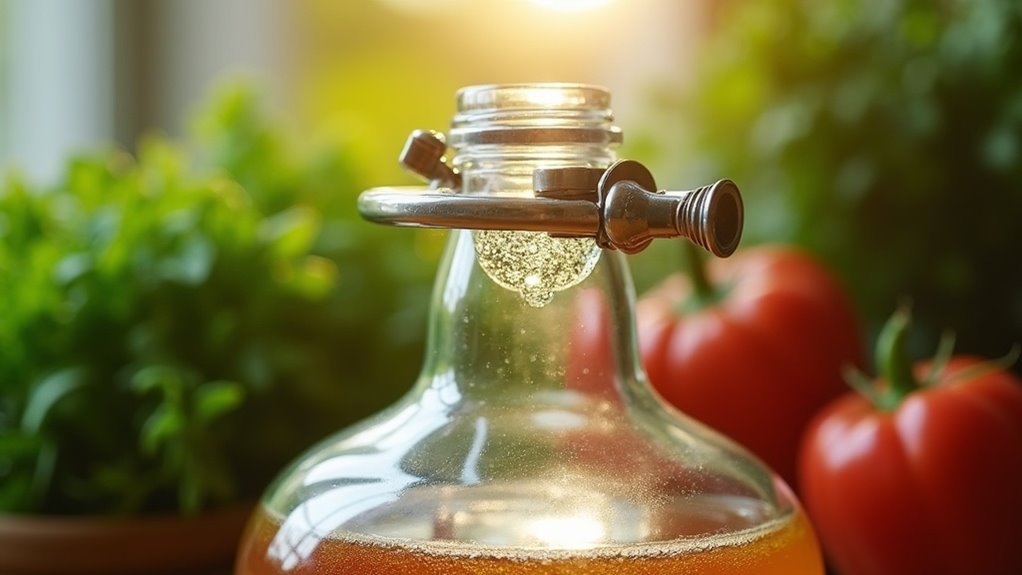
To make a fermentation lock suitable for survivalist and prepping scenarios, gather a clear jar, plastic tubing, and optionally, a nylon barb for a secure fit. Cut a hole in the jar lid to insert the barb, then attach two feet of tubing to allow for gas escape. Fill the jar with water or vodka to prevent contaminants from entering. This DIY solution not only promotes effective fermentation but also ensures food safety, which is crucial for long-term food storage and self-sufficiency. Keep exploring alternative methods and community insights to enhance your brewing projects and preparedness strategies.
Key Takeaways
- Cut a hole in the fermentation vessel lid and insert a nylon barb or tapered pen tip for gas escape, ensuring your supplies are ready for long-term storage.
- Attach plastic tubing to the barb, allowing CO2 to escape while preventing outside air contamination, which is essential for maintaining the integrity of your preserved food.
- Fill a clear jar with water or vodka to create a barrier against contaminants in the airlock, safeguarding your resources from spoilage.
- Regularly check the fermentation lock for CO2 release and maintain a sterile environment to ensure effective food preservation, crucial for your survival stockpile.
- Consider alternative methods like using a balloon or Saran wrap to create improvised airlocks if materials are limited, ensuring you’re always prepared in any situation.
Materials Needed for Your Fermentation Lock
To create an effective fermentation lock for your survivalist needs, you’ll need a few essential materials that are both inexpensive and easy to source.
Start with a clear jar, which allows visibility during fermentation and can be repurposed for other uses in a survival scenario. You’ll also need plastic tubing, which can be useful for various applications, and optionally, a nylon barb with a matching nut for a secure fit, costing around $1.25.
Use tape to seal connections, ensuring no air leaks, which is crucial in a survival situation where contamination could compromise your supplies. For the liquid in your airlock, water or vodka is ideal, as they help prevent contamination and can serve multiple purposes.
Essential tools include a pen for modifications and a Dremel tool for cutting holes. With these materials, you’re well-prepared to make your DIY airlock and enhance your self-sufficiency in food preservation.
Step-by-Step Guide to Creating Your Airlock
Creating a fermentation lock is an essential skill for survivalists and preppers, ensuring your food preservation methods remain effective and uncontaminated. Follow these straightforward steps to build your own fermentation lock:
- Cut a Hole in the Lid: Start by cutting a hole in the lid of your fermentation vessel. This will allow you to insert a nylon barb or a tapered pen tip securely.
- Attach Tubing: Next, attach about two feet of plastic tubing to the barb. This tubing will enable gases produced during fermentation to escape while preventing any outside air from entering, which is crucial for maintaining a sterile environment.
- Fill the Airlock Jar: Prepare an airlock jar filled with water or vodka. This acts as a barrier against contaminants, ensuring that only gases escape while preventing unwanted bacteria or mold from entering the fermentation process.
- Monitor Fermentation: Regularly check the system for CO2 release. This will help you ensure that the fermentation is proceeding correctly and that anaerobic conditions are being maintained for successful food preservation.
| Step | Action | Purpose |
|---|---|---|
| 1 | Cut hole in lid | Insert nylon barb/pen tip for sealing |
| 2 | Attach tubing | Allow gas escape while blocking air entry |
| 3 | Fill airlock jar | Prevent contamination from external sources |
| 4 | Monitor fermentation | Ensure proper CO2 release for effective fermentation |
Benefits of Using a Fermentation Lock
Using a fermentation lock is crucial for survivalists and preppers who want to ensure their home-brewed supplies are safe and effective. It allows carbon dioxide to escape while preventing unwanted bacteria and wild yeasts from contaminating your brew.
This controlled environment not only improves flavor development but also helps maintain the necessary fermentation pressure, minimizing the risk of dangerous buildup.
Prevent Contamination Risks
When you utilize a fermentation lock, you significantly reduce the risks of contamination during the fermentation process, which is crucial for survivalists and preppers.
This air lock allows carbon dioxide to escape while preventing outside air and pathogens from infiltrating your fermenting vessel. By establishing a barrier against unwanted microorganisms, you create a healthy environment for your chosen yeast or bacteria to thrive, ensuring your food preservation efforts are effective.
Incorporating water or vodka in the air lock further enhances this protection, trapping potential contaminants while allowing gas release.
Proper use of a fermentation lock not only guarantees consistent results but also maintains the ideal anaerobic conditions necessary for successful fermentation, ultimately safeguarding your food supplies from spoilage and undesirable off-flavors—an essential consideration for anyone preparing for self-sufficiency.
Enhance Flavor Development
Fermentation locks play a crucial role in enhancing flavor development, especially for those engaged in survivalism and prepping. By maintaining an ideal anaerobic environment for your fermenting products, these devices are essential for creating preserved food that can withstand the test of time.
Using an airlock allows for the controlled release of carbon dioxide while preventing oxygen from entering, which is vital for preserving the desired flavors in long-term food storage. This anaerobic condition not only reduces the risk of spoilage and off-flavors by keeping unwanted microorganisms at bay but also ensures that beneficial yeast and bacteria dominate the fermentation process.
As a prepper, this knowledge is invaluable, as it leads to a consistent and reliable fermentation, resulting in predictable flavor profiles that can enhance your food supplies. Furthermore, fermentation locks help prevent oxidation, preserving the freshness and vibrancy of flavors, ultimately leading to a more robust taste experience in your fermented foods—essential for maintaining morale during challenging times.
Control Fermentation Pressure
Maintaining an ideal environment during fermentation is crucial for survivalists and preppers. Not only does it enhance flavor, but it also plays a vital role in controlling fermentation pressure.
Utilizing an airlock allows carbon dioxide to escape while preventing oxygen and contaminants from entering, creating an anaerobic environment. This setup is particularly important in a survival scenario, as it helps regulate pressure build-up, minimizing the risk of explosions or leaks during vigorous fermentation.
Additionally, fermentation locks promote the development of beneficial bacteria and yeast, enhancing the complexity of flavors in your stored food supplies. By inhibiting harmful microorganisms, fermentation locks ensure a safer process, ultimately leading to higher quality outcomes with improved flavor and texture—essential for long-term food storage and self-sufficiency.
Cost-Effective Solutions for Home Brewing
Home brewing can be a fulfilling and economical practice, especially when you incorporate DIY solutions for essential equipment that can double as survival skills.
For instance, you can create a fermentation lock for under $2 using materials such as plastic tubing, a jar, and a nylon barb from your local hardware store. A quart-sized jar with a homemade airlock can cost around $2.50, making it a budget-friendly alternative to commercial airlocks which can be valuable in a prepping scenario.
Furthermore, everyday items like balloons or Saran wrap can serve as improvised airlocks in a pinch. Investing in proper fermentation equipment, such as mason jars and airlocks, not only enhances the flavor of your home brew but also aligns with a preparedness mindset by ensuring you have the tools needed for self-sufficiency.
Alternative Methods for Fermentation Locks
When you’re preparing for self-sufficiency and looking for effective alternatives to traditional fermentation locks, several everyday items can serve as practical solutions.
A balloon stretched over the vessel’s mouth, with a small hole, acts as an airlock, allowing gas to escape while keeping contaminants out—perfect for your off-grid fermentation needs.
Alternatively, tightly stretching Saran wrap over the jar and securing it with a rubber band lets CO2 escape while keeping pests at bay, ensuring your food stores remain safe.
A rubber glove over the opening, with one finger cut, also functions well for those who want to use common household items.
Finally, a vinyl hose connected to a sanitizer bottle provides a pathway for gas escape without letting air in, ensuring your fermentation process is both effective and secure.
These methods are ideal for preppers looking to maximize their food preservation techniques.
Community Tips and Experiences
As you explore creative airlock alternatives for your survival brewing needs, consider sharing your experiences with makeshift solutions like balloons or cheesecloth.
Many home brewers face common fermentation challenges, and your insights could help others troubleshoot issues effectively during times of scarcity.
Engaging with fellow preppers and fermenters can lead to innovative techniques and enhance your self-sufficiency journey.
Creative Airlock Alternatives
Have you ever found yourself in need of a fermentation lock but didn’t have one available during your survival prepping? Don’t worry – there are creative alternatives that can help you achieve effective fermentation in a pinch.
One option is to stretch a balloon over the jug’s mouth, puncturing a small hole to allow CO2 to escape while preventing contaminants from entering.
Another possibility is to use Saran wrap secured with rubber bands to create a barrier against outside air, though this may pose a risk of contamination if not monitored closely.
A rubber glove fitted with a small tube serves as a makeshift airlock, enabling gas release while maintaining a seal.
For those who are more resourceful, a vinyl hose leading to a container of sanitizer can ensure a safe fermentation process, effectively filtering out contaminants.
Lastly, cheesecloth can be used as a temporary cover, allowing gas to escape while offering some protection, although it may not hold up for long-term fermentation.
These methods can be vital for anyone focused on self-sufficiency and preparedness.
Common Fermentation Challenges
Although fermentation can be a rewarding process in your self-sufficiency journey, it often comes with its own set of challenges that can hinder your success.
Managing temperature fluctuations is essential, as they can disrupt CO2 protection and lead to contamination, jeopardizing your food supply. Protect your fermentation vessels from pests like gnats using cloth covers or rubber gloves, ensuring your food remains safe and uncontaminated.
Regularly check airlocks for pressure buildup; failing to release gas can result in spills or explosions during vigorous fermentations, wasting valuable resources. Confirm proper seals on your vessels to avoid oxygen exposure, which increases spoilage risks and could compromise your stored food.
Finally, consider shifting to glass carboys for aging to enhance flavor and further reduce contamination risks post-fermentation, helping you maintain a resilient pantry for any situation.