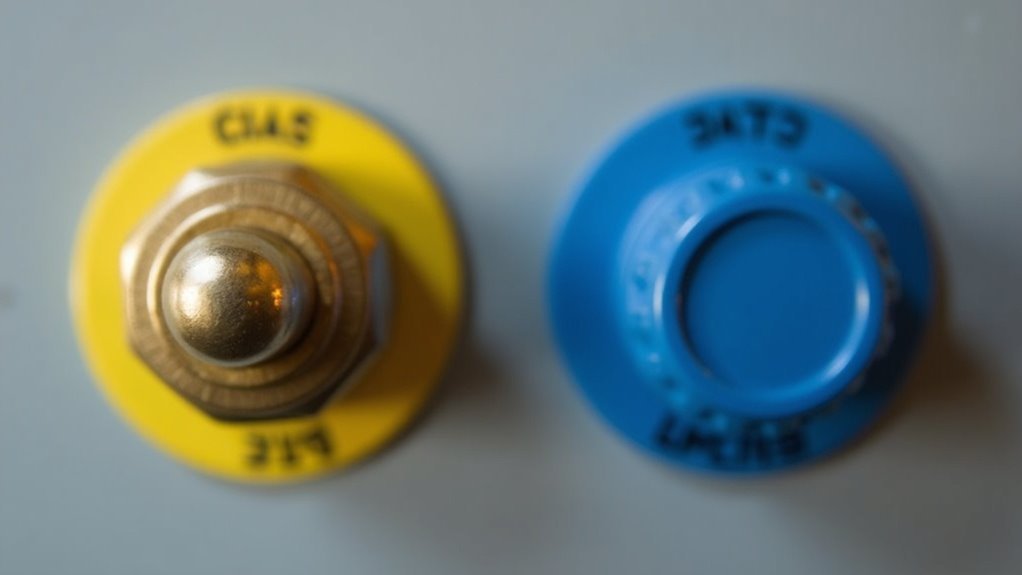
To label gas and water shut-offs clearly for survival preparedness, use high-quality, weather-resistant materials like vinyl or aluminum. It’s essential to color-code the labels: red for gas and blue for water, ensuring they’re reflective for low-light situations, as emergencies can occur at any time. Position labels at eye level near the shut-off points and include arrows for quick guidance during crises. Regularly inspect and maintain visibility to comply with safety regulations, especially in a survival scenario. Custom options can enhance clarity, making emergency responses more efficient and effective. There’s much more to explore on creating robust labeling systems that contribute to your overall preparedness strategy.
Key Takeaways
- Use color-coded labels: red for gas shut-offs and blue for water shut-offs, to ensure swift identification during emergencies and enhance your preparedness.
- Opt for durable materials such as high-quality adhesive vinyl or aluminum, which provide long-lasting visibility and resistance to environmental factors—essential for survival situations.
- Position labels at eye level near shut-off switches or valves to ensure they are easily accessible and visible during critical moments, allowing for quick action when needed.
- Incorporate arrows or symbols on labels to direct attention to the correct shut-off points, facilitating a rapid response in emergency scenarios.
- Regularly inspect and audit labels for compliance and visibility, updating them as necessary to maintain safety standards and ensure your home is ready for any situation.
Importance of Clear Labeling for Shut-Offs
Clear labeling for shut-offs is crucial for ensuring safety and efficiency during emergencies, especially in survival situations. When gas and water shut-offs are distinctly marked, you can swiftly identify them, significantly reducing response time and minimizing potential damage.
Organizations like OSHA emphasize the importance of marking all emergency controls, including shut-off valves, to enhance safety and compliance. Properly labeled shut-offs not only help prevent accidental activation but also allow individuals to easily locate and operate necessary controls during critical moments.
Implementing color-coded and universally recognized labels improves visibility, facilitates rapid emergency response, and reduces confusion. Regular audits of shut-off labels are essential to ensure they remain compliant, visible, and unobstructed, thereby reinforcing preparedness in any survival scenario.
Recommended Materials for Shut-Off Labels
When selecting materials for shut-off labels in a survival and prepping context, it’s crucial to prioritize durability and environmental resistance.
High-quality adhesive vinyl, sturdy aluminum, and glow-in-the-dark options are all excellent choices that ensure visibility and resilience in various conditions, especially during emergencies.
Furthermore, implementing color-coding can significantly enhance quick identification, which is vital for maintaining safety and efficiency in critical situations.
Durable Material Choices
Choosing the right material for shut-off labels is crucial for survivalists and preppers, as it directly affects their durability and effectiveness in various challenging conditions. Here are several durable material options to consider for your labeling needs:
| Material | Key Features |
|---|---|
| Aluminum | Corrosion-resistant; ideal for outdoor use in harsh environments |
| Adhesive Vinyl | Long-lasting; adheres securely to multiple surfaces, ensuring labels stay in place during emergencies |
| Glow Plastic | Enhances visibility in low light, making it easier to find important labels in the dark |
| Polycarbonate | Impact-resistant; perfect for rugged use and harsh environments where labels may be subject to wear and tear |
| Laminated Paper | Cost-effective; suitable for indoor use, but should be protected from moisture for longevity |
Selecting a suitable material not only boosts the longevity of your labels but also ensures compliance with safety standards and regulations, which is vital for effective emergency preparedness.
Color-Coding for Visibility
Selecting the right materials for your shut-off labels is just the beginning; implementing an effective color-coding system is crucial for enhancing visibility and recognition during emergencies.
In the context of survivalism and prepping, leveraging color-coding for visibility can be a lifesaver. Consider these standards:
- Red for gas shut-offs—immediately signals danger, alerting you to potential hazards.
- Blue for water shut-offs—indicates safety and clarity, essential for hydration in survival situations.
- Reflective surfaces—ensure labels stand out in low light, making them easily identifiable during critical moments.
Environmental Resistance Factors
To ensure your shut-off labels can withstand various environmental challenges, it’s crucial to choose materials that resist wear and tear, especially in survival situations.
Opt for durable aluminum or vinyl that can endure harsh conditions while maintaining clear visibility. In low-light environments or emergencies, adhesive glow and glow aluminum labels are invaluable for enhancing visibility during a critical shutoff.
If your labels will be exposed outdoors, prioritize weather-resistant materials to prevent fading and deterioration due to UV exposure and moisture, which are common threats in survival scenarios.
Additionally, reflective surfaces can significantly improve visibility at night or in poorly lit areas, making them essential for preppers.
Regular inspections of label conditions are vital to ensuring compliance with safety regulations and to guarantee the clear identification of shutoff points when it counts the most.
Optimal Placement Strategies for Visibility
While ensuring that shutoff labels are easily identifiable is crucial for safety in survival situations, their proper placement is equally vital.
Ensuring shutoff labels are identifiable and properly placed is essential for safety in survival situations.
Here are three strategies to maximize visibility in prepping environments:
- Position labels directly on or adjacent to the Main Shut-Off switches and valves to facilitate quick identification during emergencies or unexpected situations.
- Use emergency shut-off arrow labels to guide individuals swiftly to the correct shut-off points, ensuring that every member of your survival group can act quickly.
- Place labels at eye level, ensuring they’re unobstructed by equipment or other obstacles, so they can be easily spotted during high-stress scenarios.
Regular audits are essential to confirm that labels remain compliant, visible, and in good condition, adhering to safety standards that are critical for preparedness and effective response in any survival situation.
Standardized Wording for Consistency
Standardized wording on shutoff labels is crucial for ensuring immediate recognition and effective response during emergencies, especially in survival and prepping scenarios.
Utilize clear identifiers such as “Gas Shut-Off,” “Water Shut-Off,” and “Emergency Shut-Off” to facilitate quick understanding in high-stress situations. Consistency in font style and size, preferably bold sans-serif fonts, enhances visibility, which is vital when time is of the essence.
Incorporating universally recognized symbols alongside standardized wording further promotes comprehension and reduces language barriers, making it easier for everyone involved to act swiftly.
Color-coding labels—red for gas and blue for water—aligns with industry standards and aids in rapid identification, a key aspect of preparedness.
Regular audits ensure that all labeling adheres to standardized wording and complies with OSHA regulations, maintaining safety and efficiency in emergency situations for those focused on survivalism and prepping.
Customization Options for Specific Needs
When it comes to labeling shutoffs for your survival and prepping needs, customization options allow you to create tailored designs that meet your specific requirements.
You can incorporate unique identification features, such as survival symbols or critical text, to enhance clarity during emergencies.
Selecting the right materials and sizes ensures your labels remain effective and visible in high-stress situations, helping you maintain control and safety when it matters most.
Tailored Label Designs
To effectively identify shut-off points in preparation for emergencies, custom labels tailored to specific equipment and survival needs are essential.
When designing your emergency shut-off labels, consider these options:
- Color-Coding: Use bright colors like red for gas and blue for water shut-offs to facilitate quick recognition in high-stress situations.
- Symbols: Incorporate universally recognized symbols to ensure immediate understanding of the shut-off function, even under duress.
- Instructions: Add concise, clear directions or arrows to guide users swiftly during emergencies, ensuring everyone knows how to react.
These personalized designs not only improve visibility but also enhance compliance with safety regulations, promoting preparedness and accessibility for all individuals involved in survival and emergency planning.
Unique Identification Features
Customizing shut-off labels with unique identification features is crucial for enhancing safety and efficiency during emergencies, particularly for survivalists and preppers. By creating custom labels for shutoff valves, you ensure that you clearly specify the exact equipment associated with gas and water shutoffs, which is vital in crisis situations.
You can select from various sizes, ranging from 1×2 inches to 3.5×5 inches, to ensure maximum visibility in your preparedness setup. Color-coded options can align with industry standards, making it easier to identify shutoff points quickly. Additionally, you can request designs that incorporate arrows or symbols to direct attention to shutoff locations.
Including essential information, such as contact details for maintenance, further enhances your safety protocols, ensuring that everyone in your survival group knows how to respond effectively in critical scenarios.
Compliance With Safety Regulations
Ensuring compliance with safety regulations is crucial for creating a secure environment for survivalists and preppers, particularly in scenarios where the risk of accidents can be heightened.
To effectively manage these risks, it’s essential to:
- Clearly mark Main Shut-off controls and energy isolation points in your preparedness setups.
- Place labels in easily accessible locations to facilitate quick identification during emergencies or crises.
- Conduct regular inspections to ensure all signage is visible and meets compliance standards.
Training your community members on the meanings of shut-off signage will enhance their understanding and responsiveness in emergency situations.
Documenting compliance with safety measures is vital for safety audits and can significantly mitigate liability risks during incidents, ultimately protecting both individuals and your survivalist group.