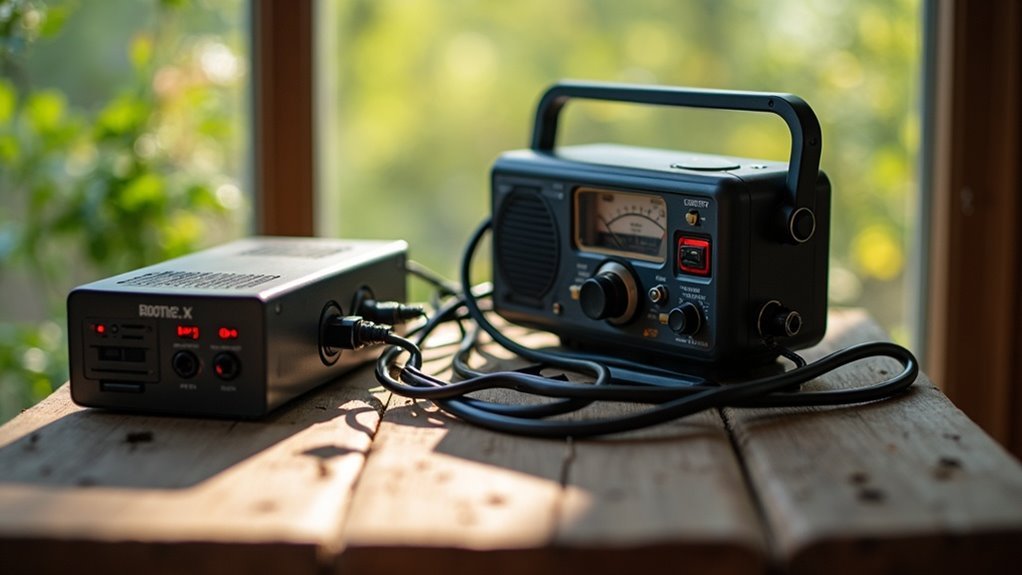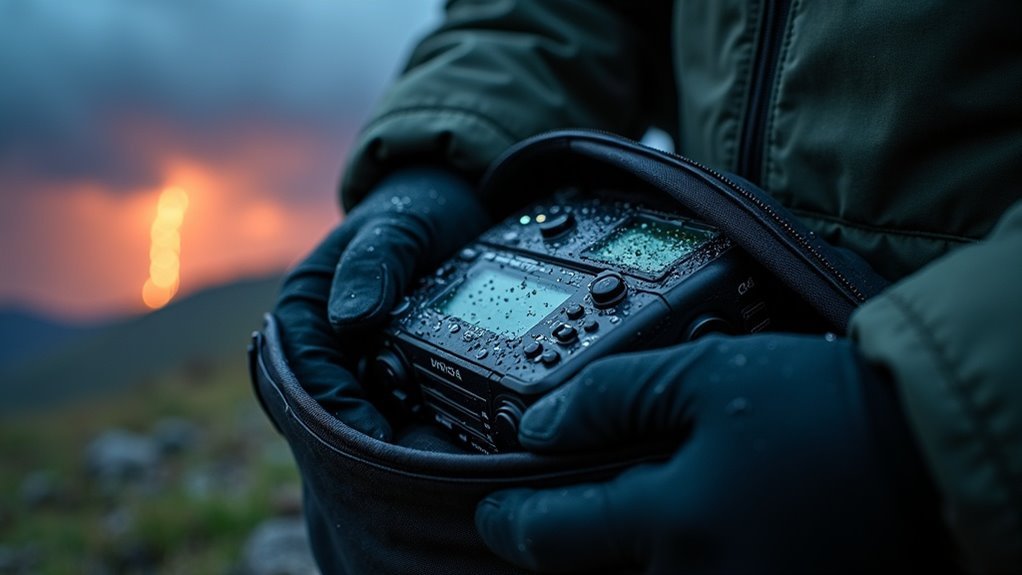
To ensure your radio remains operational and dry during storms, it’s essential to utilize a waterproof case or cover that fits tightly. If you lack a proper case, consider using plastic bags as a cost-effective solution; just make sure to seal them securely. Incorporate desiccants, such as silica gel packets, inside your storage to help absorb any potential moisture. In colder conditions, keep your radio’s batteries warm for optimal performance and opt for a longer antenna to enhance signal reception. Regular maintenance is crucial for your radio’s reliability during emergencies. By following these guidelines, you can significantly improve your radio’s protection and readiness for any storm situation.
Key Takeaways
- Utilize a waterproof case or cover with an IP67 rating to safeguard your radio from moisture damage during storms, ensuring you stay connected when it matters most.
- Seal radios in plastic bags for a cost-effective moisture barrier; reinforce seals with tape for added security against the elements.
- Incorporate silica gel packets inside cases or bags to absorb excess humidity and prevent moisture buildup, which could compromise functionality in critical situations.
- Regularly inspect antenna connections for signs of corrosion and apply water-resistant sealant to prevent moisture entry, ensuring your radio remains operational.
- Store radios in a dry, protected environment and maintain routine cleaning to enhance longevity and performance, essential for any preparedness plan.
Use a Waterproof Case or Cover
When it comes to ensuring your radio remains operational in survival situations, utilizing a waterproof case or cover is essential. These specially designed cases protect your radio from moisture damage, safeguarding its internal components.
Look for a snug fit that allows easy access to controls, and consider options made from clear plastic for visibility, so you can monitor the device without exposing it to the elements. Aim for cases with an IP67 rating, which signifies excellent water resistance—crucial during storms or unexpected downpours.
Regularly inspect the case for any signs of wear and tear to maintain its protective capabilities. Additionally, placing silica gel packets inside can help absorb humidity, further enhancing your radio’s protection and ensuring it remains a reliable tool in your survival kit.
Consider Using Plastic Bags for Extra Protection
Even with a waterproof case, it’s essential to take extra precautions to enhance your radio’s resilience against moisture in survival situations. Using plastic bags offers a straightforward and budget-friendly method to keep your radio dry. Ensure you seal the bag completely to prevent water ingress, and consider reinforcing the seal with tape for added security. Opt for thicker, durable bags to minimize the risk of tearing during rugged use. For additional protection against moisture buildup, include a silica gel packet inside the bag. Always test the audio quality after sealing your radio to ensure sound clarity remains intact, as clear communication can be critical in survival scenarios.
| Action | Tips |
|---|---|
| Seal the Bag | Use tape for extra security |
| Choose a Bag | Opt for thicker, durable bags |
| Add Moisture Absorbent | Include a silica gel packet |
| Test Audio Quality | Check sound clarity after sealing |
Employ Desiccants to Absorb Humidity
To safeguard your radio from humidity damage—a crucial aspect of survivalism—utilizing desiccants like silica gel packets is essential.
By placing several of these packets inside your radio case or storage bag, you effectively absorb excess moisture, minimizing the risk of internal corrosion and component failure.
Silica gel is non-toxic and reusable; simply dry it out in an oven to keep costs low and maintain your prepping supplies.
Regularly check and replace desiccants, as their absorption capacity decreases over time.
For optimal protection, pair desiccants with waterproof cases, creating a robust, multi-layered defense against water exposure during storms and ensuring your radio remains operational when you need it most.
Maintain Battery Warmth in Cold Conditions
As temperatures drop, the performance of your radio’s battery can significantly decline, making it essential to keep batteries warm for survival situations.
Here are some practical tips to maintain battery warmth in cold conditions:
- Store radios and batteries in a warm environment when not in use to prevent them from freezing.
- Wrap batteries in thermal insulators like neoprene sleeves or hand warmers to prolong their life and ensure readiness.
- Keep extra batteries readily available for emergencies, especially during power outages or survival scenarios.
Additionally, consider using a battery eliminator when operating from a vehicle for consistent power supply during expeditions.
Finally, regularly check battery connections for corrosion; clean contacts enhance performance and reliability in extreme weather.
Stay prepared and ensure your gear is ready when you need it most!
Choose the Right Antenna for Extreme Weather
When it comes to choosing the right antenna for extreme weather situations, antenna length is crucial for maintaining reliable communication.
Longer antennas tend to deliver superior signal strength and range, which is especially vital during storms or emergencies when consistent communication is essential for survival.
Upgrading to robust models like the Nagoya 771 or Monraker antennas can significantly improve your radio’s performance in challenging conditions, helping you stay connected and informed when it matters most in your preparedness efforts.
Antenna Length Matters
Choosing the right antenna is crucial for effective communication during survival situations, especially in extreme weather conditions. The length of your antenna can significantly impact its performance when the environment becomes challenging.
- Shorter antennas are more portable, making them easier to carry during survival missions, but they may sacrifice range and signal strength.
- Longer antennas typically provide better signal clarity, which is essential for overcoming obstacles like trees, buildings, or rugged terrain that could hinder communication.
- High-performance options, such as the Nagoya 771 or specialized Monraker antennas, can greatly enhance your communication capabilities in harsh environments, ensuring you stay connected when it matters most.
In survivalism and prepping, having reliable communication tools is a key part of your strategy.
Performance in Storms
To ensure reliable communication during storms, selecting the right antenna is crucial for survivalists and preppers. While shorter antennas may seem convenient, they typically offer less range and strength, which can be detrimental in emergency situations.
For enhanced performance in adverse weather conditions, it’s advisable to opt for longer antennas like the Nagoya 771. If you’re using your radio in a vehicle, consider the Monraker antenna, specifically designed to perform better in stormy weather.
Moreover, proper installation and placement are vital to minimize interference from storm-related obstacles. Regularly checking and maintaining your antenna is essential to prevent issues from wear and tear, especially during extreme weather events.
A well-chosen antenna can significantly impact your communication reliability, which is critical for safety and preparedness in any survival scenario.
Upgrade Stock Antennas
Reliable communication during emergencies is critical for survival, especially during severe weather events. The quality of your equipment, particularly your antenna, plays a crucial role in maintaining contact with the outside world.
Upgrading to a longer, more durable antenna, such as the Nagoya 771, can significantly enhance your range and performance when conditions become challenging. While shorter antennas offer portability, they often compromise signal strength, which can be detrimental in critical situations.
Consider these options for your survival communication setup:
- Longer antennas to improve signal reception in adverse weather conditions, ensuring you stay informed.
- Specialized outdoor antennas engineered for durability and resilience against harsh weather, keeping your communication reliable.
- Regular maintenance of your antenna ensures it remains clean and effective, maximizing your chances of staying connected when it matters most.
Investing in the right antenna is an essential step in your preparedness strategy, providing clearer communication and helping you remain connected during emergencies.
Regular Maintenance and Care for Your Radio
To ensure your radio remains an essential tool in your survival kit, prioritize routine maintenance and cleaning.
Start by regularly removing dirt and debris from the antenna and battery contacts, as these can hinder performance.
Inspect these connections for any signs of damage or corrosion, especially since reliable communication is crucial in challenging situations.
Routine Cleaning Practices
Maintaining your radio’s performance is essential for effective communication during emergencies and survival situations. Regular cleaning practices not only enhance your radio’s durability but also ensure reliability when you need it most.
Here are some vital tips for prepping your radio:
- Use a soft, damp cloth to wipe down the radio and its accessories, making sure to dry them thoroughly before storing.
- Regularly inspect antenna connections and battery contacts for corrosion or dirt, as these can significantly impact communication quality when it matters.
- Conduct routine inspections of your radio’s housing for any cracks or damage, addressing these issues promptly to prevent further deterioration.
Always refer to your user manual for specific cleaning instructions and maintenance tips tailored to your model.
Inspecting Antenna Connections
After establishing routine cleaning practices, it’s crucial to turn your attention to inspecting antenna connections as part of your preparedness strategy.
Regularly check for signs of corrosion or wear, as these can significantly impact signal quality during storms or emergencies. Ensure all connections are securely tightened; loose fittings can allow moisture to enter, potentially damaging your communication equipment.
Clean antenna contacts with a soft cloth and contact cleaner to eliminate any dirt that could hinder performance. Consider applying a water-resistant sealant to exposed connections for enhanced moisture protection, ensuring your setup remains robust in adverse conditions.
Lastly, periodically test your antenna’s performance, especially after storms or significant weather events, to confirm it’s functioning properly, and make adjustments or replace components as necessary to maintain reliable communication.