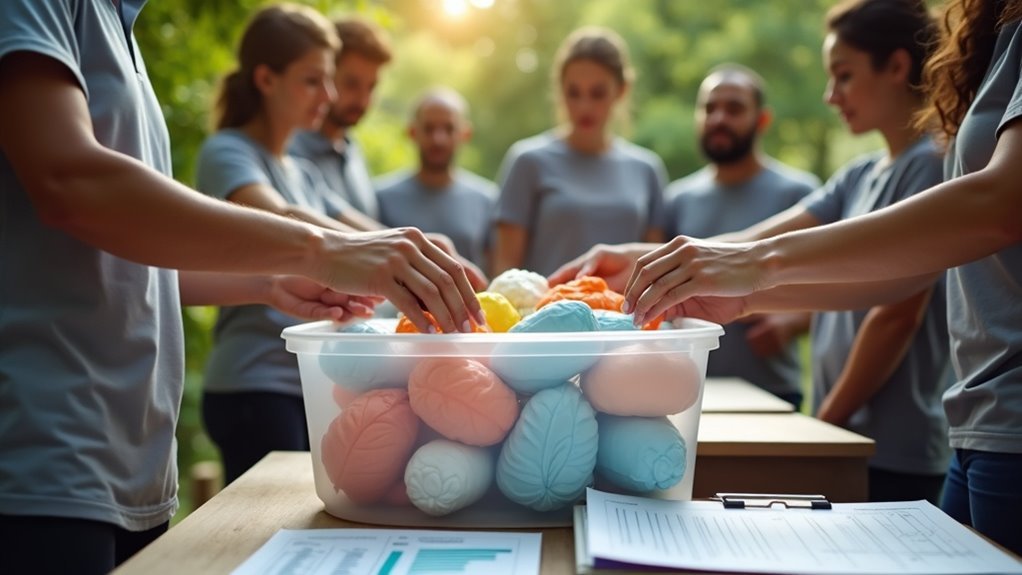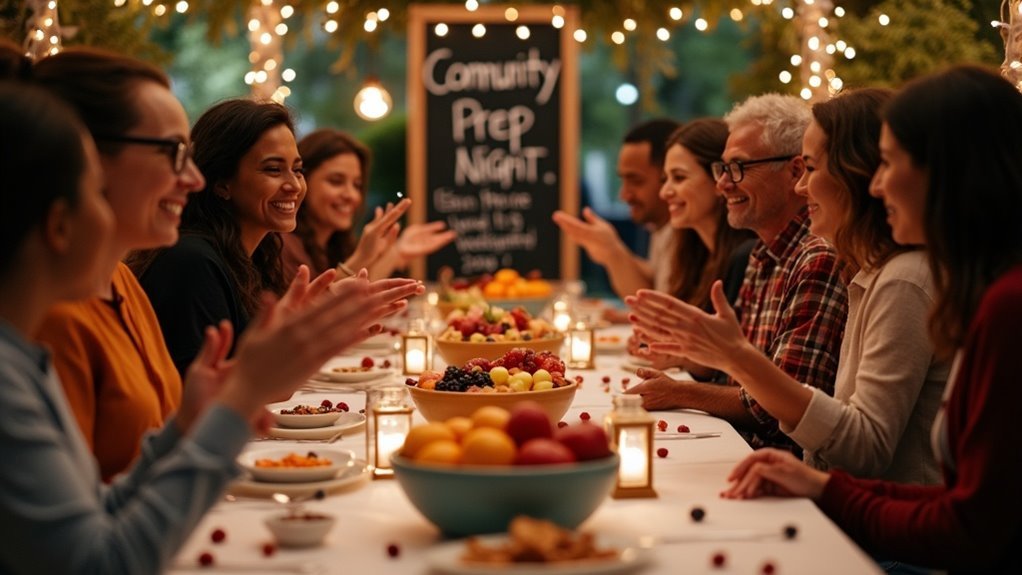
To host a successful community prep night, select a welcoming venue that’s accessible for everyone and set a date that avoids major conflicts, particularly local emergencies or significant community events. Promote your event through social media, local stores, and community centers to attract participants who are interested in survivalism and prepping. Prepare a detailed agenda that includes interactive elements focused on essential skills such as emergency preparedness, food storage, and self-defense tactics. Foster a friendly atmosphere by incorporating icebreaker activities that encourage participants to share their prep experiences and knowledge. Gather feedback after your event to improve future gatherings and ensure that attendees feel empowered and equipped for any situation. There’s so much more to contemplate for a truly engaging prep-focused experience!
Key Takeaways
- Select an accessible venue with necessary amenities, such as outdoor space for demonstrations, and confirm the date, avoiding major holidays and local events that might distract from community engagement.
- Promote the event through survivalism forums, social media, flyers, and local influencers who specialize in prepping and self-sufficiency to maximize outreach among like-minded individuals.
- Prepare a detailed agenda that includes practical workshops, interactive elements like hands-on skill demonstrations, and clearly defined objectives focused on survival skills and emergency preparedness.
- Foster a friendly atmosphere with icebreaker activities related to prepping, name tags that include specific skills or interests, and a refreshment area offering survival foods to encourage interaction and sharing of knowledge.
- Gather feedback immediately after the event to identify areas for improvement and enhance future gatherings, ensuring they meet the needs and interests of the survivalist community.
Selecting a Welcoming Venue
When you’re planning a community prep night, selecting the right venue is essential for fostering a supportive and engaging environment.
Look for a space that’s easily accessible for all participants, ensuring it has adequate parking and complies with disability access standards. Consider utilizing local community centers, schools, or churches that may offer free or low-cost options.
Select a venue that is accessible for everyone, with ample parking and compliant with disability standards, such as community centers or schools.
The venue should comfortably accommodate your expected attendees, providing room for discussions, workshops, and demonstrations.
Don’t forget to check for essential amenities like restrooms, seating, and tables, as well as technology needs such as Wi-Fi or audio-visual equipment to enhance presentations and group activities.
A welcoming venue will help create a sense of community and encourage participation in preparedness discussions.
Setting an Accommodating Date
After securing a suitable venue, the next step is to choose a date that accommodates your community of survivalists and preppers.
When setting an accommodating date, avoid conflicts with major holidays, local preparedness events, or school schedules to maximize attendance.
Consider evenings or weekends for working adults and families, while weekday afternoons may be more suitable for retirees and stay-at-home parents who are interested in survival skills.
Poll potential attendees to gauge their preferred days and times, ensuring your event aligns with their availability.
Allow at least four to six weeks for planning after confirming the date, and check community calendars to avoid overlaps with other relevant events, making your prep night stand out in the survivalism community.
Promoting the Event Effectively
To effectively promote your community prep night, it’s essential to utilize a variety of channels that align with your audience’s interests in survivalism and prepping.
Leverage social media platforms like Facebook and Instagram to create engaging event pages that highlight the purpose of the prep night, such as skills sharing, resource building, and community networking.
Utilize Facebook and Instagram to craft engaging event pages that showcase skills sharing and community networking for your prep night.
Distribute eye-catching flyers at local survival stores, outdoor gear shops, and community centers to attract attention.
Collaborate with local influencers or prepping enthusiasts to share the event, which can enhance your reach and establish credibility.
Additionally, consider using event management platforms like Eventbrite for RSVPs and updates.
Emphasize unique features, such as free survival gear demonstrations or expert guest speakers, to generate excitement and encourage attendance at your community event focused on prepping and self-sufficiency.
Preparing a Detailed Agenda
Creating a detailed agenda is essential for a successful community prep night focused on survivalism and prepping.
You’ll want to outline key components such as time allocation for activities, including workshops on emergency preparedness and self-sufficiency skills.
Additionally, specify participant roles and responsibilities, such as facilitators for each session and volunteers for logistics, to keep everyone on track.
Key Components of Agenda
When preparing a detailed agenda for your community prep night, it’s crucial to start by clearly defining the event’s purpose. This ensures all attendees understand the objectives and expected outcomes related to survival and preparedness. Next, structure the agenda with specific time slots for each item, including introductions and discussions focused on survival strategies. Incorporate interactive elements like breakout sessions to enhance engagement and practical skills. Here’s a simple table to guide you:
| Agenda Item | Time Slot |
|---|---|
| Introductions | 10 minutes |
| Presentations on Survival Techniques | 20 minutes |
| Breakout Sessions on Emergency Preparedness | 30 minutes |
| Q&A Session on Survival Strategies | 15 minutes |
| Recap & Next Steps for Community Preparedness | 10 minutes |
This organized approach will significantly contribute to the event’s success and foster a stronger community focused on survivalism and prepping.
Time Allocation for Activities
With a well-structured agenda in place, the next step is to focus on time allocation for each survival activity. Aim for 20 to 30 minutes per segment to maintain engagement and ensure participants absorb essential skills.
Don’t forget to include 5 to 10 minutes of buffer time between activities for shifts or casual interactions, which can also serve as valuable networking opportunities. At the start, clearly communicate the overall timeline, so everyone knows what to expect in terms of skill development and preparation techniques.
Display a visual agenda on a whiteboard or screen to help participants track the schedule and stay on task. After the event, gather feedback to assess if the time allocation worked well or needs adjustments for future prep nights, ensuring that all participants feel adequately prepared for any situation.
Participant Roles and Responsibilities
To ensure a successful community prep night focused on survivalism and prepping, it’s crucial to define participant roles and responsibilities clearly from the beginning. Assign roles based on individual strengths and ensure everyone understands their tasks. Here’s an example of how to organize this:
| Participant Role | Responsibilities | Notes |
|---|---|---|
| Facilitator | Guide discussions on survival strategies | Keep the agenda on track |
| Note-taker | Document key points and survival tips | Share notes post-event |
| Timekeeper | Monitor activity durations | Signal breaks and transitions |
| Logistics Lead | Coordinate materials and space for prepping | Verify all supplies are ready |
| Engagement Leader | Lead activities and discussions | Foster participation and sharing |
Communicate the agenda in advance, and review it together at the start to clarify expectations and ensure everyone is geared up for the prep night.
Fostering a Friendly Atmosphere
Creating a warm welcome is essential for setting a positive tone at your Community Prep Night. Greet each attendee with a friendly smile and consider starting with engaging icebreaker activities that revolve around survival skills and prepping knowledge.
These steps not only ease any initial awkwardness but also lay the groundwork for a supportive and inviting atmosphere throughout the event, fostering connections that can be invaluable in times of need.
Warm Welcome Practices
As you prepare for your community prep night, creating a warm and welcoming environment is crucial for making attendees feel at home in the world of survivalism and prepping.
Begin by setting up an event space adorned with earthy colors and signage that reflects the resilience and resourcefulness of your community. Greet each attendee at the door with a friendly smile and a personalized welcome, ensuring that newcomers feel valued and included in the preparedness journey.
Provide name tags to encourage introductions and foster connections among participants. Designate a refreshment area stocked with survival snacks and drinks to promote relaxed conversations about prepping strategies and shared interests.
Finally, incorporate engaging icebreaker activities focused on survival skills and experiences to help participants interact in a fun, low-pressure environment, enhancing the overall sense of community right from the start.
Engaging Icebreaker Activities
How can you break the ice and set a friendly tone for your community prep night? Engaging icebreaker activities are essential!
Try “Two Truths and a Lie” with a survival twist, where participants share two real prepping experiences and one fictional one to spark conversation.
Alternatively, play “Name That Tune” with survival-themed songs to help everyone learn names while keeping it relevant to your shared interests.
Incorporate group projects, like building a small emergency kit together, to foster teamwork and practical skills.
For a light-hearted approach, use trivia related to local survival resources or historical events, which invites laughter and builds connections.
Don’t forget movement-oriented activities like “Survival Bingo,” where participants mingle to find others with specific prepping skills or experiences, encouraging interaction while still being mindful of social distancing.
These ideas will ensure an enjoyable and enriching experience for all attendees!
Gathering Feedback for Improvement
What better way to enhance your future survival and prepping community nights than by gathering valuable feedback from participants?
Collect feedback right after the event through surveys or informal chats to capture fresh insights. Use a mix of quantitative and qualitative questions; rating scales can reveal satisfaction levels, while open-ended questions offer detailed suggestions for improving preparedness strategies.
Gather immediate feedback through surveys or casual conversations to enhance future preparedness events and strategies.
Analyze feedback trends to identify common areas for improvement, helping you plan future events that better meet the needs of your community. Share feedback summaries with volunteers and stakeholders to recognize their contributions and foster a culture of continuous improvement in survival skills.
Implement changes based on this feedback to increase overall attendee satisfaction and readiness.