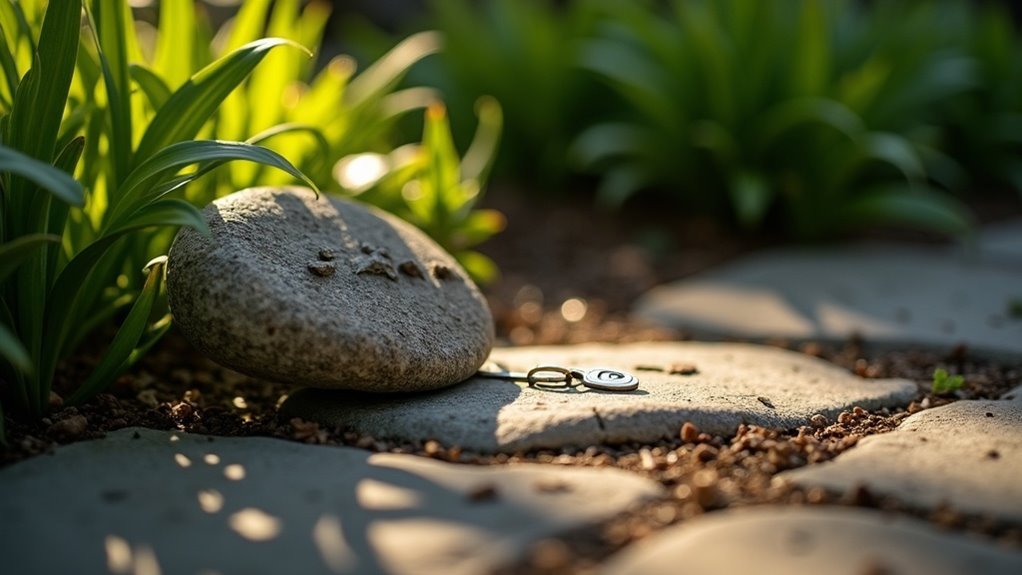
To hide spare keys securely in a survivalist context, avoid obvious spots like doormats or flower pots that can attract unwanted attention. Instead, consider less visible and more strategic locations, such as inside a birdhouse or buried within potted plants that blend into the environment. Utilize creative methods like magnetic key holders affixed to metal surfaces or disguised fake rocks that can camouflage with your surroundings. Regularly inspect your hiding spots to ensure they remain secure and undisturbed. Additionally, consider smart lock alternatives and other advanced security measures to enhance your preparedness and key management strategy in case of emergencies.
Key Takeaways
- Choose discreet hiding spots that are not visible from primary entry points, avoiding obvious locations like doormats or flower pots, which can easily be compromised by unwanted intruders.
- Utilize creative concealment techniques, such as magnetic key holders or items that blend into your survival gear, ensuring your keys remain hidden in plain sight.
- Consider entrusting a spare key to a reliable preparedness-minded neighbor for added security and accessibility during emergencies.
- Regularly inspect and change hiding spots to minimize the risk of discovery and maintain security, especially in a survival situation where adaptability is key.
- Steer clear of cliché locations like mailboxes or above door frames, as these are commonly checked by intruders and do not provide the level of security needed for preparedness-minded individuals.
The Importance of Choosing the Right Hiding Spot
How can you ensure your spare key remains secure in a survival situation? Choosing the right hiding spot is crucial. Avoid hiding your spare key outside in obvious locations like doormats or flower pots; these are the first places intruders will check.
Instead, seek out discreet locations that aren’t easily visible from primary entry points. Consider creative concealment techniques, such as utilizing fake rocks or hidden compartments within your outdoor gear, to enhance security significantly.
Regularly inspect and change your hiding spots to minimize the risk of discovery. Additionally, think about establishing a key-holding arrangement with a trusted neighbor, which can strengthen community ties while ensuring your spare key is safeguarded in case of emergencies.
Best Places to Hide a Spare Key
When it comes to hiding a spare key, it’s essential to employ creative concealment techniques that align with survivalism principles.
One effective strategy is to ask a trusted neighbor, who shares your preparedness mindset, to hold onto a key for you. This not only strengthens community bonds but also ensures your key is kept secure within a network of like-minded individuals.
Additionally, consider hiding a key in less obvious spots around your property, such as within a potted plant or a birdhouse, as these locations can deter potential intruders and preserve your safety in a survival situation.
Always think critically about accessibility and security when deciding where to stash your spare key.
Creative Concealment Techniques
While traditional hiding spots like under the welcome mat or inside a flower pot might seem convenient, they can compromise your security during emergencies.
Instead, consider utilizing a magnetized key holder discreetly attached to metal surfaces for a hidden key that remains out of sight, ensuring quick access when needed.
You could also bury a spare key in a waterproof container within a resilient potted plant, marked subtly for retrieval.
A fake rock blending in with real rocks can effectively camouflage your key, making it less likely to be discovered by intruders.
Alternatively, an unused birdhouse can serve as a quirky yet practical hiding place for your spare key, blending into your outdoor environment.
Finally, opt for a coded lockbox to store a spare key, enhancing your home’s security and preventing unauthorized access while preparing for any potential emergency situations.
Trusted Neighbor Options
One of the most strategic locations to stash a spare key is with a trusted neighbor. This option significantly enhances your home security, providing quick access during emergencies or unforeseen lockouts.
Select a reliable neighbor who lives nearby, ensuring they can respond without delay when the situation arises. Establish clear communication regarding the conditions under which the key can be used, preventing any potential misunderstandings.
Sharing a spare key not only strengthens community ties but also cultivates a network of mutual support essential for survival preparedness. Regular check-ins with your neighbor are vital to confirm their willingness to hold the key and to discuss any shifts in your home access requirements, keeping your safety and security top of mind in uncertain times.
Worst Places to Hide a Spare Key
When it comes to hiding a spare key, some spots are just too obvious and can compromise your home security. Areas like under the doormat or inside the mailbox are the first places intruders look.
As a survivalist, you understand the importance of staying one step ahead. Avoid these poor concealment techniques to keep your home secure and your key out of sight, ensuring that your preparedness strategies remain effective and your resources remain protected.
Obvious Hiding Spots
Finding a secure spot to hide a spare key can be crucial for survivalists and preppers, especially when many people use obvious hiding places that intruders are well aware of.
Here are some of the worst hiding spots to avoid:
- Under a doormat – it’s the first place burglars check, making it highly predictable.
- Inside the mailbox – offers easy access for thieves who know where to look.
- Under a flowerpot – a clichéd hiding spot that’s often discovered quickly.
- Above the door frame – a classic location that’s well-known to intruders.
For those committed to preparedness, it’s essential to steer clear of these obvious locations.
Instead, consider more discreet and less predictable hiding spots to ensure that the last thing a burglar finds isn’t a spare key outside your home!
Poor Concealment Techniques
Even with a variety of clever hiding spots available, many survivalists still resort to poor concealment techniques that leave spare keys vulnerable.
Hiding a key outside under a doormat or inside a mailbox poses a significant security threat, as intruders often check these first.
Placing a spare key under a flowerpot or above the door frame might seem practical, but these are cliché spots that are easily discovered.
Even hiding a key inside a grill risks damage and isn’t discreet.
To truly secure access to your homestead and protect your resources, avoid these poorly concealed options and consider more innovative hiding places that align with your survival strategy.
Creative Hiding Techniques
How can you keep your spare keys secure while ensuring they’re easily accessible in a survival situation? Using creative hiding techniques can be crucial for your prepper strategy.
Here are some effective places to hide your key that can blend into your environment:
- Attach a magnetic key holder to a metal surface, like the underside of a vehicle or equipment, keeping it discreet and out of sight from casual observers.
- Disguise a key inside a decorative birdhouse or lantern that can serve a dual purpose, providing both camouflage and functionality in your outdoor setup.
- Bury a spare key in a watertight container within a potted plant, ensuring it remains hidden from potential intruders while accessible for you.
- Use a fake rock that mimics the surrounding terrain to conceal your key, making it an inconspicuous part of your landscape.
These methods enhance your security without relying on smart locks, while ensuring your spare key is always within reach for when you need it most.
Smart Lock Alternatives
While creative hiding techniques for spare keys can enhance your security, exploring smart lock alternatives offers a modern solution for keyless entry and improved home protection, especially for preppers looking to bolster their home security. Smart locks eliminate the need for a traditional house key, providing peace of mind with features like remote access and customizable alerts that can help you stay informed about your home’s security status. Biometric locks, which utilize fingerprint recognition, ensure that only authorized individuals can gain entry. You can even integrate these devices with your overall home security system for a comprehensive approach to safety. Consider the benefits below:
| Smart Lock Features | Benefits |
|---|---|
| Keyless Entry | No more hiding keys, reducing vulnerabilities |
| Remote Access | Monitor and control entry from anywhere |
| Customizable Alerts | Stay informed about entry and exit activity |
| Biometric Security | High-level protection against unauthorized access |
| Compatibility with Cameras | Enhanced surveillance for a thorough security setup |
In a survivalist mindset, these advanced locking systems not only provide convenience but also add an essential layer of security for your home and family.
What to Do If You Lose Your Spare Key
What should you do if you lose your spare key? First, stay calm and follow these steps to ensure your home and preparedness are secure:
- Retrace your steps and search common areas where you might’ve placed the key. In a survival scenario, knowing your surroundings is vital.
- Thoroughly check your vehicle and around your home, including under furniture and in bags. Remember, being organized can prevent loss in the future.
- If you can’t locate the key, contact a locksmith for key replacement or to re-key your locks. Consider learning DIY lock-picking techniques as part of your prepping skills.
- If you suspect suspicious activity or that your key has been stolen, file a police report and change your locks immediately. Being proactive about security is essential in survivalism.
Taking these steps ensures your home remains safe and secure, allowing you to focus on your preparedness efforts.