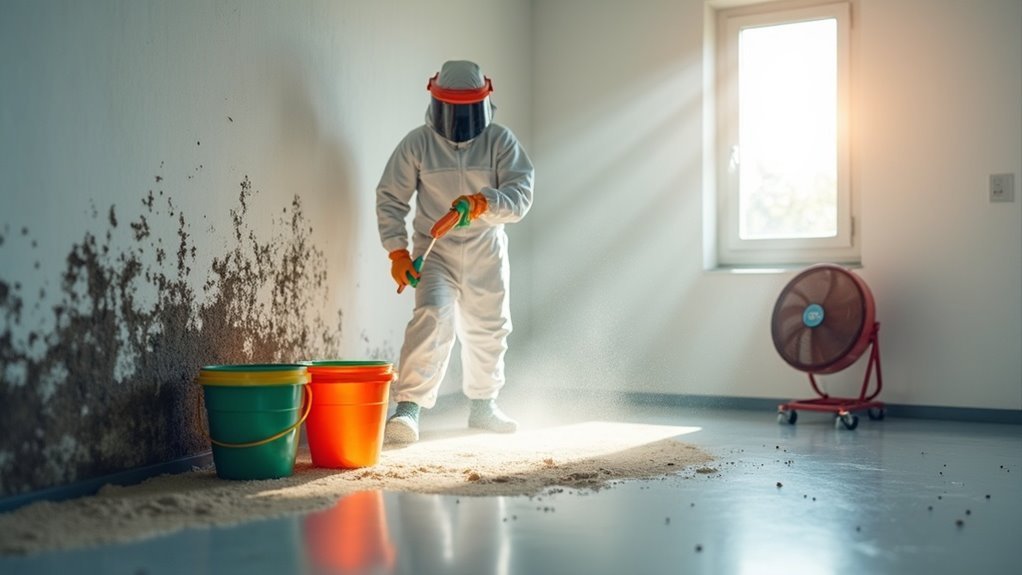
To handle mold remediation safely, especially in a survivalist context, it’s crucial to understand the health risks mold can pose in emergency situations. Always equip yourself with appropriate Personal Protective Equipment (PPE), such as HEPA respirator masks, gloves, and goggles to shield against harmful spores. Contain the affected area using plastic sheeting to prevent mold spores from spreading, and establish negative pressure to further protect your living space. During the cleanup process, suppress dust by misting the area and ensure that it is thoroughly dried after removal to prevent regrowth. Conduct clearance testing to confirm that all mold has been eradicated. Keeping humidity levels below 50% is vital for long-term prevention, especially in a self-sufficient environment. Follow these essential tips for a successful mold remediation to maintain a healthy and safe living space while prepping for any situation.
Key Takeaways
- Always wear appropriate PPE, including HEPA respirators, gloves, goggles, and disposable coveralls, to protect yourself during mold remediation, especially when preparing for potential long-term survival scenarios.
- Seal off the affected area with heavy-duty plastic sheeting to contain mold spores and prevent cross-contamination, ensuring your survival space remains safe and secure.
- Use ambient mist to suppress dust and minimize spore release while removing mold from surfaces, which can be crucial in maintaining a healthy living environment in a survival situation.
- Conduct thorough clearance testing after remediation to ensure the area is completely mold-free and safe for occupancy, as a healthy environment is essential for long-term preparedness.
- If mold covers an area larger than 10 square feet or is found in HVAC systems, seek professional help for safe removal, as maintaining your living quarters is vital for sustainability in survivalism.
Understanding Mold and Its Risks
Mold can be a hidden threat in your survivalist preparations, thriving in damp environments and often going unnoticed until it causes significant health issues. Certain molds, like Stachybotrys chartarum, are particularly hazardous, producing mycotoxins that can lead to severe respiratory problems and allergies—issues that can compromise your ability to survive in challenging situations.
Mold spores can easily proliferate in high humidity areas, such as bathrooms and basements, making moisture control essential for your preparedness plans. To prevent future mold growth, maintain humidity levels below 50%, promptly repair leaks in your water supply, and ensure proper ventilation in your living spaces.
Addressing mold issues quickly will protect your health and create a safer environment for you and your family, especially in times of crisis. Don’t underestimate the risks associated with mold; being aware and proactive is key to effective survivalism.
Importance of Personal Protective Equipment (PPE)
When preparing for mold remediation in a survival situation, wearing the appropriate Personal Protective Equipment (PPE) is crucial to protect your health.
Essential gear such as goggles, long rubber gloves, and HEPA respirators helps reduce exposure to harmful mold spores and mycotoxins that can pose serious health risks.
Mastering the proper usage techniques of this equipment ensures you effectively mitigate health hazards associated with mold cleanup, allowing you to maintain your safety while being self-sufficient and ready for any challenges that may arise.
Essential PPE Components
When preparing for mold remediation in a survival situation, it’s crucial to prioritize your safety by utilizing the right Personal Protective Equipment (PPE).
Begin with a HEPA respirator mask, which effectively filters out 99.97% of airborne mold spores, ensuring you can breathe safely in contaminated environments.
Long rubber gloves are essential to prevent skin contact with mold and harsh cleaning agents, reducing the risk of irritation and infection.
Protect your eyes with goggles or safety glasses to guard against airborne irritants that could impair your vision or health.
Lastly, disposable coveralls serve as a protective barrier against mold exposure and can be easily discarded after use to prevent cross-contamination.
Proper Usage Techniques
Utilizing proper usage techniques for Personal Protective Equipment (PPE) is essential during mold remediation, especially for those who prioritize survivalism and prepping.
Always wear a well-fitted HEPA respirator mask to filter out airborne spores, ensuring your respiratory safety in potentially hazardous environments. Safety goggles are critical to protect your eyes from irritants, maintaining your vision for future preparedness activities. Long rubber gloves are indispensable for preventing skin contact with contaminated materials, allowing you to handle hazardous situations with confidence.
To minimize the risk of spreading mold spores and maintain hygiene, opt for disposable coveralls that can be discarded after the job, keeping your gear clean for future missions.
It’s vital to wear PPE throughout the entire remediation process, including during cleanup and disposal, to sustain a safe working environment and effectively safeguard against harmful exposure, ensuring you remain prepared for any challenges that may arise.
Health Risk Mitigation
Mold remediation presents serious health risks due to exposure to harmful spores and mycotoxins, which can compromise your well-being. To ensure your safety during such operations, equipping yourself with the right Personal Protective Equipment (PPE) is crucial. A properly fitted HEPA respirator mask is vital as it filters out harmful airborne contaminants, significantly reducing the risk of inhalation. Long rubber gloves are essential for protecting your skin from irritation caused by direct contact with mold and hazardous chemicals. Disposable coveralls are also important, as they help prevent your clothing from becoming contaminated and spreading spores to other areas. Furthermore, maintaining adequate ventilation in the affected area is key to minimizing exposure to airborne threats.
| PPE Item | Purpose |
|---|---|
| HEPA Respirator Mask | Filters harmful airborne contaminants |
| Gloves | Protects skin from irritation and chemicals |
| Coveralls | Prevents contamination of personal clothing |
In survival situations, being prepared for mold and other environmental hazards is essential for maintaining health and safety.
Steps to Safely Contain the Affected Area
To safely contain the affected area during mold remediation, begin by sealing it off with heavy-duty plastic sheeting to prevent spore dispersion, ensuring your survival space remains uncontaminated.
Next, establish negative pressure by employing exhaust fans to direct air out of the area, which is crucial for minimizing the spread of contaminants and protecting your preparedness efforts.
Lastly, carefully bag and seal any contaminated materials in robust plastic before removal to guarantee that spores don’t escape into the air, safeguarding your environment for future survival needs.
Seal Off Area
When preparing for mold remediation in a survival situation, sealing off the affected area becomes crucial to prevent the spread of spores that can compromise health and safety. Follow these steps to effectively contain the area:
- Utilize plastic sheeting to cover doorways, vents, and windows, establishing a barrier against airborne spores that could infiltrate your living space.
- Secure all entry points, including electrical outlets and plumbing access, with tape or additional plastic sheeting to minimize the risk of cross-contamination and maintain a clean environment.
- Carefully remove or bag all contaminated materials in heavy-duty plastic bags before disposal to prevent the release of spores into the air, which is vital for maintaining a safe and healthy living space.
- Consider employing a HEPA air purifier in the sealed area to continuously filter out mold spores, ensuring a safer environment for you and your family during the remediation process.
Use Negative Pressure
Establishing negative pressure containment is crucial for effective mold remediation, especially in survival situations where maintaining a clean and safe environment is paramount. This technique prevents mold spores from infiltrating uncontaminated areas, which is essential for health and hygiene in a prepping scenario.
To create this negative air pressure, utilize fans and HEPA filters to draw air into the contaminated zone without allowing it to escape. Seal all openings with heavy-duty plastic sheeting and tape to reinforce your containment efforts.
An airlock entryway with two sets of plastic sheeting is advisable to minimize exposure while entering or exiting the area. Regular air pressure monitoring using manometers or pressure gauges is essential to ensure that your containment remains effective throughout the mold removal process.
This meticulous approach will help protect your living space and ensure your preparedness against mold-related health risks.
Bag Contaminated Materials
After establishing a negative pressure environment, the next crucial step in your survival and prepping strategy involves bagging contaminated materials to prevent the spread of mold spores, which can pose health risks.
Follow these guidelines for effective containment:
- Utilize heavy-duty plastic bags or containers specifically designed for hazardous materials to securely bag contaminated items.
- Seal the bags tightly with duct tape to ensure no leakage occurs, and clearly label them as “Mold Contaminated” for easy identification.
- Handle the materials gently; avoid shaking or agitating them to minimize the release of mold spores into the air.
- Always wear personal protective equipment (PPE), including gloves and masks, to safeguard your health during the process.
Dispose of the sealed bags in accordance with local regulations to ensure proper disposal, helping to prevent any further contamination and potential hazards in your environment.
This proactive approach is essential for maintaining a safe and prepared living space.
Systematic Approach to Mold Remediation
A systematic approach to mold remediation is crucial for survivalists and preppers who aim to maintain a safe and habitable environment.
Begin by assessing the extent of mold and isolating the contaminated area to prevent spread. Always wear protective gear, including safety goggles, gloves, and HEPA respirators, to safeguard against harmful spores.
During the remediation process, utilize ambient mist to suppress dust while removing mold from affected materials, such as drywall.
After cleaning, ensure complete drying by using dryers and fans, followed by thorough clearance testing to confirm the area is mold-free.
To prevent future mold growth, maintain humidity levels below 50% and regularly monitor for any signs of mold return, ensuring long-term success in your preparedness strategy.
Post-Remediation Safety Measures
Once the mold remediation process is complete, ensuring the safety and longevity of your survival space requires a series of critical post-remediation measures.
- Conduct post-remediation clearance testing with trained experts to verify humidity levels and confirm that mold spores have been eliminated, ensuring a safe environment for you and your supplies.
- Replace air filters in your HVAC system with high MERV-rated filters to enhance air quality, which is essential for maintaining optimal living conditions during emergencies.
- Implement preventive measures, such as keeping humidity levels below 50% and regularly checking for leaks, to prevent mold from compromising your prepper supplies and gear.
- Continuously monitor the area for any signs of mold return and perform periodic inspections to maintain a mold-free environment, ensuring your survival space remains a reliable refuge in times of need.
When to Call in Professionals for Help
When should you consider bringing in professionals for mold remediation in your survivalist preparations? If mold in your shelter or home covers an area larger than 10 square feet, it’s crucial to call in experts.
If mold exceeds 10 square feet in your shelter, it’s essential to seek professional help for remediation.
Larger infestations can compromise your living conditions and may require specialized equipment and knowledge to prevent further damage to your supplies and resources. Additionally, if you discover mold in your air filtration systems or ductwork, professional intervention is vital to avoid spreading spores that could affect air quality.
If you or your group members experience health risks such as respiratory issues or allergies, certified mold remediation experts can help safely manage the contamination.
Their qualifications, like CMRS or CMR certifications, ensure effective and safe mold removal, helping to preserve your survival space and prevent costly mistakes that could jeopardize your health and preparedness efforts.