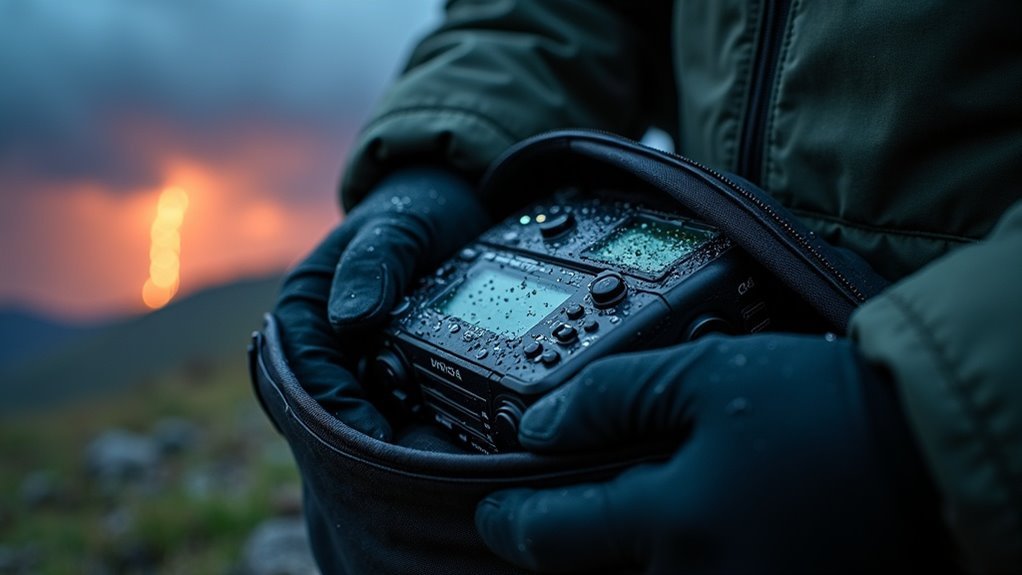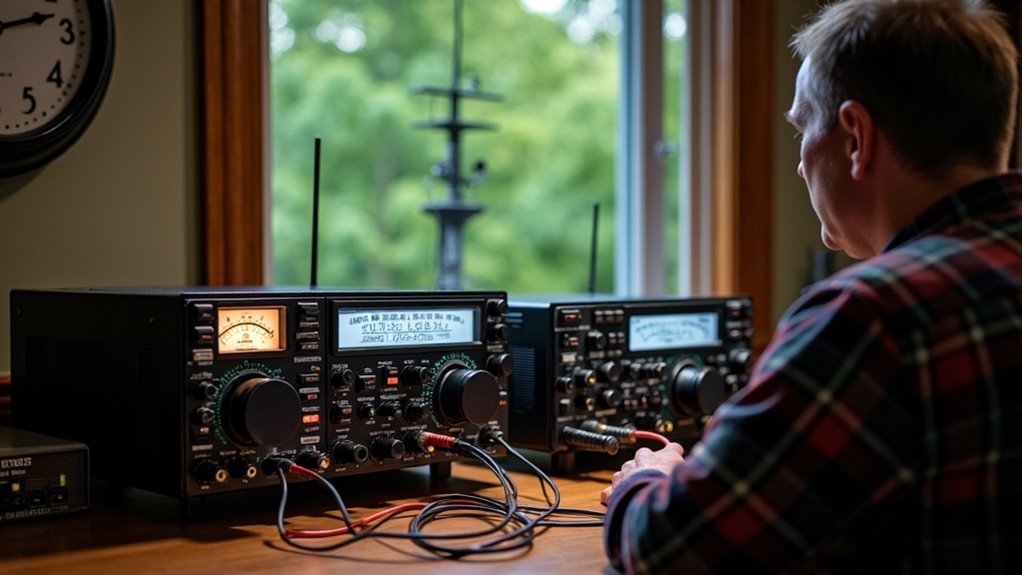
To extend your handheld radio range safely in a survival situation, start by using reliable UHF radios like the Motorola TLK Series that leverage cellular networks, which can be invaluable when traditional systems fail. Upgrade to a better antenna, such as a longer J-pole, and elevate it to maximize line of sight—this is crucial for effective communication in the field. Consider employing repeaters to achieve broader coverage in challenging environments, especially where natural obstacles may impede signals. Regularly check and maintain batteries to ensure your equipment is always ready when you need it most. Be aware of environmental factors that can affect signals, such as terrain and weather conditions. By applying these techniques, you’ll greatly enhance your communication capabilities, which is essential for effective survival and prepping. More tips for optimizing your communication strategy await!
Key Takeaways
- Upgrade to a longer wideband or external J-pole antenna to enhance signal strength and communication range, which is crucial for effective communication during emergencies.
- Elevate antennas using flag poles or vehicle mounts to improve line of sight, reducing obstacles that could hinder communication when you need it most.
- Utilize repeaters installed in elevated locations to significantly extend communication range in rugged environments, ensuring you stay connected even in challenging conditions.
- Regularly monitor and maintain battery levels, using high-quality batteries to ensure optimal performance and reliability when you’re off the grid or in survival situations.
- Ensure a clear line of sight for UHF radios, as they are more effective indoors and in urban settings compared to VHF radios, making them a better choice for urban survival scenarios.
Consider Nationwide Two-Way Radios
When preparing for survival scenarios, having reliable communication tools is essential, and nationwide two-way radios can significantly enhance your ability to stay connected.
Models like the Motorola TLK Series leverage cellular networks, providing a superior signal that far surpasses conventional walkie-talkies. With a range often exceeding two miles, these radios ensure dependable communication in both urban and rural environments, which is crucial during emergencies or when navigating remote areas.
The TLK100, TLK110, and TLK150 models offer seamless connectivity, making them perfect companions for outdoor expeditions and survival situations.
Improve the Antenna
Upgrading your radio’s antenna is a crucial step for enhancing communication effectiveness in survival and prepping scenarios. A superior antenna, such as a longer wideband or an external J-pole, can significantly improve signal strength and range, which is essential for staying in touch during emergencies.
Elevating your antenna is key; positioning it higher improves line of sight, which is vital for effective GMRS communication. Additionally, utilizing a fully extended telescopic antenna can maximize performance.
Don’t underestimate the impact of adjusting your antenna’s angle; even minor tweaks in various directions can greatly enhance signal clarity. Regular maintenance and fine-tuning of your antenna will ensure that you’re getting the most out of your handheld radio, providing clearer and more dependable communication when it’s needed most in critical situations.
Use a Repeater for Extended Range
Using a repeater can significantly enhance your communication range while prepping for any survival situation, particularly in rugged or remote environments.
To ensure optimal performance, it’s advisable to install repeaters in elevated locations, which can help reduce signal obstruction caused by terrain or structures.
Repeater Installation Tips
To achieve optimal communication capabilities with handheld radios in survival situations, installing a repeater is a crucial step. Elevating the repeater in high locations can significantly improve its effectiveness, allowing for better communication over obstacles like hills and buildings that may obstruct signals.
It’s vital to ensure the repeater is powered by a reliable source, as weak batteries can severely impact performance during critical moments. Regular maintenance is key to ensuring the repeater operates effectively and lasts longer.
Additionally, utilizing a high-gain antenna can enhance both the range and clarity of your signals, which is essential in emergency scenarios. For extensive coverage, especially important for first responders or during survival operations, consider linking multiple repeaters together to create a robust communication network.
Optimal Repeater Locations
Selecting optimal locations for your repeaters is crucial for enhancing communication range, especially in survival situations.
Position your repeaters in elevated areas such as rooftops or tall towers to improve coverage and navigate around obstacles like hills and buildings that can block signals. This ensures a clear line of sight between your repeater and the radios, which is vital for effective communication.
Repeaters amplify signals at higher power levels, significantly extending your range—an essential factor during emergencies or when traditional communication methods fail.
Regular maintenance, such as checking and replacing batteries, is critical to ensure they function at peak levels.
In survival scenarios, dependable communication is imperative, making the strategic placement and upkeep of repeaters a top priority for any prepping plan.
Benefits of Using Repeaters
While handheld radios are vital tools for communication in survival situations, their range can be significantly hindered by obstacles like buildings and rugged terrain. Incorporating repeaters into your communication strategy can greatly improve your capabilities.
Here are four essential benefits for preppers and survivalists:
- Extended Range: Repeaters amplify signals, enabling communication over greater distances, even when direct line of sight is obstructed.
- Reliable Communication: They ensure consistent connectivity in challenging environments, which is crucial for coordinating during emergencies or survival scenarios.
- Strategic Placement: Installing repeaters in elevated locations can help overcome geographical barriers, enhancing your communication network.
- Safety Enhancement: Using repeaters ensures you remain connected during outdoor activities, expeditions, or emergencies, providing peace of mind.
Regular maintenance is vital to keep repeaters functioning optimally, ensuring you have reliable communication when it matters most in your survival preparations.
Ensure Batteries Are in Good Condition
Ensuring that the batteries in your handheld radio are in optimal condition is crucial for survival situations where communication is vital. Regularly monitor battery levels with a tester, as weak batteries can severely diminish your signal strength, potentially putting you at risk. Replace any depleted batteries promptly to maintain peak performance. Always opt for high-quality batteries that are compatible with your specific model, and consider using rechargeable options for a more sustainable approach. Additionally, it’s wise to keep a spare set of fully charged batteries on hand to minimize downtime during critical moments.
| Action | Frequency | Notes |
|---|---|---|
| Check battery levels | Weekly | Use a battery tester |
| Replace depleted batteries | As needed | Ensure reliable communication |
| Use quality batteries | Always | Select compatible types |
| Consider rechargeables | If prolonged use | Fully charge before deployment |
| Maintain spares | Always | Quick replacement during emergencies |
Use UHF for Better Range Indoors
To enhance your handheld radio’s indoor range for survival situations, utilize UHF frequencies, which are adept at penetrating walls and obstacles.
These shorter wavelengths are particularly effective in urban environments, ensuring clearer communication during emergencies.
To optimize signal strength, strive to maintain a line of sight between your transmitter and receiver.
In critical situations, consider using external antennas or repeaters to bolster your communication capabilities.
Being prepared with reliable communication tools is essential for effective survivalism and prepping.
UHF Signal Penetration Strength
UHF radios are a crucial tool for survivalists and preppers, especially in urban environments where obstacles can disrupt communication. Their exceptional signal penetration is vital for maintaining contact during emergencies.
Here’s why UHF radios are essential for your preparedness strategy:
- Shorter Wavelength: UHF signals can easily navigate through buildings, allowing you to communicate effectively even in crowded or complex environments.
- Frequency Range: Operating between 300 MHz to 3 GHz enables UHF radios to perform well against dense materials, ensuring you can stay connected when it matters most.
- Multi-Story Communication: UHF radios provide clear communication across multiple floors, which is important in high-rise situations or when coordinating with team members in different locations.
- Clear Line of Sight: Strategically positioning your devices can significantly enhance signal strength, ensuring reliable communication during critical moments.
In survival situations where every second counts, using UHF radios considerably improves your communication reliability, making them an indispensable part of your emergency preparedness toolkit.
Optimal Indoor Usage Tips
When it comes to optimizing communication in survival situations, the right approach can significantly enhance your handheld radio experience. UHF radios are highly recommended, as they penetrate walls and obstacles more effectively than VHF radios, making them ideal for indoor use during emergencies.
Position yourself near windows or on higher floors to improve line of sight and extend your communication range. Additionally, avoid using electronic devices nearby that might cause interference, which can be crucial when every message counts.
Experiment with different frequencies and channels, as some may perform better in various indoor environments, especially if you’re in a survival scenario where conditions can be unpredictable.
Lastly, always check your battery status regularly; weak batteries can severely reduce signal strength and lead to communication breakdowns when you need it most.
Stay connected and prepared by following these essential tips for indoor radio communication in survival situations.
Key Factors Affecting Range
Several key factors considerably influence the effective range of handheld radios, which is crucial for survival communications. Understanding these can help you optimize your preparedness strategies.
- Terrain and Obstacles: In survival situations, hills and buildings can severely limit your communication range. When planning your setup, seek open areas for better radio performance.
- Weather Conditions: Adverse weather, such as rain and snow, can disrupt radio signals, reducing your effective range. Be mindful of the forecast during critical communications.
- Line of Sight: Maintaining a clear line of sight is essential for enhancing signal quality. Elevated positions can significantly improve your communication distance, especially in rugged terrain.
- Radio Type: UHF radios are particularly effective for indoor use, as they penetrate walls more effectively than VHF radios. Choose the right type based on your environment and needs.
Additionally, regularly check your batteries, as weak power can diminish signal strength, jeopardizing your ability to communicate in emergencies.
Techniques for Optimal Performance
To maximize the performance of your handheld radio for survival situations, consider implementing several effective techniques that enhance signal strength and clarity.
Elevate your antenna using a flag pole or mount it outside your vehicle to improve line of sight, ensuring you can communicate over long distances in emergency scenarios.
Upgrading to a longer wideband or telescopic antenna can significantly enhance signal quality when fully extended, making it easier to reach help when needed.
Regularly check and replace weak batteries to maintain peak power levels, as reliable communication is crucial during survival situations.
Utilize repeaters in elevated locations to boost your signal range and overcome physical obstacles, ensuring you stay connected with your group or emergency services.
Finally, experiment with your body orientation and minor movements while transmitting to achieve noticeable improvements in reception and clarity, which can make a critical difference when every message counts.
Resources for Further Learning
As you seek to enhance your knowledge of extending handheld radio range for survival situations, a wealth of resources is available to aid your learning.
Consider exploring these options:
- Online forums dedicated to survivalists and prepping enthusiasts for troubleshooting and shared experiences in communication methods.
- Video tutorials on platforms like YouTube that illustrate techniques for optimizing radio performance in emergency scenarios.
- Manufacturer websites for recommendations on antenna upgrades and configurations that can be crucial during a crisis.
- Workshops or local classes focusing on amateur radio operation, emergency communication, and maximizing range for preparedness.
Utilizing these resources will deepen your understanding and help you effectively extend your handheld radio’s range, ensuring you stay connected when it matters most.