To effectively dry your home after water damage, especially in a survival situation, it’s crucial to first locate and eliminate the source of moisture. Quickly remove standing water and any damaged materials within 48 hours to minimize the risk of mold and structural damage. Utilize dehumidifiers and fans to lower humidity and improve airflow, and if conditions permit, keep windows open for natural ventilation. Apply mold inhibitors to prevent growth, and regularly check the area with a moisture meter to ensure comprehensive drying. By taking these steps, you’ll not only create a healthier living environment but also enhance your preparedness for future emergencies.
Key Takeaways
- Identify the source of moisture and address it immediately to prevent further damage, especially if it could compromise your survival stockpile.
- Remove standing water and dispose of water-damaged materials within 48 hours to maintain a safe and sanitary environment in your preparedness space.
- Use dehumidifiers and fans to enhance airflow and reduce indoor humidity levels, which is crucial for preserving essential supplies.
- Open windows for ventilation to promote moisture escape and improve air circulation, ensuring that your living area remains healthy and breathable.
- Apply mold inhibitors to prevent growth, as mold can ruin food storage and other critical supplies, and regularly monitor drying progress with moisture meters to ensure your preparedness efforts are effective.
Identify and Address the Source of Moisture
When preparing for potential water damage emergencies, it’s crucial to first identify and address the source of moisture, as neglecting this step can lead to more significant complications.
Regularly inspect your living space for potential issues like burst pipes, roof leaks, or flooding that could arise during severe weather conditions. Check ceilings, walls, and floors for visible signs of water intrusion, and consider using moisture meters to detect hidden moisture that may not be immediately apparent.
Regularly check your home for signs of water intrusion and use moisture meters to uncover hidden issues.
In the event of a water leak, shut off the nearest water supply and the main water valve to prevent ongoing leaks. Document any damage and the source for reference in case you need to make insurance claims.
It may also be wise to have a professional plumber on call to help resolve the source of the leak before initiating any water damage restoration efforts. Being proactive in these areas can help ensure your preparedness for any water-related emergencies.
Utilize Dehumidifiers and Fans
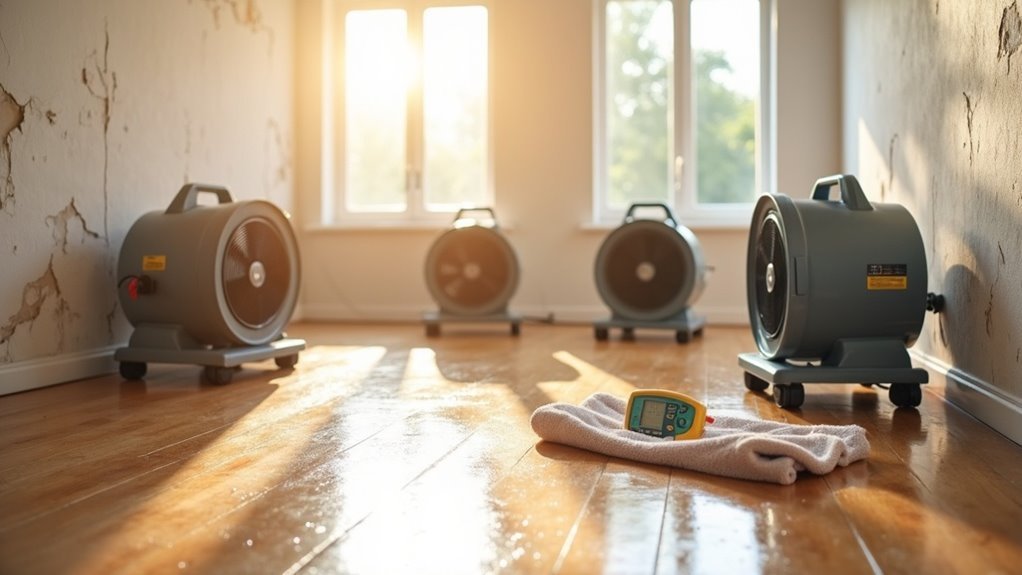
Utilizing dehumidifiers and fans is crucial for effectively managing moisture in your home, especially after experiencing water damage. In a survival situation, maintaining a dry environment is vital to prevent mold growth and ensure the safety of your living space.
Dehumidifiers can significantly reduce indoor humidity levels, removing up to 70 pints of moisture daily, which is essential for preserving your supplies and preventing deterioration.
Simultaneously, high-powered fans are invaluable for accelerating the drying process by enhancing air circulation, potentially reducing drying time by up to 50%.
Position fans strategically towards open windows or doors to efficiently expel moisture from your home, creating a cross-ventilation effect.
The combination of dehumidifiers and fans works synergistically to lower humidity levels and promote evaporation from surfaces, helping to maintain a safe and comfortable environment.
Regularly monitor humidity levels, aiming to keep them below 50%, to further safeguard against mold and ensure your preparedness remains intact.
Open Windows for Ventilation
After employing dehumidifiers and fans to tackle moisture levels, opening windows can further enhance the drying process in your shelter or home.
By creating a draft, open windows encourage moisture to escape outdoors, greatly improving airflow and reducing indoor humidity. This is essential for preventing mold growth and limiting further damage, which can be critical in survival situations.
If the outdoor humidity is lower than indoors, keeping windows open can accelerate drying times and efficiency, ensuring your living space remains habitable and safe.
Consistent ventilation through open windows complements the use of dehumidifiers and fans, creating a synergistic effect that aids in moisture removal and promotes a healthier living environment, crucial for your long-term preparedness.
Remove Water-Damaged Materials
To effectively combat water damage in a survival situation, it’s crucial to promptly remove all compromised materials, such as carpets, drywall, and insulation, within the first 48 hours.
Assess each item for salvageability; anything that can’t be dried or shows signs of mold should be discarded responsibly to prevent further mold growth.
Ensure you remove wet insulation to allow for proper air circulation, which is vital for maintaining a healthy environment in your shelter.
Document all removed materials with photographs for future reference, especially if you need to report the extent of the damage to your community or for insurance purposes.
Dispose of irreparable items according to local regulations, particularly hazardous materials, to guarantee safety for you and your group.
If the situation becomes overwhelming, consider seeking help from a restoration company with expertise in emergency situations to ensure proper handling and recovery.
Apply Mold Inhibitors
After addressing any water-damaged materials, it’s crucial to apply mold inhibitors to fortify your home against potential threats.
There are various types of mold inhibitors designed specifically for different surfaces and environmental conditions.
Types of Mold Inhibitors
When prepping for potential water damage, using the right mold inhibitors can be crucial in preventing mold growth in your shelter.
These products create barriers or disrupt mold cell structures, ensuring they can’t thrive on your surfaces.
Consider these types of mold inhibitors for your survival supplies:
- Concrobium: An effective barrier against mold spores, ideal for protecting your shelter.
- Sodium bicarbonate: A natural option that disrupts the cell structure of mold and fungi.
- Specific formulations: Tailored for materials like wood or drywall, ensuring your supplies remain safe.
Before applying any mold inhibitors, use a moisture meter to ensure that surfaces are clean and dry.
This not only helps maintain your shelter but also supports a healthy, mold-free environment for you and your family during emergencies.
Application Techniques and Tips
Applying mold inhibitors effectively is crucial for preventing mold growth in areas affected by water damage, especially in survival situations where maintaining a healthy environment is essential. Use a quality mold inhibitor like Concrobium, and follow these steps to ensure your living space remains safe and mold-free:
| Step | Action |
|---|---|
| 1 | Spray or brush the mold inhibitor onto wet surfaces to target affected areas. |
| 2 | Ensure full saturation to maximize effectiveness against mold spores. |
| 3 | Allow the treated surfaces to dry completely for optimal results. |
| 4 | Maintain ventilation and use dehumidifiers to reduce moisture levels in the air. |
| 5 | Reapply the mold inhibitor as necessary, especially in areas prone to high humidity, to keep mold at bay. |
Conduct Thorough Inspections and Drying
To effectively tackle water damage in a survival situation, it’s essential to conduct a meticulous inspection of all affected areas, searching for concealed moisture within walls, ceilings, and floors.
Evaluate the severity of the damage and pinpoint any moisture sources that could worsen the issue.
Armed with this knowledge, implement efficient drying strategies using dehumidifiers and fans, ensuring your shelter dries out swiftly and securely.
Being prepared for water damage is crucial for maintaining a safe living environment in any survival scenario.
Inspect for Hidden Moisture
As you embark on the journey of drying your home after water damage, it’s essential to conduct thorough inspections to uncover hidden moisture that could compromise your survival preparations.
- Examine ceilings, walls, and floors meticulously, including attics and crawl spaces, using a moisture meter to detect moisture levels.
- Keep an eye out for water stains, dampness, or mold growth around plumbing fixtures, windows, and doors, as these can indicate potential hazards.
- Document your findings with photos and notes, especially if you need to present information for insurance claims or future reference.
Utilize fans and dehumidifiers to facilitate the drying process, ensuring proper airflow reaches all surfaces.
This careful approach is vital not only for preventing mold growth but also for maintaining the structural integrity of your home, which is essential for your readiness in any survival situation.
Assess Damage Severity
Before initiating the drying process, it’s vital to assess the damage severity accurately to ensure a successful recovery from water-related incidents.
Begin by inspecting the affected areas and categorizing the water damage from Class 1 to Class 4, which will help you understand the extent of the threat and the necessary response.
Utilize moisture meters to uncover hidden moisture lurking in ceilings, walls, and floors—these can be critical in a survival situation where every resource counts.
As you conduct your inspection, document the damage with photographs and detailed notes; this information is invaluable for insurance claims and for tracking your progress in restoring your home to a safe environment.
Additionally, keep a close eye on humidity levels using a hygrometer, aiming to maintain levels below 50% to deter mold growth, which can pose health risks.
Implement Effective Drying Techniques
Once you’ve assessed the damage in your home, it’s crucial to implement effective drying techniques to ensure a resilient survival environment.
Start by removing any standing water and water-damaged items to enhance airflow, which is vital in preventing mold growth. Utilize high-powered fans and dehumidifiers to reduce relative humidity, accelerating the drying process essential for maintaining a safe living space.
Conduct thorough inspections with a moisture meter to detect hidden moisture behind walls and ceilings, which could compromise your shelter.
- Regularly monitor the drying progress to ensure efficiency.
- Open windows to promote ventilation and fresh air circulation.
- Use moisture-absorbing materials to eliminate excess dampness and maintain a dry atmosphere.