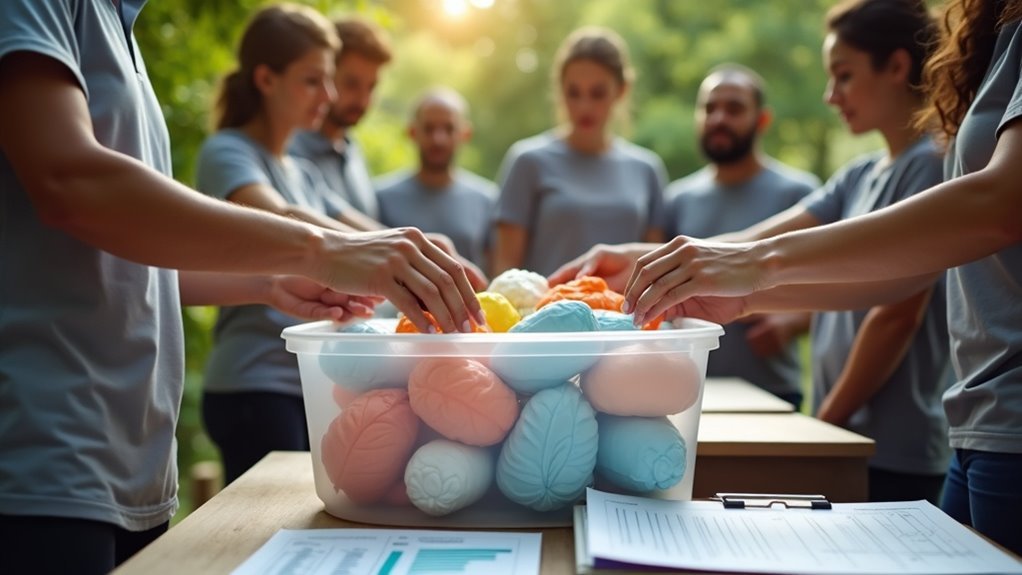
To collect needs and offers on paper within the survivalism and prepping community, design a clear survey that focuses on key questions about preparedness skills, resources, and community support. Utilize a mix of open and closed-ended questions to gather a variety of insights related to survival strategies, resource sharing, and skills exchange. Distribute your survey through community bulletin boards, survivalist forums, social media groups focused on prepping, and local prepper meetups to engage participants effectively. Encourage detailed feedback with open questions that allow individuals to express their specific needs and offers. Follow up on connections made to foster collaboration and build a resilient network. By promoting communication and cooperation, you’ll strengthen community ties and enhance overall preparedness. With the right approach, you can uncover invaluable insights that will benefit your survivalist group.
Key Takeaways
- Design an “Offers and Needs Sheet” specifically tailored for survivalism and prepping to document community skills, resources, and preparedness strategies for easy sharing and visibility.
- Use clear and concise open-ended questions to invite detailed responses from participants regarding their survival skills, equipment, and resources.
- Distribute paper surveys at survivalist meetups, prepping workshops, or local events to reach a diverse range of individuals and gather comprehensive data on community needs and offerings.
- Create a comfortable environment that encourages honest feedback about survival and prepping topics, ensuring confidentiality for participants who may share sensitive information.
- Regularly update and share the collected information with the community to maintain engagement and facilitate collaboration in enhancing preparedness efforts.
Understanding the Importance of Needs and Offers
Understanding the importance of needs and offers is crucial in the context of survivalism and prepping, as sharing resources can significantly enhance community resilience.
By conducting needs assessments, you can gather valuable information from community members about their skills, supplies, and preparedness requirements. This process not only identifies existing resources but also promotes effective communication, enabling individuals to articulate their offers and needs clearly.
When prepping communities share resources, they create a supportive network that reduces isolation and fosters collaboration in times of crisis.
Ultimately, recognizing these needs and offers empowers everyone to contribute actively, transforming passive observers into engaged participants focused on collective survival and self-sufficiency.
Designing an Effective Survey
When you’re designing an effective survey for survivalism and prepping, start by identifying key questions that align with your objectives, such as preparedness levels, preferred survival strategies, and resource availability.
Choosing the right format—mixing open-ended and closed-ended questions—can help you gather valuable insights into the community’s needs and concerns.
Once you’ve collected the data, you’ll need to analyze it thoroughly to inform your understanding of survival priorities and resource offers.
Identifying Key Questions
How can you ensure that your survey effectively captures the survival needs and resources of your community? Start by crafting clear, concise questions that directly assess specific information related to preparedness and self-sufficiency.
Use a blend of quantitative questions, like rating scales on preparedness levels, and qualitative open-ended questions to gather detailed insights about individual experiences and challenges.
Don’t forget to include demographic questions to identify trends within different segments of your community, such as urban vs. rural preppers.
Before launching your survey, pilot it with a small group of survivalists to catch any ambiguous questions or technical issues.
Finally, add a section for participants to provide contact information, enhancing future engagement based on their identified survival needs and resources.
Choosing Appropriate Format
To design an effective survey that captures the needs and offers of your survivalism and prepping community, focus on clarity and user experience from the outset. Your target audience deserves a format that’s accessible and straightforward. Use a mix of open-ended and closed-ended questions to achieve clear objectives. Incorporate Likert scale questions for gauging intensity, enhancing your needs assessment. Here’s a simple format you might consider:
| Question Type | Purpose | Example |
|---|---|---|
| Open-ended | Gather qualitative insights | “What prepping supplies do you need most?” |
| Closed-ended | Quantitative data | “Do you feel prepared for emergencies? Yes/No” |
| Likert scale | Gauge intensity | “How confident are you in your survival skills? (1-5)” |
Pilot your survey to ascertain effectiveness!
Analyzing Collected Data
Analyzing the collected data effectively is essential for understanding the needs and offers within your survivalism and prepping community.
To design an effective survey tailored to this audience, focus on these key elements:
- Create clear, concise questions that target specific survival and prepping needs.
- Use a mix of closed and open-ended questions to gain thorough insights into community preferences and concerns.
- Include demographic questions to analyze how different segments of the survivalism community respond.
Incorporating a Likert scale can help quantify the urgency of various survival needs.
Remember to pre-test your survey with a small group of fellow survivalists to identify and rectify any confusing language. This guarantees you collect valuable data that accurately reflects your target group’s priorities in the realm of survivalism and prepping.
Selecting Distribution Channels
When selecting distribution channels for your survivalism and prepping offers, it’s crucial to ensure that you effectively reach a diverse audience of preparedness enthusiasts.
Consider utilizing community boards at local outdoor supply stores, libraries, and community centers to enhance accessibility for all interested members.
Utilize community boards at outdoor supply stores, libraries, and community centers to increase accessibility for all preparedness enthusiasts.
Leverage social media platforms and prepping community groups to share digital versions of your informational materials, thereby expanding your reach.
Distributing flyers or brochures at local preparedness events or workshops can boost awareness and encourage engagement.
Collaborating with local survivalist organizations or businesses can help distribute your materials, fostering a supportive network.
Always prioritize language accessibility and cultural relevance to ensure that everyone feels included in the survivalist conversation.
Encouraging Detailed Feedback
How can you encourage participants in the survivalism and prepping community to share their thoughts in a way that truly benefits everyone involved? To gather detailed feedback, use open-ended questions that invite descriptive responses. For example, ask, “What specific skills, resources, or strategies do you believe are most crucial for effective survival and preparedness in your community?” This approach helps you collect valuable insights that address the unique needs of preppers and survivalists.
- Offer incentives for thorough feedback, such as recognition for top contributors or featuring their survival stories.
- Emphasize how clear and detailed responses can strengthen the community’s preparedness efforts and resource sharing.
- Create a comfortable environment by assuring participants that their feedback will be confidential, encouraging them to share honest and candid insights.
These strategies foster a richer dialogue and stronger connections within the survivalism and prepping community, ultimately enhancing everyone’s preparedness and resilience.
Analyzing Collected Data
As you immerse yourself in the analysis of the collected data on survivalism and prepping, categorizing responses is essential for uncovering trends and common themes within the community.
Conducting a needs assessment helps you gather data effectively, revealing what participants truly require in their preparedness efforts.
Utilize qualitative methods like coding and thematic analysis to interpret open-ended responses, while quantitative analysis can measure the frequency of specific needs and offerings.
Visual tools such as charts and graphs can enhance understanding and facilitate presentations.
Regular feedback loops with participants validate findings and refine future efforts, ensuring your analysis remains relevant and engaging for the survivalism and prepping community.
Identifying Key Community Needs
To effectively identify key community needs in the context of survivalism and prepping, it’s essential to understand where gaps exist in resources and preparedness.
Engaging local stakeholders, such as emergency services, local survivalist groups, and residents, can provide valuable insights into specific challenges and opportunities that may not be immediately apparent.
Understanding Community Gaps
What really lies beneath the surface of your community’s survival needs? Understanding community gaps in preparedness requires a thorough assessment to identify specific deficiencies in resources and knowledge.
By gathering quantitative and qualitative data through surveys and interviews, you can uncover critical insights into what your community lacks for effective survival strategies. Engaging stakeholders—like community members and local leaders—fosters collaboration and ensures that every voice is considered.
- Identify urgent preparedness needs that impact the community’s resilience.
- Analyze existing demographic trends and resource shortfalls in survival supplies.
- Prioritize gaps based on feasibility and potential impact on community safety and self-sufficiency.
Engaging Local Stakeholders
How can you ensure that your community’s survival needs are accurately identified? Start by engaging local stakeholders, as their insights reveal specific challenges faced by residents in times of crisis.
Utilize focus groups and surveys to gather both qualitative and quantitative data, helping you pinpoint priority needs and service gaps related to preparedness and resilience.
Collaborate with local survival groups, emergency services, and community leaders to ensure diverse perspectives are included in the assessment process.
Encourage active participation to build trust and maintain ongoing engagement, which is vital for implementing effective survival strategies.
Finally, establish regular feedback loops throughout the data collection to keep the assessment relevant and responsive to your community’s evolving needs in the face of potential emergencies.
Highlighting Available Offers
Highlighting available offers is crucial for building a resilient survivalist community and facilitating resource sharing among preppers. To achieve this effectively, create an “Offers and Needs Sheet” that clearly details each participant’s skills, resources, and contact information.
Encourage participants to consider a wide array of survival skills, supplies, and knowledge to ensure a diverse range of offers. Utilize rapid-fire sharing techniques to keep the exchange dynamic and engaging. Document offers visibly on a flipchart so everyone can see them, reinforcing the sense of community.
- Promote active listening among participants to fully understand each offer
- Encourage note-taking on offers that resonate and could enhance individual preparedness
- Foster a supportive atmosphere for building connections and collaborations that strengthen overall survival readiness
Facilitating Follow-Up and Connections
To ensure that the connections made during your survivalism and prepping resource-sharing event flourish, it’s crucial to facilitate effective follow-up among participants.
Begin by using a standardized Offers and Needs Sheet to document survival skills, resources, and contact information. Encourage participants to note down relevant offers and needs that resonate with their prepping objectives.
After the event, provide a follow-up sheet to track connections, detailing potential collaborations, training sessions, or meetups for skill-sharing.
Suggest scheduling follow-up discussions within a week to maintain the momentum. Remember, ongoing communication and feedback are essential for evaluating success and exploring further sharing opportunities, ensuring that valuable connections and knowledge don’t fade away.