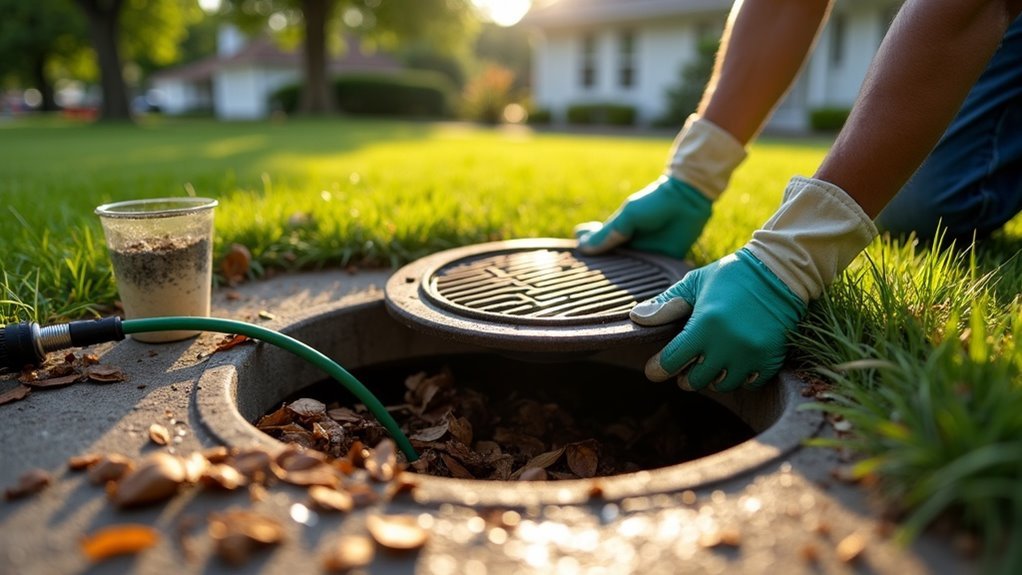
To ensure your storm drains are clear and functional, especially in preparation for severe weather, start by gathering essential survival tools such as gloves, a rake, and a hose. Begin by removing surface debris with a broom and collect it with a dustpan to prevent accumulation. Use a hose to flush the drain, helping to clear any potential underground blockages that could lead to flooding. Always wear protective gear and work safely, steering clear of high-traffic areas to avoid accidents. Regularly inspect your drains, particularly before heavy rains, to prevent future clogs and ensure your property remains safe. Consider joining community efforts to promote effective maintenance strategies, ensuring that your local drainage systems function properly in emergencies.
Key Takeaways
- Assemble essential survival tools such as gloves, a rake, a shovel, and a hose for effective storm drain cleaning.
- Clear surface debris using a broom or rake before removing deeper obstructions with a shovel or dustpan to maintain functionality.
- Flush the drain with a hose to check for blockages and ensure proper flow after cleaning, which is crucial during emergencies.
- Regularly inspect and maintain storm drains, especially before anticipated severe weather, to prevent future clogs and ensure access to your property.
- Seek professional assistance for severe blockages, structural damage, or persistent odors that may indicate contamination, as these can pose health risks in survival situations.
Understanding Storm Drains and Their Importance
Understanding storm drains is crucial for anyone interested in survivalism and prepping, especially when it comes to flood prevention and safeguarding your property.
Storm drains serve as an essential system for capturing and redirecting rainwater, significantly lowering the risk of flooding during heavy rains. In urban areas like Portland, there are approximately 58,000 storm drains equipped with metal grates designed to block large debris.
However, without regular maintenance, these drains can become clogged with organic materials such as leaves and branches. This can lead to standing water, which poses serious public health risks and can cause property damage.
Common Causes of Storm Drain Clogs
Storm drain clogs can significantly impact survival scenarios, often resulting from the accumulation of organic matter, such as leaves and soil, which obstructs water flow crucial for irrigation and sanitation.
Additionally, structural damage in older drainage systems can lead to cracks that trap debris, exacerbating the risk of flooding in emergency situations.
Environmental debris, including construction materials, can infiltrate drains, creating further blockages and complicating survival efforts during natural disasters.
Preparing for these potential issues is vital for maintaining access to clean water and ensuring effective drainage in a survival setting.
Organic Matter Accumulation
As heavy rainfall washes organic debris like leaves, branches, and grass clippings into storm drains, these materials can quickly accumulate and create blockages that impede water flow.
Clogged storm drains can lead to serious flooding issues, especially if not regularly maintained. For survivalists and preppers, this is a crucial concern, as flooding can disrupt access to essential resources and compromise emergency plans.
Consider these factors:
- Seasonal leaf fall increases organic matter, which can block drainage systems.
- Heavy rains exacerbate debris accumulation, making it vital to monitor weather conditions.
- Microbial decomposition has limits; organic buildup can overwhelm natural processes.
- Community cleaning efforts are essential for maintaining local infrastructure.
- Regular maintenance reduces clog risks, ensuring reliable access to water drainage.
Understanding these causes helps you take proactive steps in preventing clogged storm drains, which is essential for efficient water management and reducing potential flooding risks in your survival planning.
Keeping your surroundings clear of debris can also enhance your preparedness for extreme weather events.
Structural Damage Issues
Clogs in storm drains can pose significant risks during emergencies and natural disasters, often arising from structural damage issues that undermine their effectiveness. As materials age, they may develop cracks and breaks, obstructing water flow and leading to dangerous clogs.
Additionally, tree roots can infiltrate storm drain pipes, creating blockages that might require professional removal—a situation best avoided in a survival scenario. Construction debris, such as concrete or gravel, can accidentally enter the drainage system, causing severe clogs that need immediate attention to ensure proper drainage during critical times.
Furthermore, grease buildup from cooking oils can solidify in connected sewer systems, further impeding drainage and increasing the risk of overflow.
To ensure your survival plan is effective, regular inspections and maintenance of drainage systems are vital for identifying and repairing structural damage early, preventing costly emergencies and ensuring that water flow remains unobstructed when you need it most.
Environmental Debris Infiltration
Environmental debris infiltration poses a significant threat to effective storm drain operation, especially during periods of heavy rainfall, which can be critical for survivalists and preppers.
Understanding the common sources of debris is essential for maintaining proper drainage and ensuring the safety of your homestead:
- Leaves and organic matter, particularly in autumn, can create blockages that lead to flooding.
- Dirt and sediment washed in by storms can accumulate and hinder drainage systems.
- Tree roots infiltrating drain pipes can cause severe damage and require immediate attention.
- Construction debris, like concrete or gravel, may be prevalent in urban areas and lead to clogs.
- Grease and fats from cooking can solidify in drains, further exacerbating the issue.
Addressing these factors is crucial to guaranteeing proper drainage and maintaining a self-sufficient lifestyle.
Essential Tools for Cleaning Storm Drains
To effectively clean storm drains, especially in a survival or prepping context, having the right tools is crucial for maintaining functionality and preventing flooding. Here are the essential tools for cleaning storm drains:
| Tool | Purpose | Recommendation |
|---|---|---|
| Rake or Broom | Sweeping away surface debris | Use to clear leaves and trash |
| Dustpan or Shovel | Collecting debris | Essential for gathering waste |
| Thick Work Gloves | Hand protection | Protects against sharp objects |
| Trash Bag | Safe disposal of debris | Helps prevent environmental recontamination |
| Hose | Flushing the drain | Ensures unobstructed water flow |
Equipping yourself with these tools not only enhances efficiency and safety during the cleaning process but also contributes to overall preparedness in maintaining your environment.
Step-by-Step Guide to Clearing Your Storm Drain
To effectively clear your storm drain and prepare for potential emergencies, you’ll need specific tools and must follow safety precautions.
Start by gathering your equipment—such as gloves, a shovel, and a bucket—and ensure the working area is safe, especially if it’s near traffic or in a high-risk area.
After cleaning, implement maintenance tips to keep the drain functional and prevent future blockages, which is crucial for maintaining a safe environment during a crisis or natural disaster.
Tools Needed for Cleaning
Before you begin cleaning your storm drain, it’s essential to gather the right tools to ensure the process is efficient and safe, especially in a survivalist context where preparedness is key.
Here’s what you’ll need for effective storm drain cleaning:
- Broom or rake for sweeping away leaves and debris that could obstruct water flow
- Dustpan or shovel for collecting waste materials
- Heavy-duty gloves for hand protection against sharp objects and contaminants
- Trash bag or a designated container for proper disposal of collected waste
- Sturdy closed-toe shoes or boots to protect your feet in hazardous environments
Having these tools ready not only helps maintain the storm drain but also ensures you’re prepared for any unexpected situations that may arise during your cleaning efforts.
Safety Precautions to Follow
When clearing storm drains, prioritizing safety is crucial, especially in a survivalist or prepping context, as improper precautions can lead to serious injuries.
Always wear thick work gloves and sturdy closed-toe shoes or boots to protect against sharp objects that may be encountered in urban environments. Avoid areas with heavy traffic; instead, choose quieter streets or backroads for your maintenance work to minimize risks.
Before you start, check for standing water—if present, report it to the stormwater team or take necessary steps to divert it if you’re in a survival situation.
Wear reflective clothing to enhance your visibility near roadways, particularly during low-light conditions when visibility is compromised.
Finally, stay aware of your surroundings and maintain a safe distance from moving vehicles, as well as any potential threats, to ensure your safety throughout the process.
Implementing these safety precautions isn’t just critical for immediate tasks but is also essential for long-term survival readiness.
Post-Cleaning Maintenance Tips
Regular maintenance of your storm drain is essential for preventing future clogs and ensuring reliable drainage during rain events, which is crucial for effective survival preparedness.
Follow these post-cleaning maintenance tips to keep your drains clear and maintain your property’s resilience:
- Inspect drains regularly, especially before the onset of heavy rains or seasonal changes that can increase debris.
- Keep the area around the drain clear of debris to prevent blockages that could hinder water flow.
- Utilize tools like rakes or pitchforks to maintain cleanliness and ensure that no organic material accumulates.
- Flush the drain with a hose to check for underground blockages that could cause water to back up, which can lead to flooding.
- Encourage neighbors to participate in community maintenance efforts, fostering a spirit of cooperation and mutual aid in preparedness.
Best Practices for Regular Drain Maintenance
To ensure your survival and preparedness during storm events, it’s essential to maintain effective drainage around your property. Conducting regular inspections of storm drains is vital, especially during autumn and before heavy rain forecasts.
Frequent checks help you detect and clear debris that could obstruct your drainage systems, which is crucial for preventing flooding during emergencies. Use basic tools like a rake or pitchfork to remove leaves and branches, and always wear gloves for added safety.
Regularly inspect and clear debris from drainage systems to prevent flooding; use simple tools and prioritize safety.
Establish a cleaning schedule—preferably after storms and at intervals throughout the year—to minimize the risk of clogs. Encourage your neighbors to join in community drain maintenance efforts, as collective action can enhance the resilience of your area.
Additionally, consider participating in local initiatives where you can adopt a drain, taking on the responsibility for monitoring and maintaining it to ensure it remains clear and functional in times of need. This proactive approach not only protects your property but also contributes to the overall safety of your community during severe weather conditions.
When to Seek Professional Help
While you may be able to handle minor issues and routine maintenance on your own, certain situations clearly warrant professional intervention in the context of survivalism and prepping.
Consider seeking help if you encounter:
- A storm drain clog that resists DIY methods, potentially affecting your water supply
- Visible cracks or structural damage in the storm drain that could lead to flooding in an emergency
- Severe blockages requiring advanced tools that you don’t have in your preparedness kit
- Persistent foul odors or standing water that could attract pests or indicate contamination
- The need for precise video inspection to identify hidden issues that could compromise your water safety
Each of these signs indicates that your storm drain might’ve deeper problems, which could impact your overall preparedness.
Don’t hesitate to call a professional to prevent further complications and ensure effective solutions, keeping your survival plans intact.
Community Involvement in Storm Drain Maintenance
Community involvement in storm drain maintenance is crucial for enhancing local safety and environmental health, which is vital in a survivalist context. By participating in organized clean-up events, you help mitigate flooding risks that could threaten your preparedness efforts and foster a spirit of collective responsibility within your neighborhood.
The Concerned Citizens of Columbia County (4C’s) actively encourages you to check and clean storm drains near your home as part of your preparedness strategy. Utilizing social media can effectively raise awareness and organize initiatives, maximizing your community’s resilience against natural disasters.
Your collective efforts decrease debris accumulation, preventing costly city cleanup and maintaining the aesthetics of your environment. Engaging in storm drain maintenance not only protects vital infrastructure but also strengthens neighborhood ties, ensuring that everyone is better equipped to address common issues collaboratively in times of crisis.
The Long-Term Benefits of Keeping Drains Clear
Keeping storm drains clear is crucial for survivalism and prepping, as it provides long-term benefits that go beyond just flood prevention.
By dedicating time to maintain clear storm drains, you can reap the following advantages:
- Protect your homestead from costly water damage during heavy rains, ensuring your shelter remains safe and functional.
- Enhance road safety, which is vital for mobility during emergencies by minimizing hazardous driving conditions that could impede your exit or movement.
- Reduce municipal cleanup costs and long-term drainage issues, allowing resources to be allocated to more critical survival needs.
- Foster a cleaner environment by decreasing debris in local waterways, which is essential for maintaining usable water sources.
- Safeguard your property’s foundation and preserve its value, ensuring your investment in survival is protected.
Incorporating regular drain maintenance into your survival routine not only safeguards your immediate surroundings but also contributes to a more resilient and self-sufficient community for everyone involved.