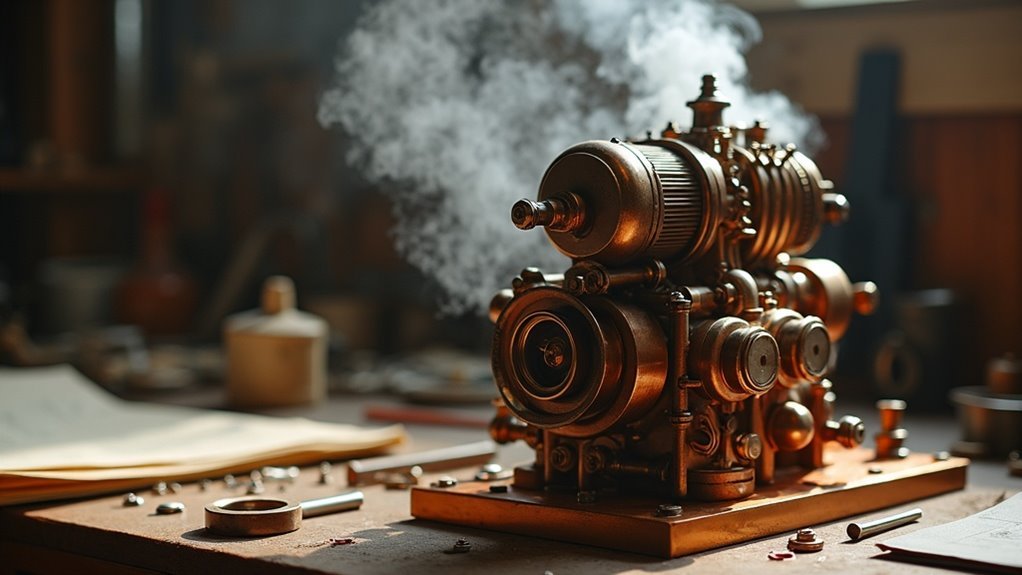
To build a Pop Pop boat engine, which can be a fun and educational survival project, you’ll need a brass or copper tube for steam generation, a boiler crafted from an empty can, and a simple bending tool. Start by coiling the tube tightly using a stable mandrel to ensure optimal steam release, which is crucial in a survival situation where resourcefulness is key. Assemble the hull from aluminum and securely fasten the engine in place. It is essential to verify airtight connections to prevent steam leaks, and always monitor safety while operating outdoors. This project not only enhances your skills in engineering but also reinforces the importance of self-sufficiency. If you’re eager for more detailed instructions on enhancing your project or other survival techniques, there’s much more to discover.
Key Takeaways
- Cut a brass or copper tube to a length of 50 cm and bend it using a homemade bending tool to create a coiled shape that maximizes heat efficiency.
- Create a reliable and airtight boiler by repurposing an empty drinks can, which is vital for generating steam effectively in survival situations.
- Ensure that the ends of the tube are submerged in water before igniting your fuel source; this is crucial for maintaining steam pressure and ensuring the engine operates optimally.
- Secure the engine within a hull made from an aluminum baking form, providing stability during operation, which is essential for ensuring safe and efficient use in a survival scenario.
- Optionally, attach a rudder to enhance steering capabilities, and decorate the vessel with heat-resistant materials, keeping safety in mind for all your survival endeavors.
Materials and Tools to Make Yourself
To construct a pop pop boat engine, which can be a valuable project for those interested in survivalism and prepping, you’ll need specific materials and tools that are crucial for the construction.
Constructing a pop pop boat engine is a rewarding project for survivalists and preppers, requiring essential materials and tools.
Start with a brass or copper tube, measuring 3mm outside diameter and 2mm inside diameter, cut to a length of 50 cm. Create a reliable bending tool using scrap wood, a short screw, and a cylindrical object for coiling the tube effectively.
For the boiler, repurpose an empty drinks can by folding it into a rectangle measuring 6cm by 18cm. Ensure airtightness by sealing the inserted straws with Blu-Tack, and test for leaks in clean water to confirm that your assembly is watertight before moving forward.
This hands-on project not only enhances your skills but also provides knowledge that could be useful in survival situations.
Water and Fire
In the Pop Pop boat engine, water is essential for steam generation, and understanding the specific depths required for optimal efficiency is crucial for survival situations.
Always prioritize safety measures when working with fire, ensuring that operations take place outdoors to minimize risks.
In your prepping endeavors, comparing fuel types, such as Esbit tablets, is key to identifying the best option for maintaining consistent heat and propulsion during outdoor activities or emergencies.
Steam Generation Process
As you heat water in a sealed boiler, understanding the steam generation process is crucial for many survival scenarios, including utilizing a pop pop boat as a practical tool.
Ensure that the boiler is airtight to maintain optimal steam pressure, which can be vital in emergency situations. Using clean water at a depth of 2 to 3 cm improves steam production efficiency, maximizing your resources.
Esbit fuel tablets are a great choice, as they burn cleaner than candles and provide reliable combustion for about 10 minutes, making them ideal for prepping situations.
The boiler’s coiled brass or copper tube allows steam to escape forcefully, creating propulsion.
Regularly monitor your fuel supply and inspect for any leaks to ensure effective steam generation throughout your operation, as maintaining functionality can be crucial in survival contexts.
Safety Precautions Required
When constructing and operating a pop pop boat engine, it’s crucial to incorporate safety precautions related to water and fire to prevent accidents. Here are essential safety measures to keep in mind:
- Always supervise children aged 6 and older during construction and operation to ensure their safety.
- Operate the boat outdoors in calm conditions to minimize the risk of capsizing and ensure a safe experience.
- Instead of using candles, opt for clean-burning Esbit fuel tablets to handle fire safely.
- Before igniting the fuel, confirm that both ends of the engine’s tubing are fully submerged in water to prevent overheating and potential hazards.
- Maintain a safe distance from the flame at all times and be prepared to manage any accidental fires that may occur.
Adhering to these safety precautions will help protect you and those around you while engaging in this enjoyable survivalist project.
Fuel Types Comparison
Understanding the fuel types utilized in pop pop boat engines is vital for optimizing performance and safety, especially in survival situations.
Water serves as the primary medium for steam generation; maintaining a depth of 2 to 3 cm is crucial for effective propulsion through the engine’s coils.
In prepping scenarios, Esbit fuel tablets are preferable due to their cleaner burning properties, lasting about 10 minutes each. They provide consistent steam pressure without the soot associated with candles, making them a more reliable choice in emergencies.
A half tablet can still deliver over 5 minutes of burn time, which is beneficial for extended sailing sessions when resources are limited.
By combining water and Esbit tablets, you can maximize efficiency and performance, particularly when you incorporate a hole in the bottom for steam escape.
This knowledge can be essential for those looking to enhance their skills in self-sufficiency and survival.
Making the Bending Tool or Coiling Mandrel
To create an effective bending tool or coiling mandrel for your survival projects, gather a sturdy piece of scrap wood, a short screw, and a durable cylinder for guidance.
Begin by marking a line 9.5 cm from the cylinder, ensuring that the gap between the screw and the cylinder aligns perfectly with the 3mm diameter of the tube you plan to work with.
This setup will enable you to coil brass or copper tubing accurately, which can be essential for constructing efficient heating elements, water distillers, or other vital equipment in your prepping endeavors.
Mastering this skill can enhance your self-sufficiency and ensure you’re well-prepared for any situation.
Tool Materials Needed
Creating a bending tool or coiling mandrel for your pop-pop boat engine can be a valuable skill in a survival or prepping scenario.
To build one effectively, gather the following essential materials:
- A sturdy piece of wood (which can serve multiple purposes in a survival situation)
- A short screw (to secure components)
- A sturdy cylinder that fits the 3mm outside diameter of the brass or copper tube (which may be repurposed from other items)
- A marking tool for precision (important for accuracy in crafting)
- Optional: A method to secure the tool to a sturdy surface (ensures stability during construction)
Ensure the cylinder is secured to the wood, leaving a gap for the tube.
Proper alignment is crucial for creating effective coils necessary for steam propulsion in your engine, which can be an innovative way to utilize limited resources in a survival setting.
Assembly Instructions Overview
Once you’ve gathered your materials, you can begin assembling the bending tool or coiling mandrel, which can be crucial for creating essential components in a survival situation.
Secure a sturdy cylinder shape to a piece of scrap wood with a short screw, leaving a gap equal to the tube diameter for proper bending. Mark a line 9.5 cm from the cylinder to indicate where the brass or copper tube should start bending.
It may be beneficial to fix the bending tool to a stable surface to enhance stability during coiling, especially when you need reliable equipment in a prepping scenario.
When coiling, insert the tube, ensuring proper alignment to achieve smooth bends. Uniform, tight bends will result in better efficiency for steam generation, which could be vital for water purification or cooking during emergencies.
Coiling the Engine
Coiling the engine is an essential step in optimizing the performance of your Pop Pop boat, significantly influencing steam propulsion efficiency.
To effectively coil the engine, adhere to the following best practices:
- Insert the brass or copper tube into the bending tool, ensuring proper alignment for maximum efficiency.
- Secure the bending tool to a stable surface to facilitate smooth and controlled bending.
- Begin coiling at the designated line, 9.5 cm from the cylinder, for accurate placement.
- Apply consistent pressure while coiling to achieve tight, evenly spaced coils, which are crucial for optimal performance.
- Position the tube ends correctly to ensure ideal steam exit and water entry during operation.
Assembling the Boat
As you prepare to assemble the Pop Pop boat, begin by shaping the aluminum baking form to create the hull, which can serve as a vital tool in emergency situations. Stretch both ends to form the bow and fold the opposite end inwards at a 45-degree angle, ensuring it is robust enough for rough conditions. Make sure the sides are widened for better access, which is crucial when time is of the essence. Place the engine into the fold and secure it with a binder clip, ensuring both tube ends touch the working surface for stability in unpredictable environments. Position the coiled opening vertically for easy fuel charging, allowing for quick refueling when resources are limited.
| Step | Action | Purpose |
|---|---|---|
| 1 | Shape hull | Create structure for survival |
| 2 | Secure engine | Ensure stability in emergencies |
| 3 | Position opening | Facilitate quick fuel access |
Adding a Rudder (optional)
Adding a rudder can greatly enhance your Pop Pop boat’s steering capabilities, which is crucial for navigation in survival situations.
To construct and attach your rudder, follow these steps:
- Cut a disposable aluminum baking form into a rudder shape using a pair of scissors, ensuring it’s sturdy enough for use in various water conditions.
- Print and scale a rudder template to 12 cm, then fold a flat aluminum piece along the long axis to increase durability.
- Secure the rudder at the back using heat-resistant adhesive, which is vital for maintaining integrity in challenging environments.
- Experiment with the rudder’s angle to find the optimal position for precise steering during your expeditions.
- Use water-resistant materials for any additional decorations to ensure safety and effectiveness while sailing in potential survival scenarios.
Decoration (optional)
Decorating your Pop Pop boat not only enhances its visual appeal but also allows you to express creativity while ensuring that all materials used are suitable for the challenging conditions on the water.
Use water-resistant and heat-resistant materials for decoration to withstand the elements, avoiding placement near the flame.
Consider creating survival-themed items, such as signal flags or makeshift fishing lures, from aluminum foil for flexible designs.
Secure decorations to the hull with double-sided adhesive tape for reliable adhesion.
Permanent markers can add vibrant colors to your survival gear, but ensure all elements are firmly attached to maintain safe operation on the water surface without interference.
Prioritize functionality and safety in your decorations to align with your prepping mindset.