When it comes to ensuring a safe and healthy home, you can’t overlook radon test kits. The HOUND-2033 Radon Detector offers real-time updates, while the LifeBasis model features a handy display. For EPA-approved testing, the PRO-LAB kit stands out. The Airthings Corentium’s battery-operated design makes it portable, and the First Alert Test Kit is user-friendly and accurate. Each kit has unique features to fit your needs. Discover more options and important factors to evaluate to protect your home.
HOUND-2033 Radon Detector for Home

If you’re looking for a reliable way to monitor radon levels in your home, the HOUND-2033 Radon Detector is an excellent choice. This portable device features a 3.4-inch touchscreen and rechargeable design, making it easy to use anywhere. With a high-precision pulse ionization sensor, it detects alpha radiation from radon decay and updates readings every 10 minutes. You can also store data for up to 508 days, visualize trends, and receive audible and visual alarms. Plus, it allows for customizable thresholds and supports both pCi/L and Bq/m³ units, ensuring you stay informed about your indoor air quality.
Best For: Homeowners and renters looking for an easy-to-use, portable solution to monitor radon levels in their indoor environments.
Pros:
- High-precision sensor provides accurate radon level readings every 10 minutes.
- Long-term data storage for up to 508 days allows for comprehensive monitoring.
- User-friendly touchscreen interface with customizable settings for convenience.
Cons:
- Requires occasional recharging, which may be inconvenient for some users.
- Limited to detecting radon levels, not other air quality factors.
- Initial setup may take time for users unfamiliar with technology.
LifeBasis Radon Detector with TFT Color Display

The LifeBasis Radon Detector with TFT Color Display is an ideal choice for homeowners who prioritize health and safety, especially since radon is the second leading cause of lung cancer. This device features a high-precision semiconductor sensor, detecting radon levels from 0.09 to 1000 pCi/L. It provides first readings within six hours and updates hourly, allowing you to track levels over the last 504 days. With dual alarm modes and customizable settings, you’ll be alerted to hazardous conditions. Its compact design and rechargeable battery make it easy to use in any space, ensuring you stay informed and safe.
Best For: Homeowners who prioritize health and safety by monitoring radon levels in their living environment.
Pros:
- High-precision semiconductor sensor with a wide detection range (0.09-1000 pCi/L).
- Long-term monitoring capability with historical records for up to 504 days.
- User-friendly design with customizable settings and portable rechargeable battery.
Cons:
- Initial reading takes 6 hours, which may delay immediate detection.
- Battery life may vary depending on usage, especially if the screen is frequently on.
- Requires periodic calibration to ensure ongoing accuracy over time.
PRO-LAB Radon Test Kit for Home – EPA Approved Short-Term Radon Tester

For homeowners seeking a reliable and efficient radon testing solution, the PRO-LAB Radon Test Kit stands out as a top choice. This EPA-approved short-term tester includes two detectors, allowing you to conduct simultaneous screenings for thorough results. The patented design facilitates precise radon analysis, delivering detailed lab results within a week after receipt. With a $20 lab analysis fee per detector, you can trust transparent pricing without hidden costs. Plus, the user-friendly experience guarantees hassle-free testing, with email and text notifications keeping you updated every step of the way. Safeguard your home with this dependable kit today!
Best For: Homeowners and real estate professionals seeking a reliable and efficient solution for radon testing.
Pros:
- EPA-approved for reliable and accurate radon testing.
- Includes two detectors for simultaneous home screenings, ensuring thorough results.
- User-friendly design with email/text notifications for easy tracking of test progress.
Cons:
- $20 lab analysis fee per detector may add up for larger homes.
- Additional $10 fee for NJ residents could be a drawback for those living in that state.
- Results take up to a week for delivery, which may not be ideal for urgent testing needs.
Airthings Corentium Home Radon Detector 223

Looking for a reliable way to monitor radon levels in your home? The Airthings Corentium Home Radon Detector 223 is a perfect choice. Its portable, lightweight design means you can easily move it around, and being battery-operated lets you monitor radon without needing an outlet. This innovative device provides long-term monitoring, essential for understanding daily fluctuations in radon levels. You’ll appreciate the short-term on-screen readings for immediate feedback, plus the ability to generate radon self-inspection reports. With clear displays of both long and short-term readings, you’ll always have a quick overview of your home’s radon levels.
Best For: Homeowners who want a portable and reliable solution for monitoring radon levels in their living environment.
Pros:
- Portable and lightweight design makes it easy to move around the house.
- Battery-operated feature allows monitoring without the need for an outlet.
- Provides both short and long-term readings for comprehensive understanding of radon levels.
Cons:
- Requires battery replacement (3 AAA batteries) which may be inconvenient over time.
- Limited to indoor monitoring, so it may not be suitable for outdoor radon assessment.
- Initial setup and understanding of readings may require a learning curve for some users.
First Alert Radon Gas Test Kit, RD1
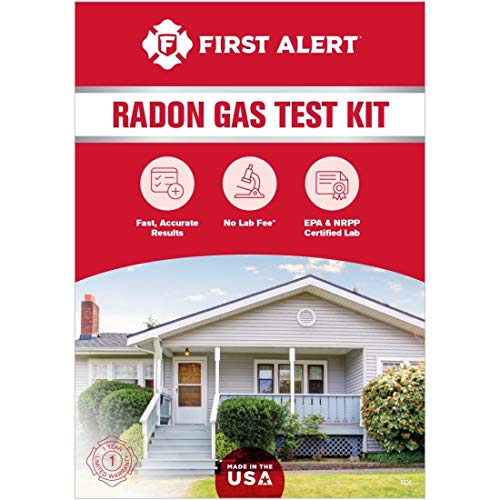
If you’re seeking a reliable and user-friendly method to detect radon gas in your home or workplace, the First Alert Radon Gas Test Kit, RD1, stands out as a top choice. This kit offers a simple and safe way to test for dangerous radon, a gas linked to lung cancer. It includes all necessary materials and lab fees, with results emailed within 72 hours. Testing is straightforward: place the sealed tray for 48-72 hours, then return it for analysis. Customers appreciate the ease of use and accuracy, making it a solid option for proactive health measures.
Best For: Homeowners, workplace managers, and institutions seeking a straightforward and effective method for radon detection.
Pros:
- Ease of Use: Simple testing process that requires minimal setup and time commitment.
- Quick Results: Lab results are emailed within 72 hours of the kit being received by the lab.
- Accurate Detection: Reliable radon detection, providing peace of mind regarding health safety.
Cons:
- Hidden Costs: Some customers report unexpected shipping fees, especially for international returns.
- Variable Shipping Times: Experiences with shipping times can vary, leading to delays in receiving results.
- Limited to the U.S.: Recommended for use only within the United States, which may limit accessibility for international users.
EPA-Approved Radon Test Kit for Home

An EPA-approved radon test kit is the perfect choice for homeowners and renters seeking peace of mind about their indoor air quality. This easy-to-use kit allows you to quickly assess radon levels in your home. Simply set it out for 48 hours, seal it, and mail it using the prepaid label. You’ll receive a detailed lab report from an EPA-certified laboratory, ensuring reliable results without hidden fees. With a 4.6-star rating, users praise its straightforward instructions and fast turnaround. Detecting radon early can protect your health, making this kit an essential tool for a safer living environment.
Best For: Homeowners, renters, and real-estate professionals looking to ensure safe indoor air quality by detecting radon levels.
Pros:
- Easy-to-use process with clear instructions for quick setup and testing.
- Includes lab analysis with no hidden fees, ensuring transparency in results.
- Fast turnaround on results from an EPA-certified laboratory for reliable detection.
Cons:
- Requires a 48-hour exposure time, which may not be sufficient for identifying lower radon levels.
- Some users suggest that longer testing durations could yield more accurate results.
- Limited to a single radon collection device, which may not be ideal for larger homes or multiple testing locations.
Airthings Corentium Home Radon Detector (Portable, Battery Operated)
The Airthings Corentium Home Radon Detector stands out as the ideal choice for homeowners seeking a portable and convenient solution to monitor radon levels. This lightweight, battery-operated device runs on just three AAA batteries, eliminating the need for an outlet. It offers long-term monitoring, capturing daily fluctuations in radon levels, so you can take action if necessary. With its on-screen display, you get both short and long-term readings, providing immediate feedback and a clear overview of your home’s radon levels. Plus, generating self-inspection reports is a breeze, making it easier than ever to guarantee a safe living environment.
Best For: Homeowners looking for a portable and user-friendly solution to monitor radon levels in their living spaces.
Pros:
- Lightweight and portable design allows for easy relocation within the home.
- Battery-operated, providing flexibility without the need for a power outlet.
- Offers both short and long-term readings for comprehensive monitoring of radon levels.
Cons:
- Requires regular battery replacement, which may be inconvenient for some users.
- May not provide continuous monitoring if left unattended for extended periods.
- Limited to indoor use, as it is designed specifically for home environments.
Factors to Consider When Choosing Radon Test Kits
When choosing a radon test kit, you should consider several key factors. Think about the detection method, how long the test will take, and any data reporting features that might be important for you. Additionally, look at the alarm systems and the kit’s portability to guarantee it fits your needs.
Detection Method Used
Choosing the right radon test kit involves understanding the detection methods available, as they can considerably impact your monitoring experience. There are two primary methods: passive and active. Passive kits often use materials like charcoal or alpha track detectors for long-term sampling, while active kits rely on electronic sensors for real-time measurements. High-precision semiconductor sensors can detect radon levels ranging from 0.09 pCi/L to over 1000 pCi/L, ensuring your safety. Some devices provide short-term monitoring with hourly updates, while others offer continuous long-term tracking with data storage for days or months. It’s essential to select a method that fits your needs, whether you want immediate feedback or thorough long-term monitoring.
Testing Duration Required
Understanding the testing duration required for radon kits can greatly influence your decision-making process. Short-term radon tests typically provide results within 48 to 72 hours, making them ideal for initial screenings. However, if high levels are detected, consider following up with long-term tests that can monitor radon levels for up to 90 days or more, yielding more reliable averages. Some tests require at least 6 hours before initial readings, so plan accordingly. Continuous monitoring devices offer real-time data updates every hour, making them suitable for ongoing assessments. Remember, longer testing durations generally provide more accurate results, particularly in areas with fluctuating radon levels. Choose wisely based on your specific needs and circumstances.
Data Reporting Features
Selecting a radon test kit involves considering various data reporting features that can enhance your monitoring experience. Look for kits that offer automated data reporting, generating easy-to-reference PDF files of historical data. Some advanced detectors provide continuous long-term monitoring, storing records for up to 508 days. This allows you to track trends over 12, 24, or 48 hours. User-friendly designs often display both long-term and short-term readings on-screen, giving you immediate feedback. Additionally, certain detectors allow for direct data export to your phone or computer, simplifying trend visualization. Finally, many kits adjust alarm thresholds based on local regulations, providing timely, color-coded alerts and sound notifications when hazardous levels are detected, ensuring you’re always informed.
Alarm and Alert Systems
When it comes to radon test kits, alarm and alert systems play an essential role in keeping you informed about hazardous levels of radon. These systems typically feature audible sounds and visual indicators, such as color-coded bars, to alert you to dangerous concentrations. Look for detectors that allow you to customize alert thresholds based on local safety regulations, ensuring the monitoring fits your specific needs. Some models offer dual alarm modes, activating both sound alerts and visual signals for heightened awareness. Regular updates on radon levels—usually every 10 minutes to hourly—help you stay informed about fluctuations and potential risks. An effective alarm system can greatly increase your responsiveness, ultimately reducing health risks associated with prolonged radon exposure.
Portability and Design
Choosing the right radon test kit involves more than just guaranteeing it has an effective alarm system; portability and design are equally important. A lightweight and compact radon detector allows you to easily move it around your home or workspace. Battery-operated models enhance convenience, letting you monitor areas without electrical outlets. Look for a user-friendly design with a clear display for quick readings and easy data interpretation. Rechargeable options can extend usage without the hassle of changing batteries often. Confirm the kit supports effortless transport and setup, so you can conduct tests in various environments, such as basements, bedrooms, and offices. Prioritizing portability and design guarantees you can effectively monitor radon levels wherever you are.
Lab Analysis Fees
Lab analysis fees are an essential factor to take into account in your radon test kit purchase. These fees can vary greatly; some kits charge around $20 per detector, while states like New Jersey may impose additional costs. Many radon test kits include the lab analysis fee in the initial price, which helps avoid hidden costs. If you need results quickly, keep an eye out for expedited options that might add about $10 for rush processing. Don’t forget to check if return shipping is included or if you’ll need to cover that separately. Additionally, be aware of potential shipping delays or extra charges if you’re sending kits internationally. Knowing these details can help you make an informed choice.
EPA Approval Status
EPA approval is essential for ensuring you select a reliable radon test kit. These kits meet the rigorous standards set by the Environmental Protection Agency for accuracy and reliability in detecting radon gas levels. When you choose an EPA-approved kit, you benefit from lab analysis with no hidden fees, guaranteeing transparent pricing and trustworthy results. Plus, these kits are designed for easy use, often requiring just a brief exposure time before sealing and shipping to a certified lab for analysis. Utilizing EPA-approved methods enhances the credibility of your results, making them suitable for health assessments and real estate transactions. As a homeowner or renter, you can confidently monitor radon levels and take proactive health and safety measures.