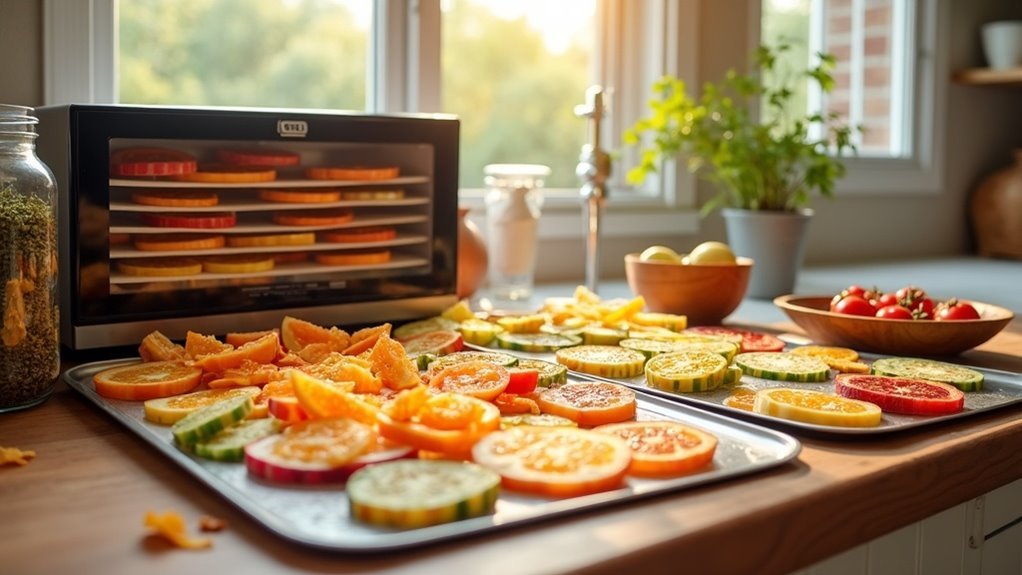
To dehydrate food for long-term storage in a survival situation, select a reliable dehydrator with adjustable temperature settings and horizontal airflow to ensure even drying. Clean and slice fruits and vegetables uniformly to maximize preservation. Set the appropriate temperatures—135°F for fruits and 125°F for vegetables—to optimize drying efficiency. Store your dehydrated foods in airtight containers, keeping them in a cool, dark place to prevent spoilage. Regularly inspect your supplies for any signs of spoilage or degradation. For rehydration in an emergency, use a 1:1 water-to-food ratio to restore moisture. Explore additional tips and techniques for successful dehydration to enhance your preparedness plan.
Key Takeaways
- Select a high-quality dehydrator that features adjustable temperature settings and horizontal airflow to ensure effective food preservation, which is crucial for long-term survival storage.
- Thoroughly prepare your food by washing, slicing uniformly, and sterilizing all surfaces and containers to eliminate any risk of contamination, an essential step for maintaining food safety during emergencies.
- Dehydrate fruits at 135°F and vegetables at 125°F to retain their nutritional value; also, ensure that lean meats are cooked to an internal temperature of 145°F before dehydrating to prevent foodborne illnesses.
- Store your dehydrated foods in airtight containers such as vacuum-sealed bags or glass jars, positioned in a cool, dark, and dry environment to maximize shelf life, a vital aspect of food preparedness.
- Routinely check your stored items for any signs of spoilage and promptly discard any compromised foods to uphold safety and ensure you have reliable provisions in times of need.
The Dehydrating Process and Its Benefits
Dehydrating food is an essential technique for survivalists and preppers, as it effectively preserves ingredients by removing moisture, which inhibits the growth of bacteria, yeast, and mold.
The dehydrating process employs low heat and steady airflow to achieve optimal results. By utilizing precise temperature settings, you can efficiently dehydrate various types of food, ensuring safety and maintaining quality.
The dehydration process utilizes low heat and consistent airflow for safe, high-quality preservation of diverse foods.
Properly dehydrated foods can last up to a year when stored in airtight containers in cool, dry, and dark places, making this method invaluable for long-term food storage.
It significantly reduces the weight of meals, making it an ideal choice for backpacking and emergency preparedness, while also allowing for customized nutritional profiles tailored to your specific needs.
Choosing the Right Food Dehydrator
When selecting a food dehydrator for survival and prepping purposes, it’s crucial to prioritize features such as adjustable temperature settings and even heat distribution to ensure optimal preservation of food.
Consider the price and capacity as well; larger models with square trays can process more food at once, which is beneficial for bulk dehydrating during harvest season or emergency preparedness.
Key Features to Consider
Choosing the right food dehydrator is crucial for effective food preservation, a key component of any survivalist or prepping strategy.
Look for models with adjustable temperature settings, as different foods require specific temperatures for optimal drying. Consider the design of the dehydrator trays; square trays offer more surface area than round ones, allowing you to process larger quantities and accommodate longer drying times—essential for bulk food storage.
Horizontal airflow models typically provide more even drying compared to vertical designs, ensuring that your food retains maximum nutritional value.
Additionally, prioritize dehydrators made from BPA-free plastic or metal for durability and safety, as you want your gear to withstand the test of time. Nonstick sheets are also beneficial for drying items like sauces and fruit leather, preventing them from sticking to the trays and ensuring a smooth operation in your food preservation efforts.
Price and Capacity Factors
Choosing the right food dehydrator is crucial for effective food preservation, especially for those focused on survivalism and prepping. When selecting a dehydrator, it’s essential to consider both price and capacity, as these factors can significantly influence your ability to store food long-term.
Prices for food dehydrators typically range from $30 to several hundred dollars, depending on features such as tray space and fan efficiency. Opt for a model with a larger surface area and square trays to maximize your drying potential for bulk food storage.
Adjustable temperature settings are vital, allowing you to dry various food types effectively, which is important for your preparedness plan. Drying times can range from 5 to 14 hours, so it’s beneficial to have a dehydrator that meets your specific needs.
Additionally, don’t forget to utilize nonstick sheets for drying sauces and fruit leather, ensuring optimal results for food that you intend to store for the long haul. Investing in a reliable food dehydrator can enhance your preparedness by enabling you to preserve essential food supplies efficiently.
Preparing Food for Dehydration
Before you begin dehydrating food for your survival stockpile, ensure that all surfaces and equipment are thoroughly cleaned and sanitized to avoid contamination.
It’s crucial to slice your food uniformly; aim for pieces that are 1/4 to 1/2 inch thick to ensure even drying.
Utilizing tools like a mandoline can help you achieve consistent sizes, which is vital for maintaining food quality and maximizing shelf life in your prepper pantry.
Clean and Sanitize Equipment
Clean and sanitized equipment is crucial for effective food dehydration, especially for those preparing for emergencies or survival situations.
Before you begin, ensure that all surfaces and equipment are thoroughly cleaned by scrubbing them with hot, soapy water to eliminate any harmful bacteria. Frequent handwashing is essential when handling food to avoid cross-contamination.
To enhance food safety, designate separate cutting boards and utensils for raw foods and dehydrating ingredients.
After preparing your food, sterilize your storage containers using boiling water or by running them through a dishwasher cycle.
Following these steps will help protect your dehydrated food and ensure a safe and reliable food supply during times of need.
Uniform Slicing Techniques
Uniform slicing is crucial for effective food preservation in survival situations, as it ensures that all pieces dehydrate at the same rate. Aim for a consistent thickness of about 1/4 to 1/2 inch when slicing fruits and vegetables to maximize their shelf life.
A mandoline slicer can be a valuable tool for achieving uniform slices quickly, enhancing the dehydration process, which is vital for long-term food storage. For leafy herbs, finely chopping or using scissors can ensure even drying, making them ready for use in various survival recipes.
When preparing meat or seafood, always cut against the grain to improve texture and rehydration, which is essential for maintaining the quality of your preserved food.
Lastly, be sure to wash and dry your items thoroughly to eliminate any contaminants that could compromise the dehydration process and the longevity of your food supplies.
Foods That Dehydrate Well
When preparing for long-term food storage through dehydration, it’s crucial to identify which foods are most suitable for this method.
Fruits such as apples, bananas, and berries dehydrate effectively at 135°F, resulting in approximately one cup of dehydrated food from one pound of fresh produce.
Fruits like apples, bananas, and berries dehydrate well at 135°F, yielding one cup of dehydrated food per pound.
For vegetables, focus on options like carrots, zucchini, and bell peppers, which should be dried at around 125°F for 6-8 hours.
Lean meats, including chicken and turkey, must be cooked prior to dehydration at a temperature of 145°F to ensure safety and quality.
Additionally, cooked grains such as rice and quinoa can be dehydrated efficiently.
Foods to Avoid When Dehydrating
While dehydrating food is an excellent method to enhance shelf life, it’s crucial to avoid certain items to ensure quality and safety in your survival pantry.
Foods high in fat, including nut butters, avocados, and dairy products, can spoil rapidly or turn rancid, which would compromise the texture and flavor of your dehydrated goods.
Furthermore, items with high moisture content, such as fresh tomatoes and cucumbers, may require pre-treatment and careful monitoring during the dehydration process.
Canned foods should also be excluded due to their moisture levels, which can increase drying times and heighten the risk of spoilage.
Focus on suitable options to ensure successful dehydration and long-term storage for your preparedness needs.
Dehydration Temperature Guidelines
Proper temperature control is essential for effective food dehydration, especially for those invested in survivalism and prepping, as it directly impacts the quality and safety of your preserved items.
For optimal results, dehydrate vegetables at approximately 125°F and fruits at 135°F to achieve that leathery yet pliable texture, making them ideal for long-term storage.
Herbs thrive at around 95°F, preserving their flavor and potency for future use.
When dehydrating grains like rice or quinoa, maintain a temperature of 145°F to ensure effective moisture removal and prevent spoilage, which is crucial for food security.
Lastly, lean meats and seafood should be dried at 160°F to eliminate bacteria, ensuring safe long-term storage for your emergency food supplies.
Consistency in these temperatures is vital to avoid spoilage and extend shelf life, key factors for any preparedness strategy.
Proper Storage of Dehydrated Foods
Storing dehydrated foods correctly is crucial for any survivalist or prepper looking to build a reliable food supply.
Use airtight containers, such as vacuum-sealed bags or glass jars with tight-fitting lids, to protect against moisture and air that can lead to spoilage.
Airtight containers like vacuum-sealed bags or glass jars are essential for preventing moisture and air-related spoilage.
Keep these containers in a cool, dark, and dry location; temperature fluctuations and light can significantly degrade their quality and shelf life, making it essential for long-term preparedness.
Incorporating oxygen absorbers or desiccant packets can further enhance preservation by minimizing oxidation and moisture, ensuring your food remains viable during challenging times.
Regularly inspect your stored dehydrated foods for signs of spoilage, such as off odors or texture changes, and discard any compromised items to maintain a safe and edible stockpile.
This attention to detail will help ensure you’re well-prepared for any situation that arises.
Rehydration Techniques for Dried Foods
When you’re ready to utilize your dehydrated foods in a survival situation, mastering effective rehydration techniques is crucial for restoring their original texture and flavor.
Begin with a 1:1 ratio of water to dehydrated food; for instance, 1 cup of dehydrated food requires 1 cup of boiling water. To expedite the rehydration process, soak the food in cold water for 5 minutes before introducing boiling water.
After adding the water, let it simmer for 2 to 10 minutes, then cover the mixture and allow it to sit for another 10 minutes to ensure full moisture absorption.
Additionally, it’s wise to store high-moisture foods separately to prevent unwanted moisture transfer, ensuring your supplies remain viable for the long term.