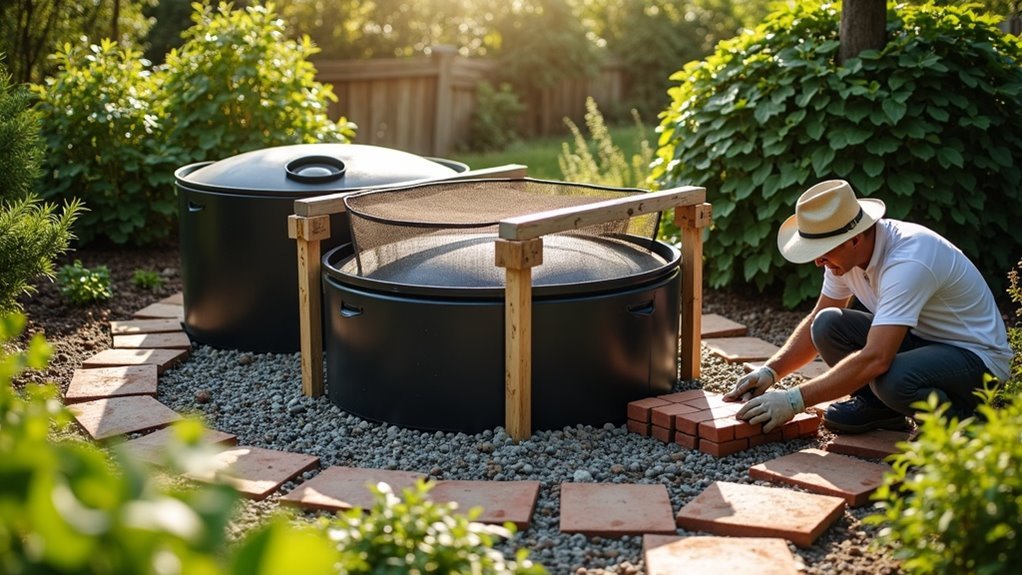
To build a cistern for rainwater as part of your survival and prepping strategy, start by selecting a location near your home that offers good drainage and accessibility. Excavate the site carefully and prepare a solid foundation, ensuring it meets the necessary dimensions for your needs. Construct a reinforced concrete structure with a sloped cleanout drain to facilitate maintenance. Install roof washers and filters to divert debris, and implement a multi-layer filtration system to ensure the water quality is safe for consumption. Regularly maintain your cistern to prevent contamination and enhance efficiency, which is crucial for self-sufficiency in emergency situations. Continue exploring further to uncover detailed techniques and essential insights for effective rainwater harvesting in your preparedness plans.
Key Takeaways
- Choose a strategic location for your cistern, prioritizing good drainage and accessibility from your home to facilitate maintenance and emergency access.
- Carefully excavate the site and build a robust rectangular framework using reinforced concrete, ensuring your cistern can withstand the test of time and potential natural disasters.
- Install roof washers and filters designed to eliminate contaminants and particulates from rainwater before it enters the cistern, ensuring a clean water supply for survival situations.
- Implement a regular maintenance schedule for sediment removal, leak detection, and comprehensive system inspections every six months to ensure your water source remains reliable.
- Improve water quality by incorporating limestone in filters to neutralize acidity, and routinely check the integrity of cistern components to prepare for unforeseen circumstances.
Selecting the Location for Your Cistern
When selecting the location for your cistern, it’s crucial to consider both practicality and environmental factors that align with survivalism and prepping principles.
Choose a spot close to your home or essential water usage points to minimize plumbing distance and ensure quick access during emergencies. Make sure it’s in an area with good drainage to prevent flooding, which can compromise the cistern’s integrity and your water supply.
Select a location near your home for easy access and ensure good drainage to protect your water supply.
Positioning the cistern underground not only helps maintain cooler temperatures but also protects against freezing in harsh climates, which is vital for long-term survival. Avoid placing it under trees or near vegetation to prevent contamination from debris and falling branches.
Additionally, consider the land’s slope; a slight downward slope can facilitate gravity-fed drainage, enhancing efficiency and reducing reliance on pumps, which may fail during a crisis.
Proper planning and positioning are essential for creating a reliable water source when preparing for uncertain times.
Excavation and Foundation Preparation
To ensure a successful installation of your cistern, it’s crucial to begin with thorough excavation and foundation preparation, especially in the context of survivalism and prepping. The excavation should be appropriately sized, with a narrower bottom for enhanced stability during adverse conditions. Engaging a skilled excavator ensures precise measurements, preventing complications that could arise in a survival scenario.
Once excavated, compact and level the soil at the bottom, directing any slope towards a cleanout drain for easy maintenance—a vital consideration for self-sufficiency.
Construct a rectangular framework using 2 x 4s to create a flat surface, facilitating the proper installation of reinforced concrete. Ensure that the wall forms are robust to prevent bulging, which could jeopardize the structural integrity of your cistern.
This preparation is essential for creating a reliable water storage solution in your prepping endeavors.
Building the Cistern Structure
As you progress with constructing the cistern structure, utilizing cast-in-place reinforced concrete is crucial for ensuring long-lasting durability and maintaining cooler water temperatures for your emergency water supply. Double-check dimensions during excavation to avoid any loss of capacity that could hinder your preparedness efforts. Integrate a sloped cleanout drain to aid in maintenance and prevent sediment accumulation, which can compromise water quality. Your design should also feature a reinforced concrete top with a manhole for easy access, smooth interior walls for efficient cleaning, and an overflow pipe to safeguard against contamination.
| Component | Purpose | Key Considerations |
|---|---|---|
| Cleanout Drain | Maintenance | Slopes toward outlet |
| Reinforced Concrete Top | Access and protection | Include manhole |
| Smooth Interior Walls | Easy cleaning | Prevents buildup |
| Overflow Pipe | Prevent contamination | Protects from pests |
This strategic approach to building your cistern will enhance your preparedness for emergencies by ensuring a reliable and clean water source when it’s needed most.
Installing Roof Washers and Filters
Completing the cistern structure is a crucial step in your survival preparedness plan, enabling effective water management through the installation of roof washers and filters.
Roof washers are essential for diverting the initial, contaminated portion of roof water away from the cistern, ensuring that only clean, usable water enters your storage system. You can opt for manual washers, which require your attention to drain contaminants, or automatic systems that operate independently, providing convenience in emergency situations.
In addition to roof washers, incorporating roof-water filters is vital for removing larger particulates before water reaches the cistern, enhancing the quality of your water supply.
Strategically position collection traps and filters to optimize efficiency, and don’t forget to perform regular maintenance to prevent sediment buildup. This will ensure your system operates at peak functionality, providing you with a reliable source of clean water in times of need.
Water Quality Treatment Methods
To ensure your rainwater supply is safe for drinking, it’s crucial to employ effective contaminant removal techniques and filtration system options.
Regular maintenance practices, such as checking for leaks and sediment buildup, are vital for maintaining optimal water quality.
Contaminant Removal Techniques
When preparing for survival situations, collecting rainwater in cisterns is an essential practice. To ensure the water’s safety and quality, it’s crucial to implement effective contaminant removal techniques.
Begin by installing roof washers to divert the initial contaminated runoff, allowing cleaner water to enter the cistern. A multi-layer filter system featuring gravel and sand can significantly reduce gross particulates, making the water safer for use.
Regular maintenance and inspection of the cistern are vital to identify sediment buildup, which can harbor harmful contaminants and compromise your water supply.
Additionally, incorporating limestone in your filters can neutralize acidic rainwater, enhancing water quality and reducing the risk of plumbing issues.
Filtration System Options
While selecting the right filtration system is crucial for ensuring high water quality, several effective options can significantly enhance the safety of your rainwater supply, especially for those preparing for emergencies.
Installing a roof washer can divert the initial flush of contaminated rainwater, ensuring that only clean water enters your storage cistern.
Utilizing rainwater filters made of gravel and sand can help remove particulates before water is stored, making it safer for consumption.
Incorporating limestone can neutralize acidic rain, improving water quality and reducing the risk of corrosion in your storage system.
Automatic roof-wash diverters can streamline this process, further safeguarding your water supply.
Regular Maintenance Practices
Effective filtration systems are crucial for quality rainwater storage, but regular maintenance practices are equally vital to ensure the water remains safe for survival use.
Regularly inspect and clean your cistern to remove sediments and contaminants, as untreated rainwater can harbor harmful pollutants that may affect your health. Incorporate high-quality filters and roof washers to divert the initial contaminated runoff, ensuring only the cleanest water is stored.
Utilize limestone in filters to neutralize acidic rainwater, improving water quality essential for long-term preparedness. Schedule routine checks for leaks, and ensure valves are properly insulated to prevent freezing during harsh weather conditions.
Additionally, install venting systems with large-diameter pipes, using screens to block contamination from animals and insects, thereby maintaining the integrity of your water supply for any survival situation.
Maintenance and Troubleshooting Tips
To ensure your cistern operates effectively in a survival situation, establish a regular inspection schedule to identify leaks and assess structural integrity, as a compromised water supply can significantly impact your preparedness.
Cleaning the cistern semi-annually is crucial for sediment removal, which directly affects water quality and your ability to sustain yourself.
Additionally, familiarize yourself with leak detection methods so you can promptly address any issues that may arise, ensuring your water source remains reliable during emergencies.
Regular Inspection Schedule
Establishing a regular inspection schedule is vital for ensuring the durability and effectiveness of your rainwater cistern, especially in a survivalist or prepping context. Conduct inspections every six months to assess for leaks, sediment accumulation, and signs of contamination. Pay close attention to your roof catchment system and gutters, clearing any debris, and thoroughly examine filters and roof washers, replacing or cleaning them as necessary to ensure optimal performance.
| Inspection Item | Frequency | Action Required |
|---|---|---|
| Roof Catchment & Gutters | Every 6 Months | Clear debris and blockages |
| Filters & Washers | Every 6 Months | Clean or replace as needed |
| Cistern Lid & Hatches | Every 6 Months | Check for security and integrity |
| Overflow & Drainage | Every 6 Months | Ensure proper function to prevent overflow |
Cleaning and Sediment Removal
Regular cleaning of your rainwater cistern is essential for ensuring both water quality and system efficiency, especially in a survivalist or prepping context.
It’s important to routinely inspect the cistern for any debris and sediment buildup, as these can become breeding grounds for contaminants that could compromise your water supply. Utilize a cleanout drain that slopes toward a free outlet to facilitate effective sediment removal during maintenance.
Establishing a maintenance schedule is vital; regularly check for leaks and ensure that manhole access allows for easy inspection.
To further protect your water supply, consider installing a roof washer to divert the initial, contaminated runoff from your roof, thereby minimizing pollutants entering the cistern.
Additionally, incorporating limestone in your filtration system can help neutralize acidic rainwater, improving water quality while reducing the risk of plumbing corrosion.
Leak Detection Methods
Detecting leaks in your rainwater cistern is crucial for ensuring sustainable water storage and system reliability in a survival situation.
Regular inspections for visible cracks or leaks, particularly at joints and seams, should be part of your prepper routine.
Utilize leak detection methods such as a water level test; mark the initial water level and monitor for any unexplained declines. A dye test can be beneficial; add non-toxic dye to the cistern and observe if it seeps through the walls or floor, indicating a leak.
Additionally, conduct a pressure test by sealing the cistern and tracking any pressure fluctuations.
Maintain a comprehensive log of inspections and test results to identify recurring issues, particularly in underground cisterns.
This proactive approach will enhance your preparedness and ensure that your water supply remains safe and dependable.