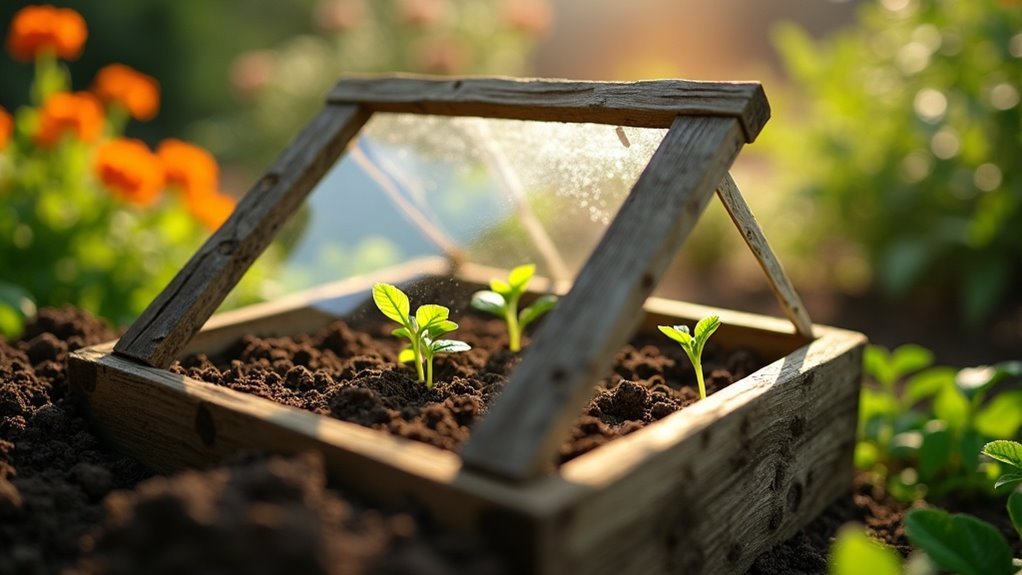
To build a simple cold frame for your survival garden, gather essential tools like a drill and miter saw, along with four durable cedar boards, sturdy hinges, and an old window for optimal insulation. Design your frame with a front height of 7 inches and a back height of 12 inches to maximize sunlight exposure. Assemble the frame securely to withstand harsh weather conditions, then attach the window lid for proper ventilation. Regularly monitor the temperature and adjust the ventilation as needed to protect your plants from extreme temperatures. For additional strategies on effective maintenance and utilization in a survival setting, explore further resources tailored to prepping and self-sufficiency.
Key Takeaways
- Gather essential tools and materials, including durable cedar boards, a repurposed window for the lid, sturdy hinges, and corner braces to ensure stability and resilience against the elements.
- Design the cold frame with optimal survival dimensions: 7 inches tall in front for easy access, 12 inches in back for better heat retention, and 4 feet wide to accommodate a variety of crops.
- Assemble the frame using screws and corner braces, ensuring it is built to withstand harsh weather conditions and provide a long-lasting shelter for your plants.
- Prepare the window lid with adjustable hinges for ventilation control, ensuring it fits snugly with a slight overhang to protect against rain and retain heat.
- Position the cold frame in a location that receives maximum sunlight to optimize plant growth, and regularly monitor the temperature to effectively manage your food supply in a survival situation.
Tools and Materials Needed
To get started on building your cold frame, you’ll need a few essential tools and materials that are useful for any survivalist project. Gather a drill, miter saw, jigsaw or circular saw, screwdriver, tape measure, and a marking tool for precise cuts.
For the frame, use four 1 1/2 × 6 × 8 cedar boards, and don’t forget two sturdy hinges for attaching the lid. An old window measuring about 32 1/4 long × 30 wide is ideal as the cover, providing both transparency and protection for your plants.
Additionally, using corner braces made from scrap wood will enhance stability and durability. Utilizing recycled materials not only reduces costs but also aligns with the principles of sustainability and self-sufficiency in prepping and survivalism.
Designing Your Cold Frame
When designing your cold frame for survival gardening, focus on achieving ideal dimensions and angles to enhance plant growth and maximize sunlight exposure, which is crucial for food production in a self-sufficient lifestyle.
Use durable materials like reinforced glass or polycarbonate for the transparent lid, ensuring it can withstand harsh weather conditions while allowing maximum light penetration.
Optimal Dimensions and Angles
Designing a cold frame for your survival garden requires careful consideration of dimensions and angles to enhance its functionality and resilience.
Here are some ideal specifications to take into account for optimal performance:
- Front height: 7 inches, back height: 12 inches
- Width: 4 feet for both front and back
- Side angles: one at 7 inches, the other at 12 inches
- Transparent lid positioned at an angle to prevent water accumulation
- Overall size: about 6 feet wide and 2.5 feet deep
These specifications will help ensure efficient drainage, maximize sunlight exposure, and ultimately extend your growing season, which is crucial for food security in a survival situation.
Material Selection and Durability
Selecting the right materials for your cold frame is crucial for ensuring both durability and functionality in a survivalist setting.
Consider using salvaged old windows or clear plastic for the lid, as they offer excellent light transmission and are often cost-effective solutions for resourceful prepping. For the frame, pressure-treated lumber is commonly used; however, it’s important to avoid direct soil contact to prevent chemical leaching, which could compromise your food sources.
Strong hinges are essential for secure attachment and easy access, facilitating quick inspections and adjustments as needed. For enhanced durability, aluminum triple track storm window inserts are recommended; they’re lightweight, provide better insulation, and resist corrosion, making them ideal for long-term use in various weather conditions.
Regularly inspect all materials, as aging wood and glass can impact your cold frame’s overall performance and longevity, ensuring it remains a reliable resource for food production in challenging times.
Constructing the Frame
To construct the frame of your cold frame, begin by assembling four 1 1/2 × 6 × 8 cedar boards, which offer excellent durability and weather resistance—essential for survival situations.
Cut the front of the frame to 7 inches tall and the back to 12 inches tall to ensure optimal sunlight exposure and effective drainage, both crucial for growing food in emergency scenarios.
Secure the corners with screws and corner braces to enhance stability, ensuring your frame withstands the elements.
Attach the hinged window lid to the back using robust hinges, allowing for easy ventilation and temperature control.
Additionally, consider reinforcing the structure with insulation from plywood walls and incorporating drainage holes to prevent moisture buildup, which can jeopardize your survival crops.
- Use weather-resistant wood
- Guarantee proper height for sunlight
- Secure corners for stability
- Install a hinged window
- Add insulation for heat retention
Preparing the Lid
When preparing the lid for your cold frame, opt for materials such as glass, acrylic, or durable plastic that allow sunlight in while effectively protecting your plants from harsh weather conditions.
It’s crucial to attach sturdy hinges securely to the back of the lid, ensuring it opens easily for ventilation while remaining robust enough to withstand potential environmental challenges.
Additionally, cut the lid to fit snugly, allowing for a slight overhang to shield your plants from rain and snow, thereby enhancing their survival in varying conditions.
Proper preparation is key to ensuring your gardening efforts are resilient and fruitful.
Selecting Lid Materials
The choice of lid materials is crucial for the effectiveness of your cold frame, especially in a survival or prepping context, as it directly impacts light penetration and insulation, which are vital for sustaining plant growth in challenging conditions.
Here are some options to consider:
- Glass: Provides excellent sunlight penetration and insulation, making it ideal for maximizing heat retention.
- Acrylic: This lightweight, shatter-resistant option offers good clarity and durability, perfect for withstanding harsh weather.
- Clear plastic sheets: An affordable and versatile choice that’s easy to work with and can be sourced from various materials.
- Old windows: Repurposing these not only gives a charming aesthetic to your setup but also ensures transparency and effective light transmission.
- UV-resistant materials: These materials safeguard your plants from harmful rays while extending the lifespan of your cold frame lid.
Make sure your lid features a sloped design to prevent debris buildup and fits securely to optimize performance.
Attaching Hinges Securely
Selecting the right lid materials is crucial for your cold frame, but ensuring that hinges are securely attached is equally important for functionality and durability in a survival situation.
First, choose strong, heavy-duty hinges that can withstand the weight of your window and the rigors of outdoor use. Attach them to the back of the frame, making sure the lid is flush with the frame for proper alignment, which is vital for effective sealing.
Drill pilot holes to prevent wood from splitting, and countersink screws to create a smooth surface that allows for fluid movement, minimizing the risk of failure. Use at least two hinges, positioned toward the corners for balanced support and increased stability.
Finally, test the lid’s movement; make adjustments as necessary to ensure easy opening and closing, thus enhancing your cold frame’s overall performance and reliability in a prepping scenario.
Assembling the Cold Frame
As you begin assembling the cold frame, gather four 1 1/2 × 6 × 8 cedar boards, which are durable and weather-resistant, perfect for prepping purposes.
Use 2 3/4-inch wood screws to secure the front, back, and side pieces, ensuring a sturdy structure that can withstand the elements.
Follow these steps for optimal results:
- Attach angled side pieces to the back without a front piece, allowing for better airflow and heat retention.
- Ensure the back is 3-6 inches taller than the front to maximize sunlight exposure, essential for growing food in a survival situation.
- Use corner braces cut from scrap wood for added stability, reinforcing the frame against wind and other environmental factors.
- If utilizing old windows, create a wood frame specifically for hinge attachment, making use of available resources to reduce waste.
- Finish by securely attaching hinges for easy access and ventilation, crucial for maintaining the right conditions for your plants.
Now, you’re prepared to build a cold frame that will enhance your self-sufficiency and food security!
Ventilation and Temperature Management
While ensuring your cold frame provides ideal conditions for plant growth, managing ventilation and temperature is crucial for survivalist gardening.
On warmer days, prop open the lid when temperatures exceed 40°F to facilitate airflow and prevent overheating, which can lead to soft growth that may not be resilient in tough conditions. Close the lid before sunset to retain heat and protect your plants from dropping nighttime temperatures, a strategy vital for maintaining a reliable food source.
Prop open the lid on warm days to ensure airflow, and close it before nightfall to protect your plants from cold temperatures.
Utilize bricks or wood to keep the lid propped during the day for effective ventilation. Regularly monitor the temperature inside, as it can be 5-10 degrees warmer than outside, a factor that could impact your plants’ health.
On sunny afternoons, consider using shade cloth or screens to shield your plants from excessive sun exposure, ensuring they can thrive even in the harshest environments.
Maintenance Tips
Maintaining your cold frame is essential for creating a sustainable environment for your plants, especially in a survivalist context. Here are some crucial maintenance tips to ensure your cold frame remains in excellent condition:
- Daily temperature monitoring is vital; use a reliable thermometer to track internal conditions, as extreme temperatures can jeopardize plant health.
- Regularly inspect hinges and seals to prevent drafts, which could compromise your plants’ growth and survival.
- Ventilation is key; prop open the lid on warm days to regulate temperature and close it before sunset to retain warmth.
- Periodically check for pests and diseases, and remove any debris that could harbor unwanted organisms.
- Annually reapply paint or sealant to protect against weather damage, ensuring your cold frame withstands the elements.
Utilizing Your Cold Frame
Utilizing your cold frame is a strategic move for survivalists and preppers, particularly in cooler climates.
Position your cold frame using old windows, ensuring the back is 3-6 inches higher than the front for optimal sunlight exposure. This setup creates a warm micro-environment, which is essential for extending your growing season and ensuring a reliable food source.
You can cultivate slow-maturing crops like beets and carrots, while also starting seedlings in early spring to prepare for potential food shortages.
Regularly vent the cold frame on warmer days to prevent overheating, ensuring your plants remain healthy. Surround it with mulch or straw to retain heat and maintain soil temperatures, which is vital for sustaining your raised bed throughout the year and enhancing your self-sufficiency in times of need.